
Baby on board: prenatal and neonatal assistance

When pregnancy complications or premature births happen far from home, repatriation brings both emotional and logistical challenges. Alysia Cameron-Davies explores advances in prenatal and neonatal transport, the importance of timing, and the mental health support families need before, during and after the transfer
Technological advancements continue to enhance neonatal and prenatal repatriations, with improvements in areas such as portable incubators, in-flight diagnostics, and telemedicine supporting care and coordination throughout the operation. Dr Lee Collier, Chief Medical Officer at SkyCare Repatriation, explained: “Our approach to neonatal repatriation now includes careful triage of the infant’s needs and consideration of the right equipment to use.”
He acknowledged that in the past, neonatal transport was almost always associated with the use of a full-size transport incubator, adding that for extremely preterm babies, this was still the best option. “The use of a full-size transport incubator attached to a purpose-designed aircraft sled still offers the highest standard of care. The link between hypothermia and poor outcomes for neonatal patients, especially in the first few days of life, is very well established, so careful use of a high-quality transport incubator with close monitoring of body temperature is key.”
However, for planned repatriations of more mature infants, lighter equipment like the AHT BabyPod is now commonly used. “The AHT BabyPod offers a comfortable environment for the baby and reduces the moving and handling risk for the clinical team,” he explained. “Since the release of the BP37 Temperature Maintenance Kit, the BabyPod now offers a heated mattress to help keep the baby warm.”
The BabyPod offers a more natural experience for the baby and parents as it looks more like a crib than a piece of hospital equipment
Dr Collier also highlighted the emotional and practical advantages. “The BabyPod offers a more natural experience for the baby and parents as it looks more like a crib than a piece of hospital equipment. The BabyPod also straps to a conventional stretcher so can be used with any flight platform, including commercial, whereas incubators tend to be dedicated to the LifePort or Spectrum sled they are fitted to.”
Dr Jean Bottu, Paediatric/Neonatal Medical Supervisor at European Air Ambulance, agreed, noting the significant advancements in modern portable incubators. “Portable incubators of the new generation have made a real change with a much better controlled microenvironment: stable temperature control, despite possible high swings of external temperature (hospital, outside, ambulance, tarmac, aircraft).”

He added: “The extended battery life, allowing up to four hours’ autonomy, is a major step forward to avoid known difficulties while using multiple vectors like ground ambulances, helicopters or aircraft. We in the company also developed an invaluable electric switch and control system that will guarantee the quality of electric power entering our specific devices, like incubators, ventilators, syringe pumps – whichever the source and the power provided by the vector. The incoming power is connected to our box, which will automatically send the expected power to our devices.”
Additionally, Dr Bottu discussed the benefits of advancements in in-flight monitoring systems, which enable continuous surveillance of vital signs such as heart rate, respiratory rate, oxygen saturation, and blood pressure. He added that point-of-care tests, including blood gases, glucose levels, and even ionogram, were also extremely helpful in adjusting neonatal care during transport, describing them as invaluable tools for ensuring safe long-range transfers.
Touching on telemedicine, Dr Bottu described it as a “promising tool” with potential benefits in areas such as pre-transfer assessments, helping clinicians determine whether a baby is stable enough for transport and what specific equipment may be required.
He concluded: “With all those improvements, repatriating babies, even for long journeys, appears to be safer and can be better planned with a specialised neonatal transport team.”
Deciding when to repatriate: key considerations
Dr Bottu stressed that transporting neonates, particularly the most premature and vulnerable, remains a significant challenge, as their clinical stability can change rapidly. He emphasised that determining the optimal timing for transport requires careful, multidisciplinary decision-making. Medical stability, he noted, is the most critical factor when considering repatriation, and must be thoroughly assessed in close collaboration with both the local team and the accepting neonatal unit.
The health and safety of the baby will always be the priority before any administrative emergency or other considerations
“The health and safety of the baby will always be the priority before any administrative emergency or other considerations”, said Dr Bottu. “Pre-transport specialised medical clearing is critical to decision-making with updated and clear medical information. Anticipation of possible difficulties during transport is an important part of the medical clearing tasks.”
He noted that the family plays a crucial role in the decision-making process, and they should be fully informed about the benefits and potential risks of repatriation.
Dr Bottu continued: “Every step of the transport must be clearly identified and planned with allocated responsibilities: bedside-to-bedside transfer is our preferred option for newborns and premature babies to limit transfer hazards when moving a baby from his ‘bed’ to an incubator.” He emphasised that the transport team must include appropriately trained personnel, such as a neonatologist and a specialised nurse, and be equipped with the right medical tools.

Dr Bottu concluded that, after considering all these factors, it is ultimately the medical team who are best placed to decide the most appropriate time for repatriation.
Dr Collier explained that there was a tendency to wait until babies are nearly ready for discharge before repatriation is considered. However, he pointed out several problems with this approach. The risks include delayed bonding between parents and their baby, separation of families, and mental health challenges for the mother, who may be left alone in a foreign country, living in temporary accommodation for several weeks.
Additionally, Dr Collier noted that neonatal patients were also vulnerable to late complications, which could extend hospital stays to several months if surgery or a return to higher-level medical care became necessary. “My approach is to look for a window of opportunity for transfer, which often occurs in a step-down of treatment,” he said. “For instance, when a baby is requiring mechanical ventilation, at the point where the treating team are considering stepping down to non-invasive ventilation, this would be a good point to repatriate the baby to their home country and carry out the step-down of care in their home country.”
Dr Collier emphasised: “By sending a senior doctor or nurse practitioner to retrieve the baby, the level of care on transport is as close as possible to that of a neonatal intensive care unit, minimising the risks of transport.”
Dr Bottu stressed that repatriating pregnant women facing complications requires caution. “An aircraft will never be a flying delivery room nor an aerial neonatal intensive care unit,” he stated. “Any risk of a premature delivery in-flight should be a clear contraindication to transport, despite parental or administrative pressure.”
Mental health and family support
For families and expectant parents, facing a pregnancy complication or delivering a premature baby while abroad can be an overwhelming and stressful experience.
Charlotte Young, Chief Executive Officer of Lia’s Wings, a UK-based charity that provides vital support for families during the neonatal repatriation process, explained: “Having a premature baby far from home is deeply disorienting. It’s not what parents planned or prepared for. It turns their world upside down in an instant. The excitement of welcoming their baby is replaced with fear, uncertainty, and a desperate need for answers. They often find themselves in unfamiliar hospitals, speaking to unfamiliar doctors, far away from their support networks. In that moment, they don’t just need logistics; they need reassurance, guidance, and someone who’s walked this path before to gently show them the way forward.”

Dr Collier noted that mental health support for families was a crucial yet often overlooked aspect of neonatal repatriation. He stressed the importance of early communication with families, saying: “I would advocate an early conversation with a neonatal transport specialist: a doctor or nurse who has considerable neonatal intensive care and transport experience. Parents want to speak to an expert with strong experience of supporting families in their position, and they value both the social and emotional support and asking questions about the medical care with someone who speaks their native language.”
Dr Bottu echoed this sentiment, highlighting that clear and early communication plays a vital role in reducing the emotional stress of neonatal transport. He added that regular contact with families before transfer helps manage expectations and ease anxiety throughout the process.
Dr Collier added: “Helping parents understand the reasons for a delay in transfer, and giving them criteria for when the transport might go ahead, is much better than just repeatedly telling them it’s ‘too soon’, which is a common complaint
from parents.”
Dr Bottu highlighted the importance of allowing a parent to accompany the baby during transport, describing this as “invaluable” for managing stress for both infant and parents. He noted that accompanying medical teams are trained in both clinical care and emotional support, helping parents feel reassured throughout the journey.
Post-repatriation support
Beyond the immediate stress of transport, Dr Bottu acknowledged that the experience of premature birth itself could be deeply traumatic, and noted the value of ongoing emotional care following the transfer. “The emotional impact of transport is high, at the time of transport, but also before and even long after,” he said. He explained that European Air Ambulance offers post-transport debriefings via email, with the option to share photos or updates. He confirmed that post-transfer contact was beneficial for both families and the medical teams and could also provide important feedback.
Dr Collier agreed and outlined the partnership between SkyCare and Lia’s Wings. “Alongside financial support, the charity offers social and emotional support with regular phone calls and text messages, and can link families up with volunteer parents who have had the same experience in the past,” he explained. “This support carries on before and after a transfer, for as long as the family need it.”
The emotional impact of transport is high, at the time of transport, but also before and even long after
Young commented: “We believe post-transfer support should be recognised as an essential part of the repatriation journey. It’s not just about flying a baby home; it’s about restoring stability, rebuilding confidence, and giving families the best possible start after an experience that turned their world upside down.”

She explained that, after repatriation, parents often face unresolved emotional trauma, ongoing medical needs, and challenges accessing further support – all of which can make it difficult to process their experience and can lead to mental health struggles and financial hardship. “What they’ve endured isn’t just a logistical challenge, it’s a profound emotional experience,” she stated.
Young noted that in addition to supporting families before and during repatriation, Lia’s Wings also provides ongoing emotional and practical support once they return to the UK, helping them reintegrate into National Health Service (NHS) care. “We know from experience that families do better when they feel ‘held’, not just in the crisis, but in the weeks and months that follow.”
Insurance and assistance considerations
While medical teams focus on clinical stability and safe transport logistics, insurance and assistance providers play a crucial role in ensuring that coverage meets the complex needs of pregnant travellers and neonates. Although most airlines allow travel up to 36 weeks of gestation, many travel insurance policies restrict or exclude cover after 32 weeks, creating a significant gap in protection.
Young noted that one of the biggest practical barriers that families face is not having adequate travel insurance. “Too many products on the market are simply not fit for purpose,” she stated. “Policies often exclude pregnancy complications such as premature birth, neonatal intensive care, or medical repatriation.”

Jess Strange, Chief Customer Officer at Southern Cross Travel Insurance (SCTI), outlined the company’s approach to supporting expectant mothers, explaining that SCTI’s policies cover uncomplicated pregnancies up to the 24th week of gestation. This includes single, multiple, and IVF pregnancies, as long as there are no pre-existing complications. Policies extend to mental health support, cover for travellers who discover they are pregnant while abroad, and include childbirth and neonatal care overseas up to 24 weeks, with coverage continuing until the family’s repatriation home. Post-repatriation treatment falls outside the policy scope.
There are many factors to consider when looking at cover for the third trimester, not the least of which are the types of medical outcomes of pregnancy-related complications
Additionally, SCTI offers no-cost extensions for unexpected pregnancy-related events abroad that delay return travel, with repatriation contingent on medical clearance by SCTI’s medical team. “This takes the pressure off any uncertainty customers may have of insurance cover ‘running out’ during a stressful situation,” Strange stated.
Discussing potential policy enhancements for pregnant travellers, Strange noted: “Insurers could choose to make cover available by offering optional additional pregnancy cover up until later gestational ages. However, there are many factors to consider when looking at cover for the third trimester, not the least of which are the types of medical outcomes of pregnancy-related complications and the cost of childbirth and neonatal care in different destinations.”

Young highlighted the vital role insurers play in supporting families through neonatal repatriation, emphasising the importance of cross-sector collaboration. “We see a valuable opportunity for travel insurers to be part of this longer-term picture,” she said. “When families feel their insurer has acted with humanity and care, it leaves a lasting impact. It builds trust. It changes how families speak about their experience. And most importantly, it shows that these families matter.”
A call for further collaboration
Acknowledging that neonatal repatriations are complex, and that medical teams, assistance providers, embassies, insurers, and charities like Lia’s Wings all play a vital role in the process, Young called for enhanced collaboration. “The best outcomes happen when we work together seamlessly, not as separate entities, but as a coordinated team with one shared purpose: to support the baby and their family with care and compassion,” she said.
Young noted that Lia’s Wings acts as a bridge between clinical care and human need, “but we can only do this well when the wider system is willing to collaborate openly and prioritise the family’s wellbeing at every stage”.

She explained that the charity supports families with complex bureaucracy, including the emergency travel document process, which poses challenges for premature babies, requiring facial photos despite intubation and medical equipment. “We are calling for urgent reform of this system through the Foreign, Commonwealth & Development Office, and we ask insurers to support families by actively assisting with the documentation process wherever possible,” she stated.
The best outcomes happen when we work together seamlessly, not as separate entities, but as a coordinated team with one shared purpose: to support the baby and their family with care and compassion
“Ultimately, what families need in these moments isn’t just coverage; it’s understanding,” Young continued. “We would welcome the chance to work more closely with travel insurers to offer better, more holistic support to families facing neonatal repatriation from overseas. We have the expertise, infrastructure, and support systems in place – systems that are helping families navigate and recover from some of the most complex and traumatic situations imaginable. By collaborating with insurers, we can extend this support further and ensure that no family falls through the cracks.”
Young added: “We believe the best repatriations, the ones families remember for all the right reasons, happen when empathy and flexibility guide every decision. That’s why we are calling for closer partnerships with travel insurers. By working together, we can reduce delays, ease emotional and financial strain, and set a more compassionate standard of care across the industry.”
She concluded: “We are ready to work together. Let’s make this kind of collaboration the norm, not the exception.”
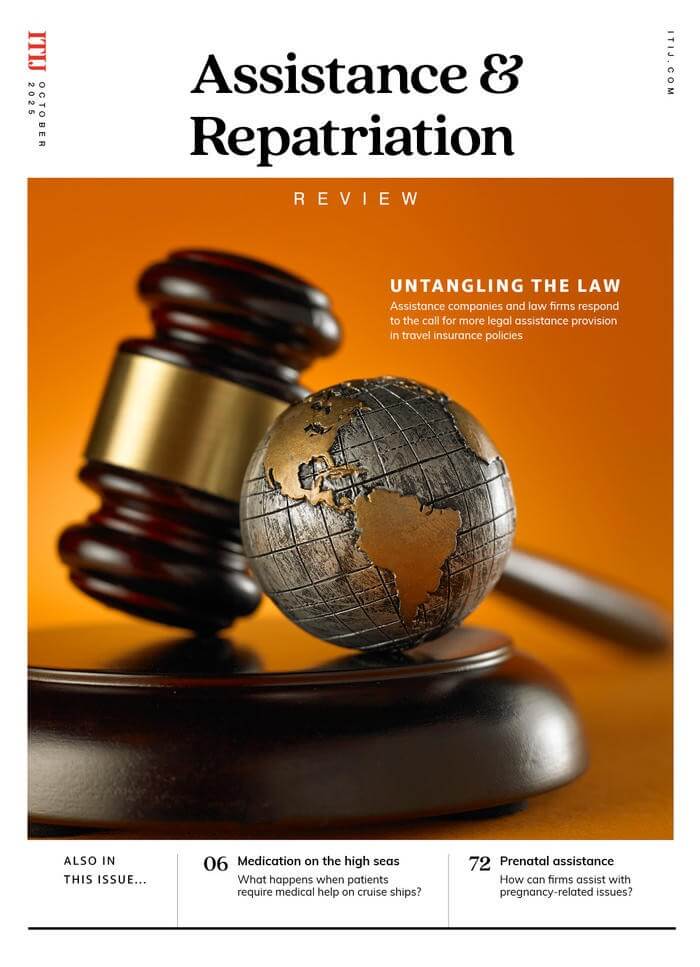
October 2025
Issue
In this latest Assistance & Repatriation Review we explore how legal networks and insurers can help travellers who fall foul of the law while abroad. We look into the intricacies surrounding how medical transfers can be provided to pre-natal and neonatal patients, and examine the provision of medical care to patients who become ill on cruise ships.
Alysia Cameron-Davies
Alysia is a copy writer for Voyageur Publishing.