
Air ambulances versus rising costs

Oliver Cuenca speaks to providers of international air ambulance services about how they are mitigating rising cost pressures and reassuring clients
Air ambulances provide a vital service – taking patients suffering from complex injuries and illnesses to receive treatment, or bringing them home after a trip gone wrong. Yet it is also a sector that relies on complex logistics and huge amounts of money changing hands.
In recent years, this complexity has led to rising costs for the sector, requiring air ambulance providers to take particular care in where they spend their money, and how they work with stakeholders in the event that price rises become inevitable.
The cause of rising costs
For Tom Hienckes, Business Development Manager at European Air Ambulance (EAA), the rising cost of providing air ambulance services in recent years cannot be blamed on a single thing. Rather, it is the result of a combination of “operational, economic, and regulatory factors”.
“One major contributor is the increase in aviation fuel and aircraft maintenance costs – particularly the constant rising prices of aircraft spare parts,” he explained. “While fuel prices have recently stabilised and even decreased slightly, the cost of spare parts continues to climb steadily. Supply chain issues have resulted in low inventories and inflated prices.”
Additionally, staffing costs, airport-related expenses such as handling and landing fees, insurance premiums, as well as the price of hotel accommodation, commercial airline tickets, and ground ambulance services, have all grown, Hienckes explained.
“Furthermore,” he continued, “the cost of equipping aircraft with cutting-edge medical equipment has continued to grow, [while] regulatory compliance – particularly for global operations or flights through complex airspace – adds another layer of financial burden.”
Douglas Weisz, Senior Director of Business Development at REVA, agreed, noting that when it comes to staffing, “there is a global shortage of highly skilled pilots and critical care-trained flight clinicians. Recruiting and retaining these professionals – who must meet stringent clinical and aviation safety competencies – requires substantial investment in training and compensation.”
He added that compliance with international accreditation standards also contributes to rising costs, while “escalating aviation and medical liability insurance premiums reflect an increasingly complex global risk environment”.
Meanwhile, a spokesperson for Redstar Aviation said that alongside this, “operating in high-risk or conflict regions often involves elevated insurance premiums and complex logistics … which contribute to the overall rise in service costs”.
Rajgopal Nair, Director of Flight Operations at Bluedot Charters and Air Ambulance, noted that due to the custom of air ambulance services being quoted in US dollars or euros, fluctuations in global currencies have also had a “direct impact on operating margins”.
This, he explained, is particularly true when expenses are incurred in multiple local currencies.
Nair continued: “Demand for highly trained medical professionals has grown, along with the need to upgrade and replace advanced life support equipment, increasing overall clinical readiness costs.”
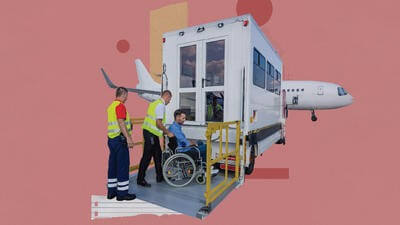
One major contributor is the increase in aviation fuel and aircraft maintenance costs – particularly the constant rising prices of aircraft spare parts
Managing costs
In REVA’s efforts to manage rising costs, Weisz explained, investing in “advanced flight planning tools allows us to optimise fuel efficiency, routing, and flight safety margins”.
Additionally, he said that maintaining strong relationships with “trusted ground handling agents” and “coordinating ground ambulance services through a carefully vetted provider network” are key to reducing costs while maintaining quality.
Hienckes agreed, adding that EAA’s strategy for managing rises in operational costs includes daily assessments of the market dynamics.
“Thanks to our efficient controlling and finance department, we can implement adjustments very quickly,” he explained. “To handle unpredictable cost spikes, such as sudden fuel surges or increased landing fees, we have financial contingency plans in place, [while] dynamic pricing models help to reflect real-time operational expenses.”
The Redstar spokesperson argued in favour of a “proactive and data-driven approach to managing operational costs … to optimise flight planning, aircraft utilisation, and crew rotations to enhance efficiency”.
They added: “We strategically select our technical stop destinations based on cost-effective airfields and ensure our crews are accommodated in budget-friendly hotels”.
Finally, Redstar stated that by operating a “diverse fleet”, it can offer “empty-leg opportunities on a global scale … [which] not only enhances our responsiveness and availability for urgent missions but also contributes significantly to offsetting operational expenses by maximising aircraft utilisation”.


Striking a balance between cost-effectiveness and quality
Weisz said that a “disciplined approach to resource allocation” was necessary when aiming to resist rising costs, including making sure that each mission is “individualised” to meet the patient’s clinical needs, while avoiding “over-servicing”.
Hienckes added that the air ambulance sector “combines two of the most highly regulated and cost-intensive sectors” in the world – aviation and medicine.
“Each comes with its own complex set of compliance requirements, safety standards, and operational demands,” he said. “Operating within either industry is expensive on its own – but when combined, the financial and regulatory burdens are significantly magnified.”
Hienckes stated that a key focus for EAA in terms of managing its costs was its aim to operate a “fully integrated business model”. This includes ensuring ownership of all aircraft and equipment, dedicated teams for medical services, maintenance, flight operations, and office support, allowing greater control over costs.
He also noted that in the case of EAA and its parent entity, Luxembourg Air Rescue Group, their status as non-profit organisations offers “certain advantages” – namely, that EAA is “free from the influence of private investors and shareholders”, allowing them to reinvest all earnings directly into the service, rather than losing some to the payment of dividends.
Nair agreed, saying that his company invests in in-house medical teams, optimising aircraft deployment, and implementing efficient routing and rostering systems. “Our floating model and empty-leg repositioning help reduce per-mission cost without compromising on safety or care standards,” he said.
He warned, however, that “affordability should never come at the cost of integrity or safety”.
Advanced flight planning tools allows us to optimise fuel efficiency, routing, and flight safe-ty margins
Reassuring clients
The Redstar spokesperson acknowledged that they had seen “increased scrutiny from both clients and insurance providers concerning cost justifications”; these concerns are usually reduced once the “unique operational challenges and risks of air medical transport – especially in conflict zones or under time-critical conditions – are understood”.
They added that “detailed quotes with breakdowns, realistic timelines, and clear explanations of operational contingencies” were an effective way of further reducing concerns from clients and insurers.
Weisz agreed that mitigating client concerns “begins with proactive communication and transparency”, but added that “predictable rate structures” also enable customers to better manage their budget.
Ultimately, reassuring customers about prices comes from an “integrated approach” that combines “clinical excellence, aviation safety, and operational intelligence”.
Hienckes added that while “client pressure is a constant factor” when it comes to the cost of air medical transfers, “ultimately, each client makes a carefully weighed decision when choosing the operator they believe is best suited to repatriate their patients safely and efficiently”.
He argued that it was important to clearly communicate the value of the services provided, in order to reinforce customer confidence – especially during price adjustments. “By clearly demonstrating the steps we have taken to absorb rising costs before implementing any increases, we can affirm our commitment to delivering value and fairness,” he said.
This race to the bottom creates a cycle of self-imposed pricing pressure that can have serious long-term consequences
However, Hienckes warned that, beyond client expectations, there is a risk that air ambulance providers themselves could contribute to challenging conditions – for example, by lowering prices to unsustainable levels in response to a temporary dip in demand.
“This race to the bottom creates a cycle of self-imposed pricing pressure that can have serious long-term consequences,” he said. “Ironically, this downward pressure on pricing can ultimately harm the very clients it is intended to benefit, as lower costs may come at the expense of reliability, service quality, or the operator’s ability to invest in new aircraft, new medical equipment or staff training.”
One challenge faced by Bluedot, said Nair, was “scenarios where clients are tempted by unregulated operators offering significantly lower prices at the expense of safety and compliance”.
“This dynamic,” he explained, “creates both commercial pressure and an ethical dilemma. While we’re committed to staying competitive, we refuse to compromise on regulatory standards or clinical integrity. However, we’ve managed this challenge through transparent pricing, operational efficiency, and continuous education of stakeholders about the risks of choosing low-cost, non-compliant alternatives.”


Conclusion
Cost efficiencies can be made by optimising how aircraft are used, bringing more operations in-house to ensure stability of staffing, and utilising a data-driven approach to managing operations.
However, sometimes higher costs must be passed on to customers. In such an event, clear, proactive communication with clients is often critical to ensuring that they understand any potential price rises. This includes giving a full breakdown of costs incurred.
September 2025
Issue
We include an examination on defining ‘fitness to fly’, and ask if an industry standard can be identified, and what that would involve. We also look at capacity in the aeromedical market and experts share their insights. Ethics and transparency in the aeromedical sector is a big issue, and we include an investigation into air ambulance payments.