
Canada’s snowbirds are facing headwinds

Milan Korcok looks at the changes and challenges facing Canadian travellers to the US
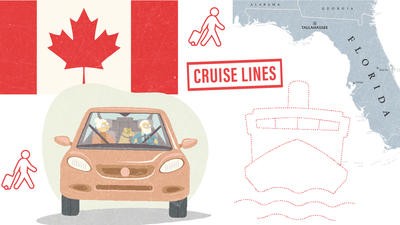
Though Canada’s travel insurance market is steadily recovering from Covid-19-related losses, it still faces major challenges from many quarters: plunging numbers of incoming international students; stubbornly high household costs cutting into family travel budgets; reduced southbound vacation travel by snowbirds; concerns about 2024’s disastrous storm impacts in Florida’s high-density coastal communities favoured by Canadian snowbirds; and most recently, unnerving speculation about President Trump’s anticipated border strategies – northern as well as Mexican.
That’s a lot to chew on. And although the Conference Board of Canada reports a steadying of consumer confidence about future travel plans, it reveals a 2.7% reduction in US-bound travel in the first six months of 2024 compared with the equivalent 2023 period, as well as a drop in air travel of 11.3%. That’s consistent with official Florida tourism data showing year-over-year drops of incoming Canadian tourism in each of the last two quarters of 2023, and the first two of 2024. That’s far from the highwater mark of four million Canadian visits in pre-Covid 2019.
This is not an encouraging metric for travel insurers, especially when combined with national survey data showing many Canadians shying away from travel insurance as too costly for their strained travel budgets. Data from a September 2024 consumer survey by international research firm Maru Public Opinion for TD Travel Insurance revealed that although 68% of the Canadians surveyed were planning pleasure travel over their next 12 months, a third would not be buying travel insurance, and only 32% said they were committed to buying both emergency medical and trip cancellation and interruption insurance. Over 60% of survey respondents also indicated they were prepared to forgo such luxuries as dining out and buying new clothes to help finance upcoming trips, while 30% said they were struggling to meet their trip budgets – ominous signs that insurance is trending down on travellers’ to-do lists. This particular survey did not stratify responses per age group, but prior ones taken over the years have consistently shown that seasoned snowbird travellers (those who spend protracted periods of time at their vacation homes in southern climates – Florida, Arizona, California, and Texas) are faithful travel insurance buyers – 80% or higher. But reliable updates on that particular demographic are scarce.
Contrary to much reporting by general media, not all Canadian southbound travellers are snowbirds
What are snowbirds?
Contrary to much reporting by general media, not all Canadian southbound travellers are snowbirds. Mom, Dad, and two kids taking an annual two-week trip to Disney World are not snowbirds. Their grandmas and grandpas who have purchased or rent homes, condos, and mobile homes of differing varieties in southern climates and spend two, three or even six months each year in them are snowbirds.
Media vaguely assigns a ‘million’ each year to the snowbird category. But there’s no way to validate that figure. It’s just baked into the imagery of Canada’s snowbirds leaving winter behind by marketers who cater to them, or the hospitals and clinics that service their needs on site in Arizona, Texas, California and especially Florida, where Canadians blend in with folks just like themselves. One big difference, however: real snowbirds know well that once they leave their country, for even a short overnight trip across the border, their mandatory provincial health plans are virtually worthless, covering no more than 5% or at best 10% of emergency medical hospital costs. After that it’s pay-as-you-go in America’s healthcare universe – the costliest in the world. For true snowbirds that’s a risk they’re not prepared to take.
J Ross Quigley, CEO of Medipac – a leading snowbird insurer and designated provider of travel insurance to the Canadian Snowbird Association (a registered non-profit group of 100,000-plus dues-paying members with an elected board of directors and all the trimmings) – admitted that even during periods of poor currency exchange (over the years the Canadian dollar has been worth as little as US$0.65 and is currently in the 71–73 cent range), snowbirds knew the territory and the risks and “continued to soldier on” with their winter lifestyles. But he added that given the persistence of exchange rate inequities and the current experience with two catastrophic hurricanes ravaging the entire Gulf Coast of Florida (the hub of Canadian homestead communities), commitment to the snowbird lifestyle may be wavering.

“There are a lot of snowbirds saying they are going down to sell their place, if they can,” said Quigley, suggesting that “new potential snowbirds will think twice before investing in new properties”. He also admitted: “Our sales have fallen for the past two weeks.” (This was in November 2024, in the wake of storms Helene and Milton.) “Up until then it was business as usual.”
Pre-trip underwriting can be challenging
Given the dominant position of ‘real’ snowbirds in the southern migrations, Canadian travel insurance providers have developed sophisticated underwriting processes (questionnaires) to try to align risk with premium price and conditions of coverage (limitations). But applicants have learned over the years that the more often they check off a ‘yes’ to a given set of symptoms, the greater the premium price will be, creating something of a moral dilemma for the applicant. Some of these underwriting applications are challenging, requiring some knowledge of medical terminology that sends them to the ‘definitions’ asterisk. Most, however, urge applicants to bring their family physicians into the process and ask for their help (a tough deal in Canada, where waiting times for even the most basic non-urgent medical appointment are extensive for most patients).
Medipac’s application/health questionnaire is tough, and Quigley offered no apology. “Our application is tough, and we encourage clients to see their doctor … preferably more than 90 days before their travel to meet the pre-existing condition clauses. We want to know everything about a future client and then we know we can insure them for what they have. No funny clauses to deny claims…”
AI integration in travel insurance claims processing is gaining traction in Canada, though it is still in the early stages of widespread adoption
Nobody wants denied claims
Certainly not insurance providers, who have restricted response to media calls demanding to know why a paid-up client was denied a transatlantic air ambulance to a hospital in her home community and had to be treated in Europe. Given Canada’s privacy laws protecting individual health information, there’s not a lot the insurer can say to satisfy public opinion. It’s hard to convince customers, and their surrogate media intermediaries, that a $5 or $10 million benefit limit policy is not a blank cheque to spend at the customer’s bidding. Fiscal prudence still rules.
Dr Ferial Ladak, Director of Global Medical Affairs for Global Excel, a Quebec-based cost containment, claims management and medical assistance company, told ITIJ that “finding the balance between customer satisfaction and fiscal prudence is a key requirement in maintaining client trust”. She finds that if patients are already familiar with facilities in their adopted communities such as the Clinique Soleil in Florida (a general medical practice geared to visiting Quebecers), they know where they want to go. And once they’re already admitted to a hospital, “it is very hard to divert them”. She asserts, however, that “since the quality of care is fairly universal in the US, albeit some might be missing the grand piano in the lobby or the Starbucks, diverting a patient doesn’t jeopardise their care”.
Where does AI fit in this balancing act?
Asked if the emerging technologies of artificial intelligence (AI) might play a role in securing patient satisfaction and fiscal prudence in travel insurance, Dr Ladak said: “AI integration in travel insurance claims processing is gaining traction in Canada, though it is still in the early stages of widespread adoption. Many major insurance companies, insurtech startups and third-party administrators (TPAs) are beginning to incorporate AI to streamline the traditionally lengthy claims process, reduce administrative costs, improve customer satisfaction and enhance claims cost management.”
She added, however: “I don’t see a role for AI once someone is in the medical system, but prior to travel or prior to a claim would be the best place for intervention that would be both a service and helpful for cost avoidance.”
Brad Dance, Chief Customer Officer for Canada-based travel insurance provider TuGo, also assured ITIJ that integration of AI processes in travel insurance procedures was advancing “slowly, though we are leveraging AI in certain processes with great results. In any claims technology changes we are investigating, AI will be a factor.”
Magdi Riad, President and CEO of Trident Global Assistance, a Toronto-area-based medical assistance and cost containment services provider for the travel insurance sector, concurred that AI could be useful in data analysis and assessing risk from an underwriting and pricing point of view. And he explained that the insurance industry has long used computer algorithms to assess and make decisions on claims, benefits, pharmacy prescriptions and other small claims with simple diagnoses.
However, he emphasised that AI “creates” logic based on extensive data and, in essence, replaces human involvement. He warned that this is “dangerous ground for insurers, and courts will not take it lightly and will not accept the AI logic as an answer to the insurer’s decision”.
Riad added: “We have to consider the list of the inherent cybersecurity risks associated with AI tools. These tools gather a significant amount of data, and, without cybersecurity measures, vulnerable systems may be exposed to data breaches and data privacy violations.” He added that Trident has integrated some AI to analyse calls patterns and for letter creation. “However, we do not expect to expose our data or plan to have AI ever click the decision button.”
Money talks. Snowbirds listen
According to US and Florida realtor sources, Canadians remain the top three foreign buyers (along with China and Mexico) of US homes. Under US immigration law, Canadians are allowed to live in these properties for up to six months (less a day) in any 12-month period, but for tourism only – no work or local business. They can stay in one continuous six-month stretch or an accumulation of shorter visits.
Canadians have been travelling south for winter vacations for over 50 years, establishing their nests in sun-drenched Arizona, southern Texas, California, and especially Florida – which in the early days many were able to do in a two-day drive. By 2010, these migrations reached a peak, realty data recording 69,400 house purchases (single homes, condominiums, town houses) valued at $17.1 billion. It’s not irrelevant that at various periods in 2010 and 2011 the Canadian dollar traded at parity with the US greenback, once or twice even peaking higher, giving Canadians a good bang for their buck in the US. Canadians are very sensitive to currency fluctuations; most can recite the daily US/Canadian exchange rates as easily as they can remember their grandchildren’s names.
By 2018, however, those economic dynamics slowly changed. Canadians still ranked as the number two foreign US home purchaser with 33,800 homes purchased, valued at $10.5 billion. Chinese buyers were number one, and Mexicans three. Shortly after that, Covid-19 changed the dynamics and by 2024 Canadian purchases of homes in the US settled in at 7,100, valued at $6.6 billion, dropping further to $5.9 billion in 2024 – Florida earning $1.39 billion of that. At that point the Florida Realtors report noted that “Canadians are a larger share of sellers than of buyers”.
But with Canadians now having to fork out CA$1.39 of their ‘loonie’ dollars to get US$1 (as of November 2024), even a tough snowbird thinks twice.
March 2025
Issue
In the March issue of ITIJ we examine spring break trends; look at the changing snowbird market; and investigate IPMI policies in North America. Included with this issue is the Air Ambulance Review, which has features on clinical care for ABIs; investing in fleet; the role of brokers in the air ambulance industry and an accreditation update.
Milan Korcok
Milan Korcok is a national award-wining medical writer who has been covering international healthcare activities and trends in Canada, the US and abroad for many years. He has long served as contributing editor to the Canadian Medical Association Journal and the Journal of the American Medical Association. He is a founder of – and has served as editor of – the US Journal of Drug and Alcohol Dependence; a founder of the Travel Health Insurance Association of Canada, and currently serves as contributor to ITIJ.