
Women in leadership positions in the travel and health insurance business

How much progress has our industry made in closing the gender gap? Female leaders share their insights on achievements, remaining challenges, and their vision for the future of women in leadership roles
In 2024, women made up 42% of the workforce but held only 31.7% of senior leadership roles, according to the Global Gender Gap Report. The insurance industry reflected this disparity – despite nearly 60% of its workforce being female, a 2023 study found that in the UK, 93% of CEOs and 84% of CFOs were male, with women holding just 11% of senior positions.
However, businesses are working towards greater inclusivity. Here, five female leaders share their perspectives on the evolving landscape.
Barbara Baumgartner, Managing Director of FAI Aviation Services
Over the past decade there certainly has been progress in creating opportunities for women – particularly in the assistance and aviation sectors. Increased awareness of gender equality, coupled with initiatives aimed at workplace inclusivity, has opened more doors to women.
However, I do think the industry remains predominantly male-dominated, especially in technical and leadership roles. While there is growing representation in areas like customer service and HR, women are still underrepresented in core functions like engineering, piloting and executive management.
At FAI rent-a-jet GmbH, we are committed to gender equality. I am pleased to report that, since 2014, the percentage of women employed by FAI has increased from 27% to 41%, which equates to a rise of some 14 percentage points. FAI Aviation Services DMCC in Dubai is led by myself, and 60% of its staff are women.
Studies suggest that women in leadership roles tend to prioritise gender diversity and create supportive environments for other women. However, generally, women remain underrepresented in the majority of aviation-related roles. For example, we continue to see a significant gap in the gender of qualified pilots. At FAI 10% of our pilots are currently female. This is still above average and compares with around 6–7% of commercial pilots worldwide.
Although progress is still mixed, the industry seems to be getting closer to the International Air Transport Association’s (IATA) 25by2025 initiative, which aims at enhancing female representation, diversity, equity and inclusion in the industry.
Studies suggest that women in leadership roles tend to prioritise gender diversity and create supportive environments for other women
At FAI, we operate under German and European laws, which dictate that there must be no discrimination between men and women, including on the basis of gender. Women are treated as equals and have the same career opportunities as men. This applies equally to women returning to their jobs after maternity or having taken parental leave. Just last year, we hired two more female pilots, further underscoring our commitment to fostering gender diversity.
To achieve greater gender equality, in my opinion, the industry needs to focus on several key areas. First, having inspiring role models. This is essential because it can be hard to imagine doing something or being someone when you have never seen what it looks like. Mentorship and sponsorship programmes should be structured to connect women with industry leaders who can actively advocate for their growth and success.
Additionally, it is equally as important to establish transparent pathways to leadership, ensuring clear promotion criteria and providing development opportunities that enable women to ascend to top roles within the industry. Flexible work arrangements, such as hybrid or part-time options, are crucial to support work-life balance, particularly for those managing caregiving responsibilities.
Lastly, the industry must embrace cultural transformation through ongoing education and awareness programmes designed to challenge stereotypes and address unconscious bias, fostering a more inclusive environment for all.
I have a number of valuable tips for women who aspire to leadership roles in the industry. Firstly, join professional organisations. For example, Women in Aviation International (WAI) is an excellent community that offers networking opportunities, mentorship, speaking engagements and support specific to our industry.
I also recommend engaging in online platforms and forums dedicated to women in aviation. LinkedIn is a great source of support and information. It provides a space to connect with like-minded professionals, share experiences, and learn from each other.
Additionally, podcasts and webinars focused on women in aviation and more generally on business and leadership can be both inspiring and informative. They often feature successful women sharing their journeys and insights while balancing family life, which can be incredibly motivating.
Finally, industry networking events and conferences should not be overlooked. They offer a chance to build connections in person and stay updated with the latest industry trends. Remember, the key is to actively engage with these resources and communities.
And lastly, surround yourself with people who lift you up, who inspire you and motivate you.
Laura Hilton, Co-Founder of Fairmount International
Although there have been significant advances, in my opinion we are still far from parity and there are still opportunities for women leaders to grow.
I think the culture can vary dramatically from company to company. My first job in the industry was at an assistance company which, at the time, was staffed 100% by women, except for the CEO and Medical Director. In retrospect, sort of a Charlie’s Angels scenario. The next company was 100% men and one woman at the time I joined. She and I practically had our own private ladies’ room for a time!
Now there are more women in leadership positions of all levels in the industry, but given the time and experience it takes to prepare leaders for senior roles, true parity is still an aspiration more than a reality.
Additionally, it’s important to address ageism and recognise that it is not only an issue for older workers, but also for young employees, especially young women, who can be underestimated and/or treated unfairly at work
There are several changes I would like to see to support greater gender equality in the future. These include increased mentorship opportunities for developing leaders, and celebrating successful industry leaders to enable them to serve as role models by highlighting the key experiences and capabilities that contributed to their growth.
Additionally, it’s important to address ageism and recognise that it is not only an issue for older workers, but also for young employees, especially young women, who can be underestimated and/or treated unfairly at work.
My key pieces of advice for young women aspiring to leading roles are:
• Be sure to always have your own development plan to ensure your ongoing growth
• Ask for feedback and advice from people you trust
• Constantly expand your own network of contacts, both within your organisation and externally. The ITIC conferences are a great place to dramatically expand your external network and deepen relationships with your own team outside of an office setting
• Be willing to volunteer to be involved with or lead special initiatives. These are great opportunities to learn, demonstrate your capabilities and develop relationships
As you advance, don’t forget to be kind to the next generation of leaders. Share your knowledge generously. Give them more encouragement than you received.
Patricia Moon, CEO of Allianz Partners UK and Ireland
In the last decade, we’ve seen a significant positive shift in social and cultural attitudes towards gender equality, and this has been reflected in the corporate world, including the insurance and assistance industry. Companies have increasingly recognised the value of diverse leadership and have strengthened their diversity and equality.
One of the major changes has been the growth of flexible working arrangements. These have greatly improved work-life balance for everyone but have had a particularly positive impact on women, who often still take on traditional caregiving roles. This flexibility allows women to better manage their professional and personal responsibilities.
The insurance and assistance industry is becoming less male-dominated, which is a positive trend. While I still occasionally find myself as the only woman in senior management meetings, this is happening less frequently. Networking events sometimes still reflect a male-dominated environment, but there has been noteworthy progress, especially in areas like finance and underwriting. However, sales and distribution still face challenges in achieving gender balance, particularly when recruiting for executive roles.
At Allianz we’ve achieved overall gender parity in our workforce and have set ambitious targets for increasing female representation in leadership positions.
In the insurance sector, specifically at Allianz Partners, we have observed a notable increase in women occupying senior leadership roles. Gender balance has improved at the highest managerial levels, and our Europe CEO community is predominantly female. These women become role models for younger generations. Seeing individuals like yourself in senior roles is truly inspiring and helps boost confidence and self-belief.
This visibility is invaluable as it inspires the next generation of leaders and normalises female leadership for all genders. Throughout my professional career journey – from Portugal, Germany, France, and Japan – I’ve been fortunate to be mentored by strong, kind leaders, many of whom were women. Their guidance has been an invaluable source of inspiration in my journey to leadership.
While progress has been made, there is still more work to be done to ensure equal opportunities across all areas of the industry. It’s important for insurers to continue promoting initiatives that provide equal access to career opportunities. Allianz’s sponsorship programmes, networking opportunities and transparent career paths are excellent pathways to support this goal.
It’s crucial to keep learning and challenging yourself. If you find you are no longer learning, it’s time to push your boundaries.
We are also deeply committed to supporting equal opportunities for women returning from maternity leave. Our hybrid work policy has been a significant step forward, allowing employees to balance work and personal commitments effectively.
In addition, we have improved our family-related leave policies. In the UK, for example, we offer six months’ full salary during maternity leave and four weeks’ for fathers. Encouraging paternity leave allows parents to balance caregiving roles as they wish, to promote equality and to challenge traditional perceptions, demonstrating the strong emphasis we place on work-life balance and family support.
For young women aspiring to leadership positions in the insurance industry, my advice is to actively seek out opportunities for growth and development. At Allianz, we have initiatives like the Women in Leadership mentor programme, which enables female leaders to actively seek out opportunities for growth and development. I was fortunate to be part of the first cohort and continue to sponsor others today.
It’s crucial to keep learning and challenging yourself. If you find you are no longer learning, it’s time to push your boundaries. Remember, your skills are more transferable than you might think. My own journey from HR to leading Allianz Partners UK is testament to this.
Networking is also key. Women often excel at executing tasks but sometimes overlook the importance of building a strong network. Make time for networking and personal development. Raise your hand for opportunities, even if you don’t meet every criterion. Trust in your ability to learn and adapt.
Lastly, don’t hesitate to ask for what you deserve. Whether it’s a seat at the table, a promotion or a raise – speak up! If you’re interested in a new area, consider shadowing a colleague and/or joining a project. Embrace your strengths and let your voice be heard.
Wendy Sherry, CEO of Global Health Benefits, International Health, Cigna Healthcare
Representation matters – seeing yourself in a position of leadership can inspire, motivate, drive vitality and positively impact a business. Having female leaders in the workplace can have a wide-ranging impact, from driving innovation and positively impacting the customer and client experience to closing the vitality gap and helping to attract and retain top talent.
I have long supported inclusion in the workplace, especially that of women. As I have risen through the ranks at Cigna Healthcare, I have been fortunate to be supported by, and offer support to, other women. While the insurance industry has historically been male-dominated, recent data shows a growing shift, with women comprising nearly 60% of the insurance workforce in the US. More broadly, we’re seeing more women enter the field at all levels, and importantly, we’re starting to see a shift in the demographics of leadership teams and the impact it is having on the workforce. Take, for example, the fact that women who are managers have 6% higher rates of engaged employees versus men who are managers, and organisations with at least 30% women in leadership roles are 12 times more likely to be in the top 20% for financial performance.
We must create space for women in leadership and be intentional in identifying women for growth assignments and promotions, establishing inclusive leadership as a core strategy, and improving employee engagement
While the progress we’re making is remarkable and making a difference, there is work to be done. We must create space for women in leadership and be intentional in identifying women for growth assignments and promotions, establishing inclusive leadership as a core strategy, and improving employee engagement.
We discuss inclusion in the workplace and creating an environment where all can thrive – this includes acknowledging and addressing the unique health challenges faced by women. When it comes to the gender health gap, we know that women are disproportionately affected in the areas of mental and hormonal health, which impacts their vitality and how they show up at work.
We know from our Cigna Healthcare International Health studies that women are more likely than men to suffer from anxiety, burnout, and stress caused by the current state of the world. Mental health is crucial for overall vitality, but women are consistently scoring lower than men in this area. Our research also indicates that the difference in vitality could be attributed to the amount of responsibility each gender shoulders, with women typically assuming more unpaid childcare and household duties. We must acknowledge that women are often carrying a heavier mental load, and that takes a toll.
And then there are aspects of women’s health that many still shy away from talking about. With nearly eight in 10 women experiencing menopause while working, it’s alarming that nearly half of women feel compelled to hide or lie about the cause of their menopause symptoms, fearing the impact on their careers. I still remember the stress of presenting to a roomful of people and worrying about whether I’d have a hot flash and break into a sweat mid-presentation. The worry was even greater when I was presenting to a room full of men as they wouldn’t understand what I was going through.
We’ve made strides since then, with employers normalising the conversations around, and increasingly considering benefits that support, all aspects of hormonal healthcare. This includes providing comprehensive health and wellbeing programmes that address thespecific needs of women, and fostering a culture of openness and understanding where women feel comfortable discussing their health needs without fear, judgement or reprisal, and challenging the stigma surrounding women’s health issues through education and awareness initiatives.
I encourage women aspiring to leadership positions to be intentional about their career goals and drive visibility to their accomplishments, and those of their teams. It is also important that women have the courage to be uncomfortable – whether it is in taking a stretch assignment or asking for what they need to achieve their professional goals. With a dedicated focus on supporting women, employers can create an environment for all to grow, develop and lead.
Carla Stern, Global Provider Network Director at Iris Global
Although the insurance industry has been working on gender equality for several years, I believe it is still male-dominated. For instance, in Spain in 2023, the presence of women in management positions in the insurance sector remained at around 31.4%. This percentage has shown a slight improvement compared to previous years, but there is still someway to go before reaching the goal of 40% female managers in the coming years.
I think a lot has changed in the last 10 years. Despite the figures, which show slow growth, we have seen increasing awareness concerning gender equality in the industry. In Spain, INESE, which leads one of the biggest communities of insurers, has created a network called Empower Women in Insurance. As mentioned, the main goal is to reach 40% female management in the sector.
From a broader perspective, the Spanish government approved an institutional declaration and the Third Strategic Plan for the Effective Equality of Women and Men (PEIEMH) 2022–2025, which ends this year. Therefore, luckily, many initiatives are on the table.
My advice to young women aspiring to leadership roles is to see it as an opportunity, as we are now experiencing a push in the growth of the female gender in management positions or C-level positions
We have 19 initiatives supporting family needs, including programmes that assist mothers returning from maternity leave. For example, we organise a ‘Day of no school’, where employees’ children, who are on school holidays, are cared for while their parents work. Additionally, we offer a lactation room for mothers. In terms of flexibility we offer remote working during the summer, on school tutoring days, and for parents of infants up to seven months old. On a personal level, I’d like to highlight that I was promoted while I was pregnant, reflecting Iris Global’s support for career growth, even for mothers-to-be.
Regarding the European Insurance and Occupational Pensions Authority (EIOPA), there is still a gap, not only in terms of managerial positions but also in terms of earnings. Women in the European Union were earning, on average, 12.7% less than their male counterparts in 2022. This wage disparity not only undermines women’s economic autonomy during their working lives but also has long-term implications for women’s retirement and pension benefits. Without a doubt, this is something we need to address.
My advice to young women aspiring to leadership roles is to see it as an opportunity, as we are now experiencing a push in the growth of the female gender in management positions or C-level positions. Things are changing for us, and we have more visibility than in the past. Additionally, the insurance and assistance industry offers many benefits, including stability, diverse roles, and opportunities across various sectors and specialisms. As insurance professionals, we have an impact and play a crucial role in helping individuals and businesses recover from unexpected events and rebuild their lives.
In terms of professional growth, the insurance industry values continuous learning and development, offering numerous opportunities for career advancement, skill enhancement, and innovation – an important focus in our sector.
Once you step in, you will love it!
May 2025
Issue
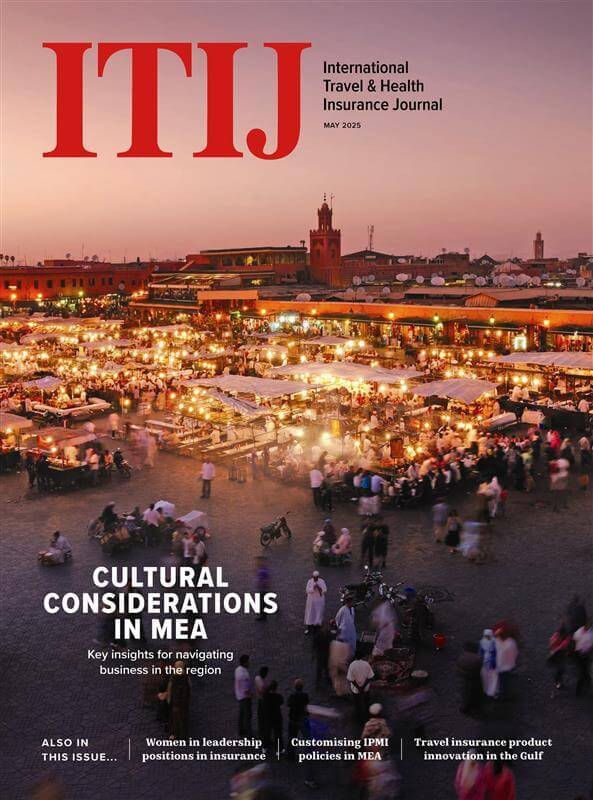
In this issue of ITIJ we consider cultural considerations and understanding in the Middle East and Africa; look at IPMI in the MEA region and the customisation of policies; and gain insights from woman in leadership positions who share the obstacles and opportunities they have encountered.
Alysia Cameron-Davies
Alysia is a copy writer for Voyageur Publishing.