Understanding the Middle Eastern healthcare market

Successful medical case management in the Middle East requires a firm grasp of the differences in language, culture, and regulation, as well as hospital quality metrics and the drivers of medical inflation
Medical system characteristics
The healthcare infrastructure in the Middle East varies from advanced, internationally accredited hospitals in the Gulf states to developing systems in parts of the Levant and North Africa.
Many Gulf Cooperation Council (GCC) countries have well-funded public hospitals for citizens, while expatriates rely heavily on private hospitals. In places like the United Arab Emirates (UAE) and Saudi Arabia, the private sector is expanding rapidly, and insurance is often mandatory for expatriate workers. The UAE and Saudi Arabia have compulsory health insurance for expatriates, creating a large insured population but also stringent compliance requirements. In contrast, some countries have less developed insurance penetration, meaning insurers may face challenges with cash flow and direct settlement agreements.
What is the best way to approach working with hospitals that may be less accustomed to processes and protocols used by Western insurance companies? IHH spoke to Lara Helmi, Managing Director of CONNEX Assistance, about the need for mutual respect and cultural sensitivity. “Our case managers and network teams dedicate significant time to developing these relationships – clearly communicating expectations, providing support, visiting facilities regularly, and maintaining flexibility where appropriate,” she said. Moreover, flexibility, patience, and understanding are key to bridging operational gaps. She added: “Many providers are both capable and willing to align with international standards; they often simply need clear guidance and the opportunity to establish trust with a reliable partner. By taking a collaborative, locally informed approach, we’re able to deliver consistent, high-quality outcomes while supporting the ongoing development of healthcare providers across a diverse list of countries.”


Accreditation, quality standards, and costs
Top-tier hospitals in the UAE, Qatar, and Saudi Arabia often hold Joint Commission International (JCI) accreditation. According to Omnia Health Insights, JCI accredits more than 200 healthcare organisations in the UAE, spanning hospitals, ambulatory clinics, laboratories, long-term care, primary care, and more. In Saudi Arabia, there are over 100 accredited healthcare facilities of various kinds. Access to good-quality healthcare, then, might not be a problem – in fact, assistance companies might be spoiled for choice! So, how can this plethora of healthcare providers be narrowed down?
While international accreditation can serve as a useful starting point in the provider selection process, it is by no means the sole determinant of quality. Helmi pointed out: “ISO standards are valuable for assessing procedural consistency, process management, and business continuity.In some countries, strong national accreditation bodies also play an important role. Egypt’s General Authority for Healthcare Accreditation and Regulation (GAHAR), for instance, closely mirrors JCI standards and provides a reliable preliminary indicator of quality within that healthcare facility.”
Sebastien Bedu, General Manager, Middle East, at International SOS, concurred: “Accreditations such as JCI, CBAHI, or ISO remain valuable indicators of a healthcare facility’s commitment to structured quality systems. In the Middle East and Africa, however, they serve more as a starting point than a guarantee.”
For medical assistance companies, accreditation can – and should – be a good place to start. But on-site audits and internal quality assessment processes are the only way for a network manager to be confident in their decision to add a hospital to its list of approved providers. And in the world of international patient care, these audits need to carefully consider medical outcomes as well as practical areas. Helmi highlighted that factors that could affect case management and the overall patient experience include communication and flexibility, which might not be measured by a typical accreditation agency, nor would the issue of how to navigate complex bureaucracy.
Bedu said: “Our network development managers always follow through with robust, in-house due diligence audits. These cover areas such as clinical governance and standards of care, billing transparency, patient safety and feedback, emergency response capabilities, and alignment with international insurance practices.”
Ultimately, Helmi added, safety, transparency, and optimal patient outcomes need to be the priority in every provider partnership. International accreditation is just part of that puzzle.

Cultural considerations
While English is widely used in medical settings in GCC countries, Arabic remains the official language. Insurance documentation, consent forms, and discharge summaries may need bilingual handling. Medical assistance companies should therefore be prepared to handle more claims forms and medical reports in Arabic, and adjust the skill sets of their coordinators accordingly.
Islam is the dominant religion, influencing many aspects of healthcare delivery, from patient expectations to operational protocols. For example, gender dynamics: in some countries, cultural norms dictate that female patients may prefer or even require treatment from female healthcare providers, especially in sensitive specialties such as obstetrics and gynaecology. Hospitals often have gender-segregated wards or waiting areas.
Families frequently play a central role in medical decision-making. Physicians may need to communicate with family elders before proceeding with certain treatments, especially for serious diagnoses. This can affect the speed of decision-making and claim approvals.
Approaches to palliative care, organ donation, and ‘Do not resuscitate’ (DNR) orders are shaped by religious interpretations. Insurers should be aware that procedures considered routine elsewhere may require special permissions or be culturally unacceptable.
Stand out from the crowd
For CONNEX Assistance, the core differentiators that make a hospital stand out lie in three key pillars: clinical quality, operational reliability, and ethical billing. If a hospital wants to be included in a medical assistance network, they need to have the right approach. For CONNEX, value is placed on responsiveness, flexibility in emergencies, and a proactive stance on resolving issues. “If a hospital is aligned with our values and demonstrates consistent patient-centred care, they stand out to us as a long-term partner – even if they don’t yet tick every box in terms of international accreditation,” concluded Helmi.
For International SOS, the differentiators go far beyond size or branding. Bedu told IHH: “What makes a hospital a strong candidate for our network is a combination of clinical excellence, operational transparency, geographic relevance, and, above all, the quality of the patient experience.” Ultimately, the most successful partnerships come from hospitals that share a collaborative approach to international patient management. Bedu added: “Those willing to work with us on cost containment, direct communication between medical teams, and flexibility in crisis situations become long-standing, trusted partners in our network.”

Management of price controls and billing
Some countries have regulated medical tariffs, while others allow market-driven pricing. In Saudi Arabia, the Council of Health Insurance (CHI) sets standard pricing guidelines for many services. In the UAE, certain emirates regulate claims formats and reimbursement timelines.
Identifying the primary drivers of cost inflation in the Middle Eastern healthcare market is key to understanding the best ways of containing costs for medical claims. Cost inflation in the region is driven by several key factors: rising demand for high-end healthcare services, increasing costs of advanced medical equipment, a growing expatriate and medical tourist population seeking premium care, and, in many cases, a lack of effective price regulation, Helmi told IHH.
Laila Al Jassmi, Founder and CEO of Health Beyond Borders, shared her point of view about other drivers of medical inflation in MEA, which include:
- Lifestyle diseases: in young countries with huge cultural and economic development, the rise of diabetes and cardiovascular diseases is high, which can require long hospitalisation
- Ageing population: as healthcare is advanced and quality of healthcare services is high it contributes to an increase in quality of life, and adjusted life expectancy has increased from 65 to 75 years old
- Shortage in healthcare manpower: due to a smaller national talent pool, countries are dependent on expatriates, which contributes to the high cost of retention and recruitment
- Mandatory health insurance: this has led to overutilisation of some services like unnecessary diagnostic tests.
Amber Musson-Thorp, Head of Corporate Consulting, EMEA, for Lifecare International, shared her thoughts on medical inflation in the region: “The primary drivers of cost and inflation in the region are concentrated in a few areas – and these need to be fully understood before they can be effectively addressed. Too often I’m asked, ‘What should insurance products look like in the Middle East?’ when in fact that’s not the right starting point.
“The Middle East is a vast and diverse region, and the pace of healthcare evolution varies widely – from Egypt to Kuwait to Oman – and this complexity should never be underestimated. Yet one common factor across many markets is the role of overtreatment, fraud, waste and abuse, and the access to sought-after, expensive facilities with very little gatekeeping. While the root causes differ from country to country, the outcome is the same: rising inflation. For insurers seeking sustainable growth, this is the critical challenge that demands attention.
The primary drivers of cost and inflation in the region are concentrated in a few areas – and these need to be fully understood before they can be effectively addressed. Too often I’m asked, ‘What should insurance products look like in the Middle East?’ when in fact that’s not the right starting point.
“In my view, one area to sharpen our focus is tackling the burden of chronic conditions. While chronic disease and comorbidities are global issues, their prevalence in the Middle East is disproportionately high. This makes it a natural starting point for more proactive strategies. With some of the healthtech solutions now available, insurers and healthcare systems have a real opportunity to intervene earlier, improve outcomes, and reduce costs – a win for both patients and the industry.”
Understanding each of these potential cost drivers and how they are affecting each country, though, is key to medical case management. In markets such as Saudi Arabia and the UAE, the rapid expansion of state-of-the-art private hospitals has significantly increased the cost of care. In Turkey and Egypt, high demand for quality healthcare, particularly from large volumes of tourists, combined with inconsistent care standards and minimal price regulation, has led to inflated pricing.
No matter what the drivers, though, international travel and private medical insurance providers need to be proactive, engaging early with their medical partners. CONNEX Assistance’s toolbox includes average case cost benchmarking by country, real-time medical oversight during treatment, and rigorous auditing of medical bills to flag unnecessary or inflated interventions.
Al Jassmi advocates a multi-disciplinary approach to cost management in healthcare, saying: “I believe stressing the gatekeeping model where encouraging referrals through primary physicians is one way of containing cost which is not a [current] practice here. Shifting from a fee-for-service model to value-based care and thus incentivising healthcare providers/physicians for good outcomes is yet to be implemented.” She added: “Encouraging prescriptions of generic drugs over branded medicines is another way to contain costs.”

Managing currency volatility
While the Gulf states use stable currencies pegged to the US dollar, other markets may face currency volatility, requiring insurers to factor exchange rate risks into contracts. Payment cycles can also be longer than in Western markets due to administrative approvals and hospital billing practices.
Managing currency risk requires real-time oversight and an adaptive operational framework. Finance and operations teams must work in close coordination, leveraging multi- currency accounts to hedge against sharp fluctuations and reduce exposure to risk, said Helmi. Relying on an extensive network of trusted local representatives, whose role includes managing payments in local currencies and facilitating smooth case handling, is also key, she said.
“By enabling instant payments in local currencies and utilising accounts in multiple denominations, we’re able to reduce delays, maintain provider trust, and ensure service continuity,” Helmi told IHH. “This approach not only supports cost containment strategies for our clients but also ensures timely and fair reimbursement for local providers.” And this last point is so crucial for maintaining good relationships with providers – prompt payment of bills is an ongoing bugbear for healthcare facilities working with insurance companies, so being known as a prompt payer can do wonders for relationships!
Financial and regulatory environment
For insurers seeking to boost their visibility and extend their reach in the Middle Eastern marketplace, where the potential for growth in the health insurance sector is significant, it’s worth noting that each Middle Eastern country has its own regulatory authority overseeing health insurance, with varying levels of oversight and enforcement. Al Jassmi agreed that the main barriers for Western companies seeking to gain a foothold in MEA countries were the differences in regulation and policies between GCC and other Middle East countries. Furthermore, she noted that culture and diversity were different country to country, so need to be understood by new entrants to the markets; how consumer demand for services varies can also be a challenge when it comes to scaling a business up or down.
Musson-Thorp added: “The Middle East insurance market still has significant capacity for greater participation from Western insurers, and we believe there is a strong case for increased presence. The key challenges lie less in demand and more in navigating compliance and licensing requirements, while ensuring that growth remains sustainable within highly competitive market dynamics.”
Insurers must comply with local licensing requirements to operate or partner with healthcare providers. For instance, the Dubai Health Authority (DHA) and Abu Dhabi’s Department of Health (DoH) maintain strict approval systems for insurance products and provider networks. Building these networks requires a deep understanding of local providers and current utilisation of them, said Al Jassmi.
the main barriers for Western companies seeking to gain a foothold in MEA countries were the differences in regulation and policies between GCC and other Middle East countries
Regulators may provide formal dispute resolution channels. In the UAE, the DHA and DoH can mediate disputes between insurers and providers. Insurers should prepare for possible regulatory intervention in claim disputes, especially when denial rates are high.
While barriers to entry remain for insurers or medical assistance companies seeking to expand their horizons into the MEA region, there is still much to be gained from the marketplace. Al Jassmi said: “There is a huge potential for growth and entry into the market, especially in GCC as we have a growing population and increasing chronic disease burden. The government in GCC supports development in medical infrastructure, especially for AI and digitalisation.”
She also noted the introduction of a law guiding public–private partnerships, which brings added value to those investing, particularly in healthcare.
For Musson-Thorp, “the region presents significant growth potential, though the scale and nature of the opportunity vary across territories depending on the stage of market evolution. For example, while Bahrain, Oman, and Qatar are only in the early stages of implementing mandatory health insurance schemes, Saudi Arabia – where such schemes are already established – continues to represent a tremendous opportunity, fuelled by its ambitious growth projections and scale.”
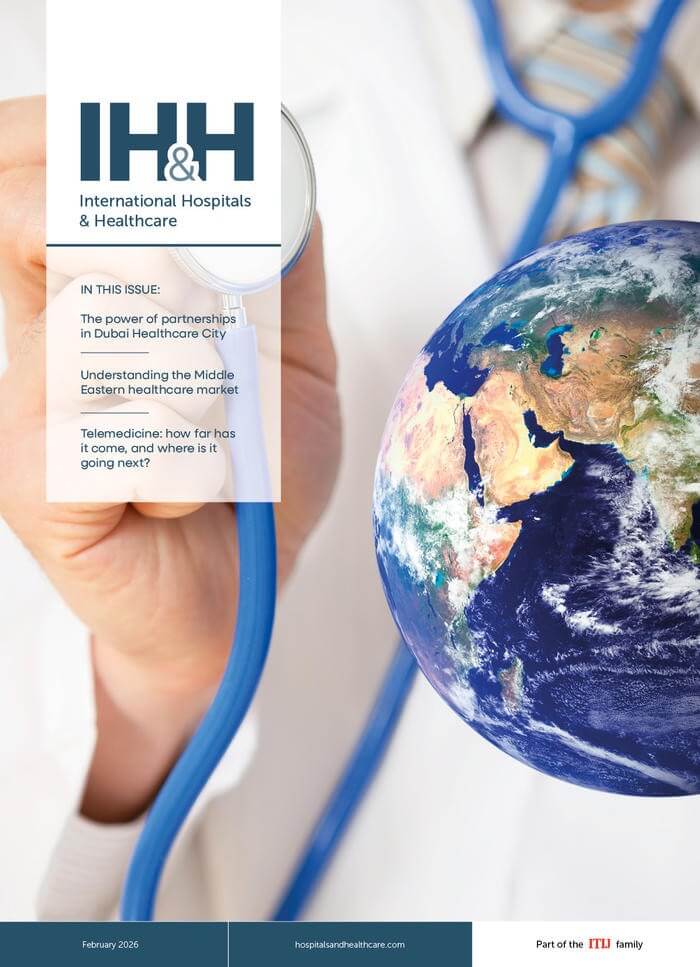
February 2026
Issue
The first edition of International Hospitals & Healthcare for 2026 includes deep dives into healthcare provision and quality in Dubai’s Healthcare City, the need for careful medical case management in MEA markets, access to high-quality healthcare in South America, and so much more!
Mandy Langfield
Mandy Langfield is a Director of Palladium Media Partners and former Publishing Director at Voyageur Group. She has written extensively on international travel and health insurance, medical assistance provision, and air medical transportation.












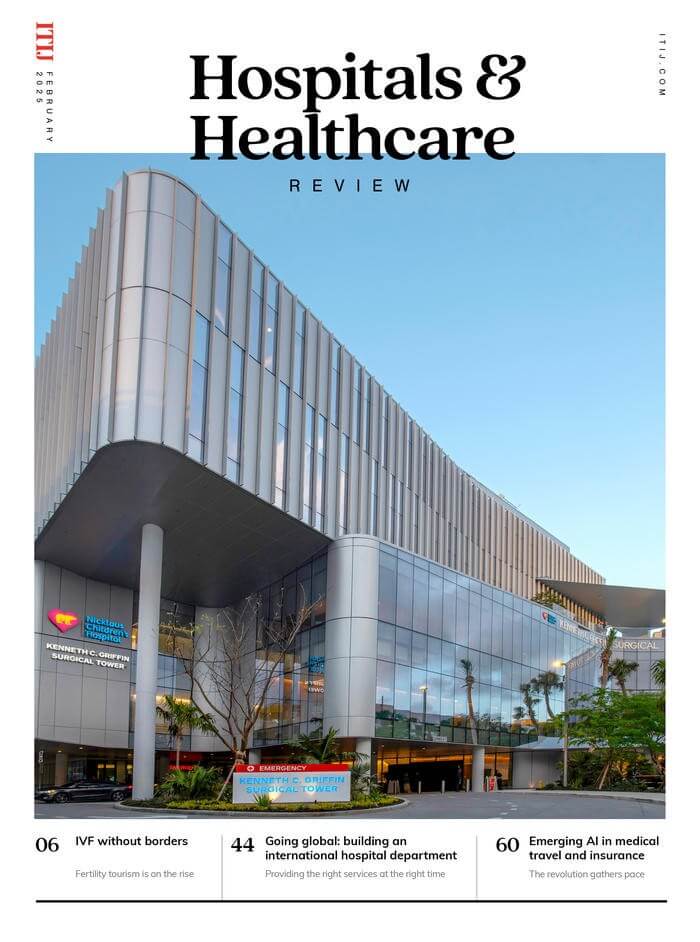
February 2025
Issue
Offering readers a deep dive into the issues facing providers and payers of healthcare services around the world. Cost containment, international patient department development, the role of AI in healthcare delivery and more.