
Travel companions on-board: a paediatrician’s perspective

Alex Veldman, Medical Director at Unicair, tells ITIJ about the advantages and limitations of accepting relatives on board of long-distance international flights
In today’s paediatric intensive care units (PICUs), it is routine for parents or caregivers to remain at the bedside, even during invasive procedures or emergencies such as CPR. This shift toward family-centred care is supported by a growing body of evidence showing that parental presence reduces psychological trauma, improves understanding of the medical situation, and strengthens trust in the care team. Studies consistently demonstrate that such involvement is beneficial for children and parents.
The principle that the presence of a trusted individual enhances patient wellbeing translates meaningfully into the domain of long-distance international aeromedical transport, especially in high-stress scenarios. Whether transporting a critically ill child or an 80-year-old patient injured while travelling abroad, the inclusion of a close family member – such as a spouse of 50 years – can play a therapeutic and stabilising role.
A travel companion
Air ambulances, by design, are clinical, confined, and unfamiliar – an environment that can amplify fear and anxiety in already vulnerable patients. A familiar face on board can offer comfort, reassurance, and continuity, just as it does in the PICU. Relatives can assist in communication,provide valuable medical history, and help in decision-making processes during the flight. Furthermore, leaving a vulnerable elderly spouse behind, who may be unfamiliar with travelling alone and confronted with language barriers may create stress, discomfort and significantly increase workload for the assistance centre.
The idea of a travel companion finds an intriguing parallel in US military medevac protocols, particularly for personnel with psychiatric or combat stress injuries. In such patients, the military frequently does assign a ‘battle buddy’ to accompany the service member during aeromedical evacuation. Peer-support has been proven to reduce agitation, increase compliance,and lower the likelihood of in-flight decompensation. The battle buddy model affirms that a trusted human connection is often as critcal as medical intervention during patient transport – especially when the injury is not purely physical.
June 2025
Issue
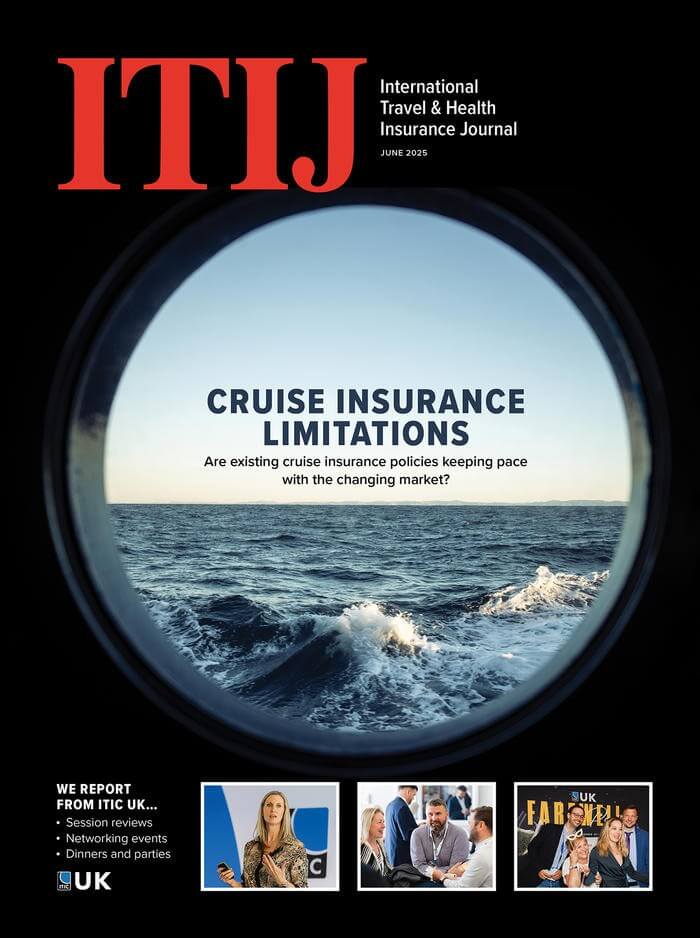
In this issue of ITIJ we examine the repatriation of mortal remains, and look at the trends, challenges and local expertise required. We also consider cruise insurance limits and exclusions and ask whether the latest cruise insurance policies are keeping up with what the travel market is offering.
Editorial Team
The Editorial Team updates the ITIJ website daily, and works on features for the print edition. With expert industry knowledge and years of experience in writing about complex travel insurance issues, the Editorial Team is ready to investigate and report on the topics that matter most to ITIJ's readers.
