
Travel assistance in a high-cost environment: why provider networks are becoming strategic

Carla Stern, Global Provider Network Director at Iris Global Soluciones, tells us that as medical inflation is climbing, smarter networks are the answer
Medical cost inflation is changing the economics of healthcare. According to WTW’s 2026 Global Medical Trends Survey, medical benefit costs are projected to increase 10.3% globally in 2026, following increases of 10.0% in 2025 and 9.5% in 2024. Europe is expected to see an 8.2% increase, while Spain is projected at 8.4%. WTW also reports that 56% of global insurers expect medical cost trends to increase further.
For international health insurers and assistance organisations, this creates a strategic challenge: how can care be delivered across multiple markets while maintaining quality, accessibility and a sustainable cost base?
Travel assistance provides a relevant example. When a member requires medical care abroad, the cost of an episode can vary significantly depending on the provider, country, treatment pathway and level of care. Managing this variability requires more than negotiating individual claims. It requires a data-driven provider network strategy.
From network management to network optimisation
A global provider network should not be viewed simply as a list of hospitals and physicians. Its strategic value comes from its ability to influence where care is accessed, how it is priced and how effectively it is coordinated.
Effective network governance establishes standards, performance indicators and accountability across markets, while allowing local teams to respond to different healthcare systems and provider landscapes.
Provider segmentation is important. Providers should be assessed according to factors such as cost, quality, volume, clinical capability, accessibility and member experience. This enables network leaders to differentiate partners from transactional providers and focus resources where they can create value.
Moving beyond price: value-based negotiations
As medical inflation continues, simply negotiating lower tariffs is unlikely to be enough. Commercial agreements should increasingly consider not only price, but also the quality and outcomes generated by each healthcare partner.
A provider with a higher nominal tariff may represent better value if it delivers stronger outcomes, avoids unnecessary interventions and provides a more efficient care pathway. This creates an opportunity for performance-based contracting, linking elements of commercial terms to quality, efficiency and service outcomes.
Data can support this evolution. Claims data, provider performance, utilisation patterns and member feedback can identify cost drivers, opportunities for renegotiation and areas where alternative care pathways may be appropriate. #
Technology can reinforce the model. Telemedicine and digital triage can help determine the care pathway before a member accesses a facility. Artificial intelligence (AI)-enabled analytics may increasingly support the identification of cost anomalies, emerging risks and intervention.
Cost containment without compromising care
Sustainable cost containment comes from improving the relationship between price, quality and utilisation.
Strong international networks combine global governance, local market intelligence, provider segmentation and value-based commercial relationships.
Their role extends beyond contracting: they connect clinical delivery, financial performance and long-term sustainability.
As medical inflation continues to pressure healthcare organisations, network management is becoming a strategic capability for insurers. The future of travel assistance will depend on organisations that can manage complexity at scale and use data, partnerships and performance management to deliver the right care at the right cost.
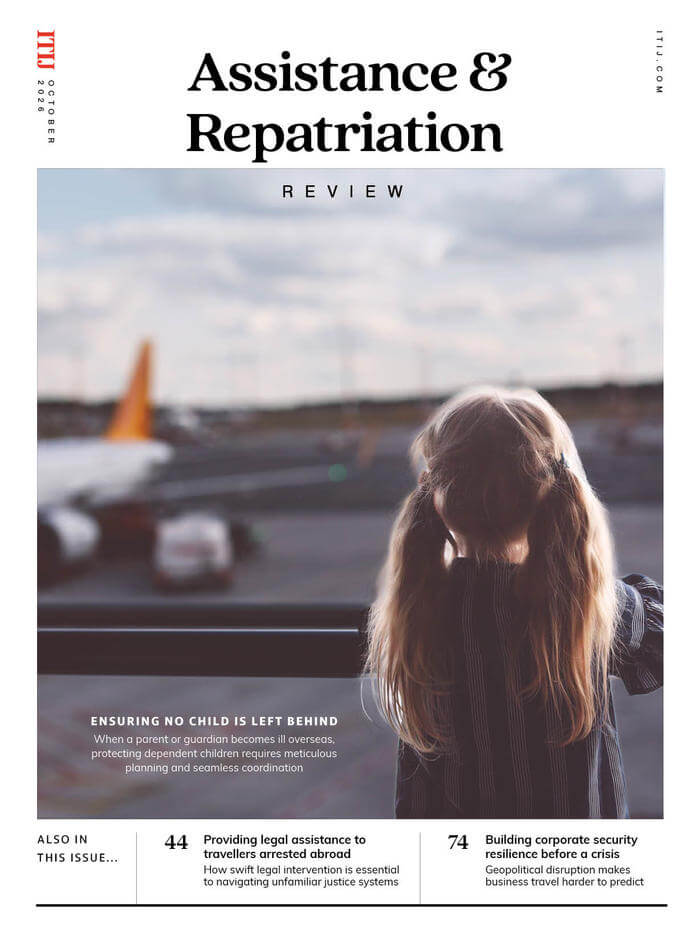
October 2026
Issue
When a parent or guardian becomes seriously ill overseas, assistance providers face a complex challenge that extends well beyond clinical care. Although these cases are relatively rare, in this issue we look at how safeguarding dependent children requires careful planning, legal awareness, and close international coordination.
Editorial Team
The Editorial Team updates the ITIJ website daily, and works on features for the print edition. With expert industry knowledge and years of experience in writing about complex travel insurance issues, the Editorial Team is ready to investigate and report on the topics that matter most to ITIJ's readers.