Transport of a neonatal ICU patient in Brazil

Dr Pedro Gontijo from Brasil Vida recounts the successful transfer of a newborn
On August 29, 2024, a complex aeromedical transport operation took place in Brazil. A newborn (NB), just six hours old, was urgently transferred from Gurupi, Tocantins to Palmas, Tocantins aboard a King Air B200 aircraft. The onboard medical team consisted of Dr Pedro Gontijo and aeromedical nurse Wesley Silva, both specialists in neonatal intensive care.
The newborn was diagnosed with a severe congenital heart defect that had not been previously identified. This condition led to respiratory and hemodynamic instability in a location without neonatal ICU support or cardiac surgery infrastructure. Given the severity, immediate air transport to a specialised centre was crucial for survival.
The newborn was diagnosed with a severe congenital heart defect that had not been previously identified
Initial assessment and transport necessity
At birth, the newborn was classified as full-term and appropriate for gestational age (AGA). However, within the first hour, the infant developed respiratory distress and cyanosis, requiring mechanical ventilation with high settings. Vital signs indicated a critical condition: oxygen saturation of 70%, heart rate of 180 bpm, and blood pressure of 60/30 mmHg.
The hospital lacked essential resources such as an echocardiogram and prostaglandin infusion, crucial for cardiac support
The hospital lacked essential resources such as an echocardiogram and prostaglandin infusion, crucial for cardiac support. To provide temporary stabilisation, a continuous infusion of furosemide was administered. Due to rapid deterioration, the medical team prioritised urgent air transfer to ensure specialised treatment.
Aeromedical logistics and transport
Given the lack of local treatment options and the urgent need for neonatal ICU care, the medical team discussed the situation with the newborn’s family. They explained that all available resources had been exhausted and that immediate transfer was necessary. After obtaining informed consent, the patient was taken by ambulance to the aircraft.
The flight covered 191km in 35 minutes. However, 15 minutes after takeoff, the newborn experienced bradycardia, followed by cardiac arrest with pulseless electrical activity (PEA). The medical team swiftly adjusted ventilatory settings and initiated cardiopulmonary resuscitation (CPR). Two cycles of epinephrine were required before spontaneous circulation returned. To stabilise hemodynamics, a continuous infusion of epinephrine was initiated. This event highlighted the importance of a highly trained medical crew capable of rapid response in critical situations.
Patient handover and conclusion
With the newborn stabilised, post-cardiac arrest care was maintained until arrival in Palmas. Upon landing, the patient was immediately transferred to a specialised medical facility. The receiving team emphasised the crucial role of timely aeromedical transport in ensuring the best possible outcome.
This case underscores the vital role of air ambulance services in critical care, particularly in regions with limited access to advanced medical support. The expertise and preparedness of the medical crew were decisive factors in the newborn’s survival, reinforcing the importance of aeromedical logistics in neonatal emergencies.
The expertise and preparedness of the medical crew were decisive factors in the newborn’s survival
Brazil’s vast geography presents challenges in the distribution of specialised healthcare. Many regions lack highcomplexity services, making air ambulance transport essential for critically ill patients. The successful coordination between frontline medical teams, families, and aeromedical providers is fundamental in saving lives and ensuring timely access to critical care.
March 2025
Issue
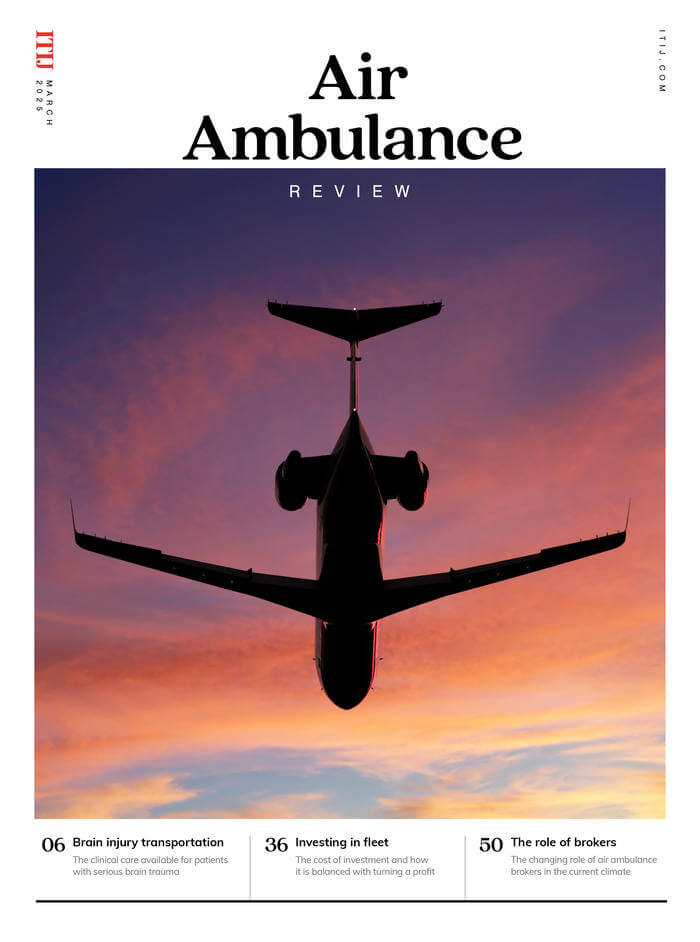
The Air Ambulance Review includes features on clinical care for ABIs; investing in fleet; the role of brokers in the air ambulance industry; and an accreditation update.
Editorial Team
The Editorial Team updates the ITIJ website daily, and works on features for the print edition. With expert industry knowledge and years of experience in writing about complex travel insurance issues, the Editorial Team is ready to investigate and report on the topics that matter most to ITIJ's readers.