
Telehealth for international students

Alysia Cameron-Davies explores explore how international students access telehealth, examining its benefits, barriers, and affordability, and the importance of building customer trust
Telemedicine has become a transformative tool, giving people access to healthcare from almost anywhere in the world. Adoption surged following the Covid-19 pandemic, embedding remote care into mainstream healthcare.
For mobile populations, including international students, the benefits are particularly significant, though some barriers remain. Telehealth also opens important avenues for mental health support, helping students abroad manage challenges such as culture shock, isolation, and integration into a new environment.
Breaking down barriers to access
Experts agreed that awareness and understanding remained the biggest barriers to telehealth adoption among international students. Many students are unsure what services are available, when to use them, and how they connect to the insurance coverage they have purchased.
Shira Cohen, Product Manager at Air Doctor, described this as a “lack of clarity at the moment of need”, noting that many students remained uncertain about eligibility, coverage, and how quickly care could be arranged when they fell ill.
Nicoletta Pinto, Global Partnerships Strategist at Guard Me Europe, echoed this, saying: “Many students don’t realise support is available, don’t know when telehealth is appropriate, and worry it won’t be taken seriously.” She noted that uptake improved when telehealth was “positioned as the clear first step, access is frictionless, and students are reassured that escalation to in-person care is straightforward and supported as part of the wider protection they’ve purchased”.
How telehealth is integrated into the student experience also matters. Cohen explained: “From a product and user experience (UX) perspective, uptake improves significantly when telehealth (or video consultation) is embedded into the student journey, rather than being treated as an add-on. Early onboarding, clear user journeys, simple non-clinical language with empathetic communication tailored to the medical situation, and reminders of access at high-stress moments consistently drive higher engagement.” She agreed that clear escalation to in-person care was also “critical to building trust and sustained adoption”.
Carol Foley, Co-Founder of Fairmount International, highlighted initiatives already helping students, noting that many international student and study abroad programmes now included a health orientation covering insurance benefits and practical guidance on accessing care within the local health system. She said this type of preparation helped students feel more comfortable seeking medical attention when it was required.
However, practical and regulatory barriers remain. Laura Hilton, Co-Founder of Fairmount International, pointed out
that in some destinations, telemedicine capacity was limited, while, in others, local regulation restricted its use, for example, where consultations were only permitted after a prior doctor–patient relationship had been established.
Many students are unsure what services are available, when to use them, and how they connect to the insurance coverage they have purchased
She added that even in countries with well-developed national e-prescription systems, international students might struggle to have prescriptions filled if they were not part of the socialised health system. Cross-border prescriptions can also be problematic. “Cross-border prescriptions within the EU may theoretically be possible,” she stated, “but in practice, students may have trouble filling them if the pharmacist is unfamiliar with the process.”
Pinto drew attention to the wider support network around the student, noting that schools, agents, and parents might encourage traditional pathways, such as visiting a doctor in person, even when telehealth could be a more efficient first step, depending on the symptoms. She emphasised that “clear guidance, education, and reassurance for these stakeholders – alongside the student – can make a meaningful difference to uptake”.
Leslie Reynolds, University Relations Manager at International Student Insurance, suggested several practical ways to improve engagement among international students, including upfront education about available services, periodic reminders throughout the year, guidance on which conditions are suitable for telemedicine versus in-person care, and cultural and language support options.

Cultural and language considerations
Cultural expectations and language barriers significantly influence telehealth adoption. Reynolds noted that telemedicine was still a recent, largely Western concept, which could feel unfamiliar to many students.
Pinto explained: “Some (students) expect face-to-face reassurance, have different norms around prescriptions, or aren’t familiar with GP-style pathways, while language anxiety can also lead to delayed care.”
Cohen added that in many students’ countries of origin, in-person care was considered the most trusted option, and others might delay seeking medical advice due to cost concerns, stigma, or uncertainty navigating an unfamiliar healthcare system. She explained: “Telemedicine is most effective when it feels local, culturally aware, and human. At Air Doctor, we consistently see higher engagement when students can speak with doctors in their own language and feel understood rather than rushed. Trust builds when telehealth acts as a bridge to familiar care standards, not a purely digital substitute.”
Hilton concurred, describing trust as “key”. She noted that many international students default to visiting an emergency department, as this is a familiar and reassuring process from their home country. While telemedicine may seem convenient, students may not trust it when experiencing serious or unfamiliar symptoms, fearing their concerns won’t be taken seriously, questioning the virtual medical professional’s competence, or worrying that language barriers could impede communication.
Foley emphasised that cultural and language considerations affect both virtual and in-person care. She said: “Providers who treat a high volume of students will be well advised to have providers with multilingual skills, a balance of male and female providers, and a general sensitivity to cultural differences in accessing care.”
Reynolds added that telehealth could actually reduce language barriers compared with in-person visits, as students are able to consult with clinicians who speak their native language. She noted that educating students about these language options could help bridge gaps and suggested
that allowing them to choose a provider aligned with their cultural, religious, or linguistic background would be a powerful adaptation to better meet international students’ needs.
Pinto summarised the practical takeaway: “The most effective adaptations are multilingual access, choice of channel, plain-language explanations of local care pathways, and reassurance that escalation to in-person care is coordinated if symptoms require it.”

How telehealth compares to in-person care
Cohen explained that telehealth delivered the best outcomes when positioned as appropriate first-line care rather than a secondary option, describing it as fast, reassuring, and effective. She said it was particularly well suited for common, low-acuity conditions such as flu-like and respiratory symptoms, gastrointestinal issues, skin conditions, minor infections, and medication reviews.
However, Cohen noted: “In-person care remains essential for severe or worsening symptoms, injuries requiring physical examination or imaging, unclear or persistent diagnoses, and emergencies that need immediate escalation.” Clear triage and referral processes are critical, ensuring that students never feel “abandoned” when telehealth alone is not sufficient. She added: “Student perception improves significantly when outcomes are clear. Knowing that a video consultation can seamlessly lead to valid, local prescriptions, in-person referrals, or follow-up care significantly increases confidence and trust.”
Pinto concurred that telehealth delivered the best outcomes as part of a “blended care pathway”. She explained: “It is highly effective for timely triage, reassurance, and guidance for common, non-urgent issues, and it can improve access by removing barriers like appointments, travel time, and uncertainty about where to go. In many cases, it can also enable students to receive prescriptions online when appropriate, avoiding unnecessary in-person visits.” She stressed, however, that telehealth was not a substitute when a physical examination, imaging, or lab tests were required, or when symptoms indicated urgent treatment.
Foley highlighted that telehealth could match in-person care for certain conditions, and that many patients and providers had had success using telehealth for behavioural health issues. However, it is unsuitable for acute, chronic, or pre-existing medical conditions.

Affordability: cost matters
Affordability is a key consideration for international students, who often face tight budgets while paying for tuition, rent, and supporting themselves in a country that may have a higher cost of living than their home country. Cohen highlighted that the perception of the cost of telehealth services could impact adoption. “Telehealth adoption increases when coverage is clearly communicated, pricing is transparent, and students know there are no unexpected out-of-pocket expenses,” she said. “When telehealth is embedded into student insurance or university health plans and communicated proactively, students are far more likely to seek care early rather than delay treatment.”
Pinto agreed, explaining that cost certainty strongly influenced student behaviour. Many students may delay seeking help if they’re unsure of the cost implications or how reimbursement works. “Uptake improves when telehealth is clearly included, communicated as no extra charge, and easy to access, which encourages earlier engagement and can prevent a minor issue from becoming more complex,” she said.
Reynolds noted that students were unlikely to use telemedicine if it was no more affordable than an in-person visit. She explained that many international student plans and major carriers now include a set number of telehealth visits in response to growing interest and utilisation, while university plans may be less likely to cover telehealth to encourage use of the on-campus health centre.
In some destinations, telemedicine capacity is limited, while, in others, local regulation restricts its use
Pinto added that coverage varied by market and plan, but telehealth was increasingly bundled within student insurance and assistance models to reduce friction and support appropriate utilisation through triage. She outlined the approach at GuardMe, where telehealth is embedded within the policy alongside core medical and travel protections, ensuring students have a simple first step to access medical guidance and a supported pathway if in-person care is required.
Drawing on the insurer’s perspective, Hilton noted that providers had varying approaches to offering telehealth to university members. “Ironically,” she said, “some insurers worry that promoting telemedicine to students will result in more claims, as utilisation may increase.”


Protecting data: privacy and security for students
Data security and privacy are central to students’ trust in telehealth. Foley emphasised that protecting patient information was a fundamental obligation, whether consultations are virtual or in-person.
Building on this, Cohen noted: “Data security is foundational when it comes to these services, particularly for international students navigating healthcare abroad. Students need confidence that their medical data is handled securely, confidentially, and in compliance with global standards such as GDPR [the European Union’s General Data Protection Regulation].” She added that clear communication and partnerships with trusted insurers helped build trust and long-term engagement, noting that telehealth was not just about convenience, but also about alleviating the fear and uncertainty students might face.
Reynolds pointed to regulation as a baseline expectation. “HIPAA [the US Health Insurance Portability and Accountability Act] compliance is an important component of telemedicine, and all reputable telehealth providers use secure systems to schedule, communicate, and meet with patients.” She explained that many students travelled from countries with strict cybersecurity laws to destinations where regulations might be less stringent, meaning expectations and concerns around data protection were often high.
Pinto agreed that compliance was paramount but argued that more must be done to gain trust. “For international students, privacy is a trust issue as much as a compliance issue. Students need confidence that their medical information is protected, used appropriately, and only shared when necessary to coordinate care – especially when they are abroad and unfamiliar with local systems.” She outlined strong safeguards as “secure platforms, controlled access, encryption, auditability, data minimisation, clear consent and privacy notices, and robust oversight of third-party providers, aligned with applicable UK/EU data protection requirements.” However, she added that transparency was also vital and students must understand what data is collected, who could access it, and when it might be shared, for example, if a referral was required.
Cohen finished by saying Air Doctor believes the most effective solutions are ones that “blend secure, intuitive technology with human support and strong local medical networks, so students feel guided and protected, wherever they are”.
Conclusion
Telemedicine has transformed how international students access care, offering convenience, speed, and extended mental health support. Yet technology alone isn’t enough: adoption relies on trust, clear guidance, cultural sensitivity, and affordability. When these factors are addressed, telehealth can become an essential tool for students navigating healthcare abroad.
April 2026
Issue
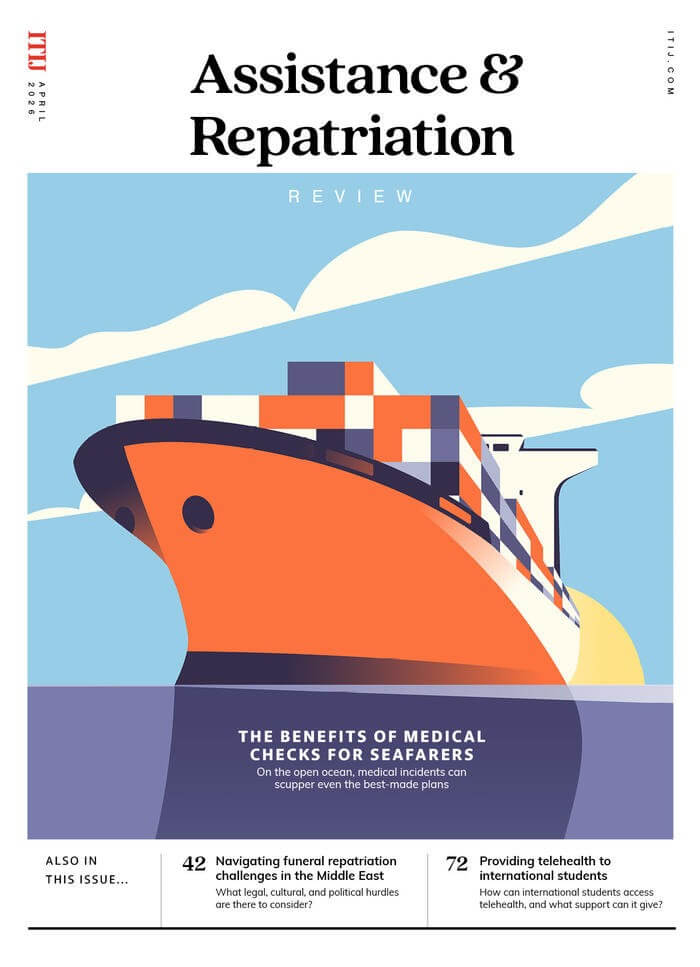
In the first Assistance & Repatriation Review of 2026, we explore the cultural, legal, and logistical intricacies of funeral repatriation in, around, and out of the Middle East. We also consider how pre-deployment medical assessments can save lives and sea voyages. The burgeoning demand for telehealth among students is covered in our third feature, plus we look at how companies are delivering services that meet that need.
Alysia Cameron-Davies
Alysia is a copy writer for Voyageur Publishing.