
The repatriation of mortal remains: industry growth, challenges, and regional insights

Given the complexities of local customs, regulations, staff training, and cultural considerations, Chloe Fox explores how providers are enhancing their services to ensure they are prepared for every challenge
The demand for repatriation of mortal remains (RMR) services is experiencing significant growth, driven by factors such as population expansion, longer life expectancy, and increased global tourism. As markets in countries such as Japan, China, and India undergo demographic shifts, the need for international repatriation services continues to rise.
Key industry leaders highlight the growing complexities within the sector, including infrastructure demands, escalating costs, and the necessity of navigating evolving local regulations. Here we give an in-depth analysis of the primary drivers behind the rising demand for RMR services, the challenges facing service providers, and the importance of strategic adaptability in a dynamic global landscape.
Growing demand for RMR services across regions
Samuel Tester, Operations Director at Homeland International, observed that growth has been steadily in line with death trends and population changes around the world. He believes the continued demand for Homeland International’s services might be attributed to an increasing number of global clients who trust it to support them with cases across the globe.
Fiona Greenwood, Operations Director at Rowland Brothers International, observed a “global rise in immigration due to more countries in a state of conflict, which is driving their population to leave in search of a safer and better environment for their families”.
She added that the travel insurance industry has seen an increase in companies offering RMR services. “This may be due to the shift in type of funeral arrangements within their country, which is driving diversity in the services they offer,” she suggested.
Robert Hoey, President of Funeral Support Services Japan, highlighted that tourism in Japan is currently at an all-time high, attributing this in part to the weakened yen. The cruise industry has also returned to normal, he said, with the company experiencing heightened demand for RMR for cruise deaths in recent months.
Population growth and increasing life expectancy rates are key demographic factors for Asian countries such as China, Japan, and India, added Elsa Sancho, Travel Assistance Network Manager at Iris Global.
Emerson De Luca, Managing Director of Albin International, touched on the influence of immigration: “Reports show a continued increase in immigration across the globe, and, despite the change in funeral practices where cremation is increasingly becoming a more preferred option for disposition of human remains, after Covid-19, cultural and religious beliefs still emphasise the importance of a funeral service or indeed the burial in their home country. Many families do opt for cremation abroad; however, they still wish for the ashes to be repatriated to their home country.”
He added that for Albin International, the partnership with insurance/assistance companies constitutes a driving force for growth, particularly as more services integrate with global insurance and logistics networks.
Sancho pointed out: “We are facing a global population increase, and life expectancy is extending, resulting in an ageing population. In recent years, we are witnessing an increase in the number of deaths, especially in regions with an older population. In pre-pandemic years, the number of deaths reached 58 million, and currently we are at 62 million, so the funeral industry continues to grow. It is estimated that from 2024 to 2030, it will have a growth of over 4%.”
Sancho noted: “The increasing prevalence of pre-planned funeral services among ageing populations, particularly in the US and Canada, has driven the growth of the regional industry. Regulatory norms, along with the region’s relatively high levels of disposable income, facilitate the expansion of funeral service offerings, including digital and eco-friendly options.”
Tester added that growth in RMR cases is “slow and steady” when compared with the growth in tourist numbers around the world. He said that the increasing popularity of destinations previously seen as dangerous has heightened the need for insurers to have sufficient network and capability across a wider range of locations.
“We are often requested to support from remote or off-grid locations,” he said. “Over time, with a surge in tourist interest, we then find these locations becoming more regular destinations, with improved infrastructure, so it is important to ensure we are constantly reviewing travel trends and the wider industry data to ensure we can adapt to increased volume and demands on local services.”
Hoey told us that his service had increased its staff over the past year to keep up with the increasing number of cases that it is handling. “We have also had to increase the number of cars in our fleet as we are constantly on the road transferring the deceased to our repatriation centre from various locations around Japan,” he said. “Quick response means that we always need to have a vehicle and driver available at short notice.”
More than one billion tourists travelled in 2024, with travellers moving to more atypical locations, said Sancho. As a result, assistance companies and RMR providers must consider many factors such as regulatory changes, local customs, increases in raw material costs, sustainability, and the advancement of new technologies to meet the ever-increasing demand for this service.
“This causes professionals in the sector to increasingly require greater flexibility and greater knowledge of the legal regulations governing each country to be able to provide the service, even adapting their facilities to offer more type of services,” she said.
To meet rising demand, Greenwood explained that Rowland Brothers leverages its bespoke case management system to efficiently handle a wide range of case types, ensuring consistent service quality despite the growing number of tourists and expats. “With our BSI ISO 9001 accreditation, all processes, risks, procedures, governance are reviewed and updated on an annual basis,” she said. This enables them to continuously adjust where needed to accommodate any increases in service delivery.
Managing delivery costs
De Luca believes repatriation companies across the globe are experiencing a rise in suppliers and flight costs. “Airline fees for transporting human remains have escalated, influenced by factors such as fuel prices and logistical complexities,” he said.
Tester agreed that since the pandemic, and subsequent geopolitical events, flight costs have become more expensive globally: “In Portugal we have seen flight costs almost double for direct flights back to other European airports. Typically, such price rises have only really been applied to long-haul flight routes out of African countries.”
However, he observed that substantial cost increases are apparent only for flight routes to certain areas. Aside from flight rates, he believes costs have been steady around the world: “We have seen incremental costs to customs and airport charges. However, the fees imposed by funeral providers around the world have risen only marginally.” Part of this could be due to increased competition. “There are more RMR providers available in most countries than before and this has led to price-based market entry, which keeps costs competitive,” he noted.
In recent years, we are witnessing an increase in the number of deaths, especially in regions with an older population
Hoey added that Japan is seeing special pivot rates used in air cargo (the minimum chargeable weight for a specific type of container) being charged on air freight more frequently, which contributes to rising RMR costs. “We need to check various airlines all the time for the best rates,” he said. “Occasionally we need to delay the RMR to get a flight without a pivot charge. It’s a fine line when balancing quick RMRs with cost performance. This is why it is important for an assistance company to use an experienced provider who can handle these challenges.”
Emphasising the importance of not compromising on quality when mitigating costs, De Luca added: “If unsuitable products were used for embalming, the quality of embalming would be poor, having a direct impact on the body and consequently on their family as this would restrict the possibility of them viewing their loved one.” He suggested that a robust procurement system is key, with proper research as well as product testing. “Adhering to international and local regulations requires meticulous attention to documentation and procedures, often leading to increased administrative costs,”
he added.
“Albin International uses specialised software tailored for repatriation logistics to enhance the reliability and efficiency of its processes. Comprehensive training from the International Air Transport Association (IATA) also helps ensure the workload is as efficient as possible, which in turn helps to reduce costs,” explained De Luca.
Adapting to local regulation changes
RMR providers are impacted not only by the increase in global costs, but also by technological developments and regulatory changes, which mean that individuals are looking for new ways to say goodbye to their loved ones.
Sancho highlighted the increasing popularity of digitalisation, driven especially by the younger population. “There is an increasing demand for live-streamed funerals, management of farewells through social networks, and something that is increasingly requested: the erasure of the digital footprint of the deceased,” she said.
“Sustainability is a rising priority, with the [Spanish] population demanding environmentally friendly funeral practices, highlighting the sector’s commitment to adapting to these values and practices, such as ecological caskets,” she added.
In Spain, when transferring deceased individuals, if the family’s wish is to cremate at the destination, they must follow the local regulations, which vary between Spain’s autonomous communities. “Most of them stipulate that cremation must be carried out in ecological coffins,” said Sancho. “If the coffin did not leave the origin in an ecological coffin, it must be changed upon arrival in national territory. If the coffin does not meet this requirement, it must be replaced. Typically, the cost of this substitution is covered by the deceased’s insurance if available. If there is no insurance, the family must bear the cost.”
Tester noted that there is great variety in how local regulations are imposed. “Some locations still look for Covid-19 results before issuing paperwork allowing repatriation to go ahead. Some have advanced methods for managing autopsies and coronial investigations.
“I think there is still a lot of room for governments to develop, using technology to provide a better service for grieving families,” he added, before elaborating: “Online or remote death registration needs to be the aim. There are still too many countries, including developed economies such as the UK, who require somebody known to the deceased person to register the death in person. There are often solutions to move around this; however, for family members not present in the country of death, it adds further challenge to an already difficult time.”
Hoey said that local regulations haven’t changed in his region. However, Funeral Support Services speaks with embassies and local government offices regularly to make one another aware of the difficulties they are facing when handling repatriations. “Every year we invite embassies to come for a tour of our facilities, which gives us all a chance to get to know each other better,” he said. “Small rural government offices are occasionally unaware of the procedures for registering the death of a foreign person, so we find ourselves advising them through their own process.”
De Luca noted that currently, there are no specific changes to the regulations concerning the repatriation of mortal remains from the UK. “On the other hand, consular requirements for repatriations are constantly evolving,” he said. “Albin International keeps a close eye on any changes that can affect the repatriation process. Internal communication and training, once again, play an important part of day-to-day operations to ensure the team is fully abreast of any change in regulations.”
Engaging with cultural and religious practices
As travel rates are rising across the world, particularly in the Middle East and North Africa (MENA) and Asia-Pacific (APAC) regions, it is important to understand and respect local cultural and religious traditions and practices to provide a high standard of RMR.
Tester reflected: “We have seen significant growth in the MENA and APAC regions of late. During this time, the service provision for RMR has improved drastically. Saudi Arabia continues to attract more and more visitors, the Philippines becomes more popular by the year, and other locations across both regions now see visitors from all over the world.”
More than one billion tourists travelled in 2024, with travellers moving to more atypical locations
However, he said that client expectations can often be unrealistic, largely since people expect the process to run in a manner that they are used to experiencing in their home country. He suggested: “It is the RMR provider’s responsibility to help educate clients immediately regarding expectations and to be clear with the client as to how the repatriation process will work in that country. Each country is different, with its own culture, laws and regulations which affect how a repatriation will unfold.”

Differentiating services to remain competitive
Tester emphasised the importance of remaining adaptive as an organisation to the market and the global landscape. “It is important for us to remain attuned to global affairs and the impact this has on travel routes, migration and tourism, so that we are prepared for any repatriation that we are requested to support with,” he said.
“We are trusted to support with cases from anywhere to anywhere in the world. Some of these locations and routes have large volumes; other less trodden routes may only see us support once in a decade. This means we need to have solutions fit for everywhere, with a team who are prepared to support, whatever the situation.”
He added: “Aside from repatriation processes, we look to work with technology to ensure we can work efficiently, around the clock. We are constantly evolving the technology we use, developing an in-house, bespoke customer relationship management (CRM) system called eFD, which helps our team stay organised and able to access the information necessary at any time, providing a streamlined repatriation process for any client.”
To remain competitive, RMR companies must invest in advanced technology, maintain a flexible approach to service delivery, and ensure ongoing staff training and multilingual capabilities
Funeral Support Services provides multilingual staff to support families in their native languages whenever possible. “We find that this makes a big difference as families are distressed and any comfort that we can give them is most appreciated,” observed Hoey.
“We believe in continuing education as well,” he added. “We completed the IATA Compassionate Transportation course at the end of 2024. This has enabled us to be more qualified when dealing with international repatriations.”
To remain competitive, Greenwood stressed the importance of taking a proactive approach. She said that Rowland Brothers does this by ensuring “all of the tools available to our team are constantly updated, country regulations are continuously monitored and updated, risk assessments are up to date, our process maps are updated.” She also underscored the value of total transparency and close communication with clients throughout every stage of the repatriation process.
Conclusion
In conclusion, the global demand for RMR services is on a steady upward trajectory, driven by demographic trends, rising tourism, and shifting cultural expectations. Industry experts highlight the growing need for providers to adapt to increasing operational costs, evolving regulations, and complex logistical challenges.
To remain competitive, RMR companies must invest in advanced technology, maintain a flexible approach to service delivery, and ensure ongoing staff training and multilingual capabilities. As the market expands, staying ahead of regulatory changes and cultural nuances will be essential for service providers to effectively meet the demands of a diverse, global clientele.
June 2025
Issue
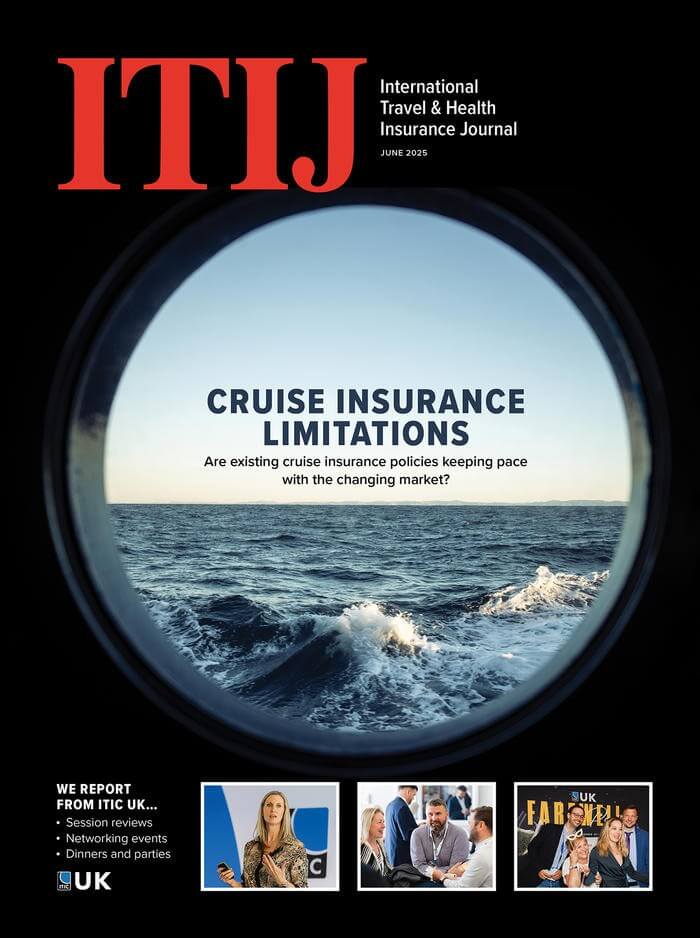
In this issue of ITIJ we examine the repatriation of mortal remains, and look at the trends, challenges and local expertise required. We also consider cruise insurance limits and exclusions and ask whether the latest cruise insurance policies are keeping up with what the travel market is offering.
Chloe Fox
Chloe Fox is an Editorial Assistant for Voyageur Group, joining in 2024. She writes for ITIJ and AirMed&Rescue, covering a range of topics including international travel and health insurance, medical assistance provision, and air medical transportation. Chloe holds a BA (Hons) in English and an MA in English Literature from the University of Bristol.