Protecting healthcare integrity

Rodney Cowart, Director, Claims and Network Operations at GMMI, talks to ITIJ about fraud, waste, and abuse
Can you please explain the difference between fraud, waste, and abuse?
Fraud, waste, and abuse (FWA) are critical issues that impact healthcare systems globally, often resulting in inflated costs and misallocation of resources. The distinctions among these three terms primarily revolve around intent:
• Fraud involves deliberate deception for financial gain, such as billing for services not rendered or falsifying diagnoses
• Waste refers to the inefficient use of resources, like unnecessary medical procedures that inflate costs without improving patient outcomes
• Abuse occurs when billing practices deviate from industry norms, often leading to excessive charges, but without the intent to defraud
Fraud, waste, and abuse (FWA) are critical issues that impact healthcare systems globally
Why is FWA such a huge problem in the healthcare sphere, and have things become worse in recent years?
The National Health Care Anti-Fraud Association (NHCAA) estimates that fraud accounts for 3–10% of total healthcare spending, amounting to billions of dollars annually. As healthcare systems have become more complex, with increasing telemedicine usage and global medical travel, the potential for fraud has grown. In the US, the fragmented nature of healthcare billing makes international insurers especially vulnerable to overbilling and fraudulent claims. This has led to unnecessary costs and prolonged claim resolution times.
At GMMI, we specialise in helping international insurers navigate these challenges, enabling our clients to make accurate payments and remain compliant with relevant regulations.
What are the key indicators of fraud in medical billing, and is new technology helping to analyse claims?
Certain billing patterns signal fraud or abuse, within the US: • Upcoding: billing for a more expensive service than what was provided
• Unbundling: charging separately for procedures typically billed together
• Billing for unrendered services: claims for fictitious treatments or equipment
• Excessive charges: inflated pricing beyond industry norms
• Repeated high-value claims: frequent large claims from the same provider.
Additionally, member fraud can be a concern, including altered reimbursement documents, excessive repeat claims, and unverified provider affiliations. New technology is significantly enhancing our ability to detect fraud.
Can you explain to us the role of data analytics and investigative protocols in detecting FWA?
At GMMI, data analytics plays a pivotal role in our fraud detection strategy. Our Special Investigations Unit (SIU) employs several advanced methodologies to detect and prevent FWA:
• Trend analysis: detecting anomalies in provider billing patterns
• Geolocation verification: ensuring service locations match actual provider networks
• Regulatory screening: running all providers through compliance databases, including OFAC.
Through these advanced data analytics techniques, we’re able to act proactively, addressing potential fraud before it causes significant financial loss.
New technology is significantly enhancing our ability to detect fraud
The US and international markets are different. Can you tell us about the challenges of identifying fraudulent activity in global claims versus US claims?
US billing systems use standardised claim forms like CMS-1500 and UB-04. These forms provide specific information, such as place of service, NPI, Federal Tax ID number, and modifiers that provide details about services rendered.
In contrast, international claims vary by country and may be provider specific. Therefore, GMMI’s SIU team query industry and public databases, and other information sources, as a part of an investigation.
International payors often lack visibility into US billing practices, making it difficult to spot overbilling, unbundling, or billing for unrendered services. GMMI helps payors overcome these challenges by providing in-depth analysis and insight into US claims, facilitating healthcare payments that are both accurate and compliant.
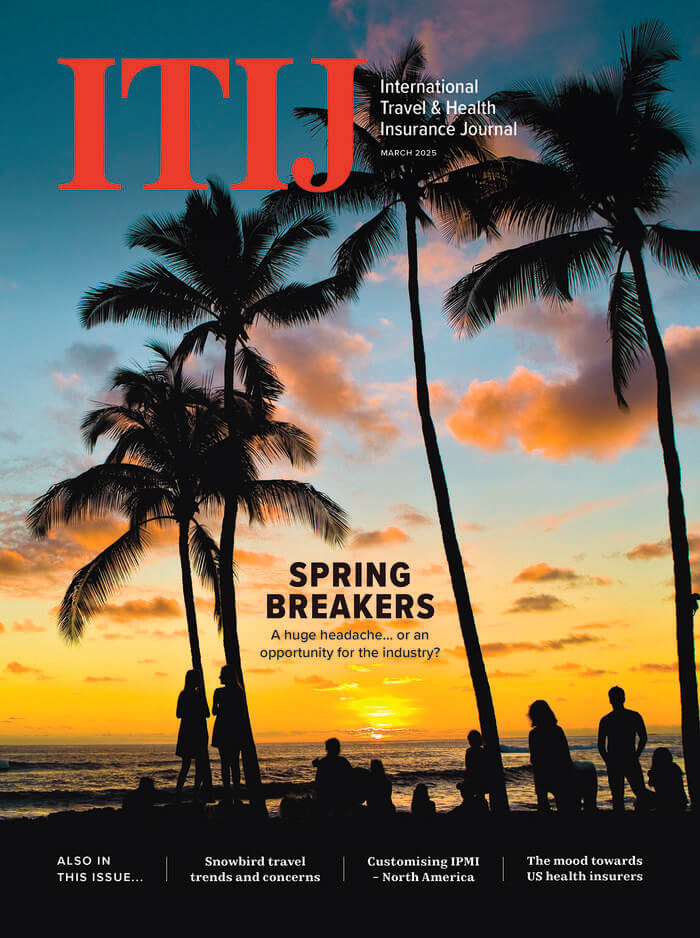
March 2025
Issue
In the March issue of ITIJ we examine spring break trends; look at the changing snowbird market; and investigate IPMI policies in North America. Included with this issue is the Air Ambulance Review, which has features on clinical care for ABIs; investing in fleet; the role of brokers in the air ambulance industry and an accreditation update.
Editorial Team
The Editorial Team updates the ITIJ website daily, and works on features for the print edition. With expert industry knowledge and years of experience in writing about complex travel insurance issues, the Editorial Team is ready to investigate and report on the topics that matter most to ITIJ's readers.