
One flight. Two lives. Complete readiness

Rolf Dall from SmuuthCare tells us about a routine medical repatriation which became a mission that required planning for two patients instead of one
When SmuuthCare was asked to transport a pregnant woman from Africa to Europe following a very early premature rupture of the membranes (PPROM), there was a realistic possibility that the situation could change during the flight. Although the patient was stable and not in labour, the decision was made to repatriate her so she could continue her pregnancy and give birth in her home country.
The mission
Labour can begin unexpectedly following PPROM, meaning the medical team had to be prepared not only to care for the mother, but also for a premature newborn requiring immediate specialist support.
SmuuthCare operates two dedicated Hawker 800XP air ambulances equipped for intensive care transport. Each aircraft carries ICU-standard medical equipment, including ventilators, patient monitors, infusion pumps, oxygen delivery systems and suction equipment. A standard medical crew consists of an experienced anaesthesiologist and a critical care nurse. Depending on the patient’s condition, additional specialists are assigned to ensure the right expertise is available for each mission.
For this transport, the medical team was expanded to include a senior obstetrician experienced in managing high-risk pregnancies. While the patient showed no signs of labour before departure, medication capable of delaying labour for several hours was carried on board should contractions begin during the journey.
The possibility of an in-flight delivery also required specialist neonatal support. A paediatric anaesthesiologist joined the mission together with specialised neonatal transport equipment, including a heated transport system for a premature infant and the equipment required to perform advanced neonatal resuscitation if necessary.
The flight
Before departure, the team had prepared for two possible scenarios. The first was an uncomplicated repatriation of a stable patient. The second was the delivery of a premature baby during the flight, followed by the simultaneous care of both mother and newborn until landing. The aircraft, equipment and medical team were prepared to manage either outcome.
Fortunately, those contingency plans were never needed. The patient remained stable throughout the flight and arrived safely in her home country, still pregnant and accompanied by her husband.
Several weeks later, the family welcomed their baby at home.
The patient remained stable throughout the flight and arrived safely in her home country
For SmuuthCare, this mission demonstrates the importance of tailoring every repatriation to the individual patient. Careful clinical planning, the right medical specialists and mission-specific equipment ensured the team was prepared for every foreseeable scenario long before the aircraft left the ground.
Rolf Dall, MD, PhD, is a specialist in anaesthesiology with more than 20 years’ experience in paediatric anaesthesia, intensive care, and air ambulance transport. He holds a Nordic Diploma in Paediatric Anaesthesia and Intensive Care and has worked at leading hospitals in Denmark and Australia’s Royal Children’s Hospital, Melbourne.
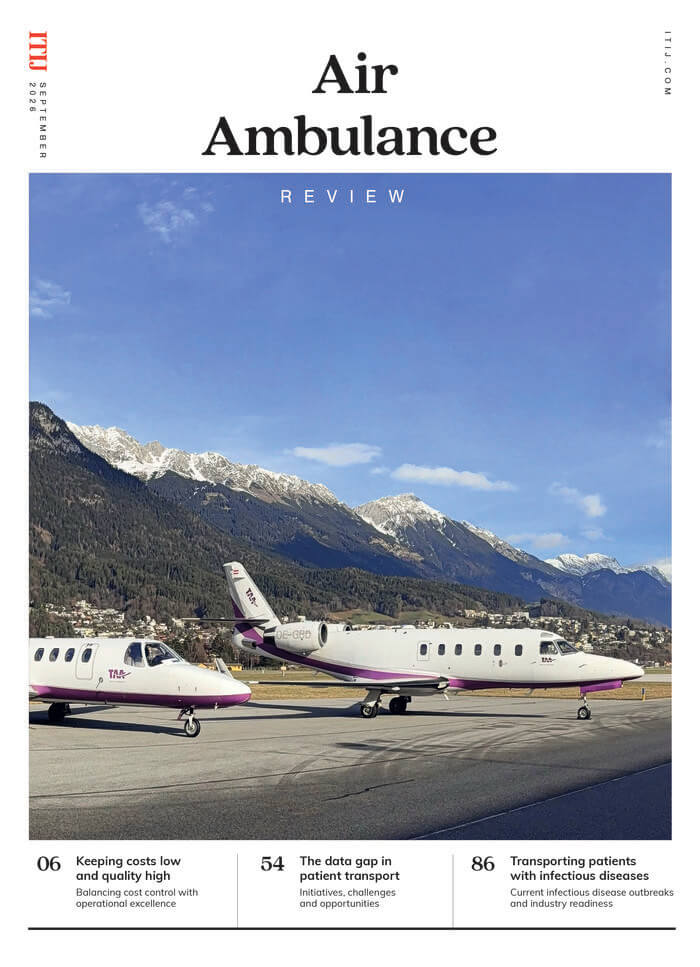
September 2026
Issue
This issue we focus on the problems that rising costs are having on the industry. Air ambulance providers are facing costs across fuel, aircraft maintenance, staffing, insurance, regulatory compliance, and specialist medical equipment. As if that wasn’t enough, delayed payments from insurers are adding further financial pressure. Despite these challenges, providers agree that patient safety and clinical quality must not be compromised.
Editorial Team
The Editorial Team updates the ITIJ website daily, and works on features for the print edition. With expert industry knowledge and years of experience in writing about complex travel insurance issues, the Editorial Team is ready to investigate and report on the topics that matter most to ITIJ's readers.