
News Analysis: Cruise tourism and the ‘nuisance’ of insurance

Milan Korcok investigates the huge growth in cruise travel and the challenges of cruise insurance, particularly when it comes to younger generations
Few sectors of tourism have bounced back from the Covid-19 blockade as resiliently as cruise travel, which by the end of 2025 is expected to tally almost 38 million passengers worldwide: 31% first-timers, and 82% who say they will sail again, and again.
According to the Cruise Lines International Association (CLIA), which represents 90% of the international cruise industry (estimated 310 boats), at least 56 new vessels are on order (totalling US$56.8 billion) to be delivered by 2036 – almost 40% consisting of mid-size to smaller vessels ranging from 800 passenger capacity to 2,500. This is a perfect fit for the expected surge of Gen Zs (mostly 20s) and millennials (29–44), who now comprise 36% of all cruise traffic and whose tastes are drawn to cultural, expedition and multi-destination cruises – in effect, purpose-driven travel. As CLIA data further shows, expedition and exploration cruises grew by 22% from 2023 to 2024, and, unlike their forebears, Gen Z and millennials are more interested in exploring polar ice caps, trekking in Patagonia, and watching whales and seals than were their elders – who were more content with dress-code dinners and the occasional dip in a tepid pool.
This doesn’t mean sun and fun in the Caribbean or the Mediterranean (first and second most favoured cruise destinations) will fade. Not by a long shot. But putting Ushuaia (the world’s most southerly port and capital city of Argentina’s Tierra del Fuego province) on the cruise map certainly expands the cruise travel firmament, including the dilemma of what one wears to dinner. Ushuaia, incidentally, is already a thriving cruise port, capable of handling vessels up to 300m long and a key terminal for the iconic National Geographic cruise line itinerary.

A nuisance to be tolerated
But Gen Z and millennials are also more tolerant of risk (sizing up icebergs is not everyone’s cup of tea) and there is plenty of evidence that these younger cohorts are relatively sanguine about committing to travel insurance. In fact, there is plenty of evidence that these same generations look on travel insurance as a nuisance to be tolerated – or at least put off for another day. In multiple recent surveys, young American and Canadian wannabe travellers have confessed to avoiding travel insurance because they say it costs too much, and they have better things to do with their money while travelling, though they might consider it when older.
Jacqueline Mondelli, Chief Marketing Officer at Squaremouth, America’s largest travel insurance plan aggregator, affirmed that when cruise candidates start their search for a trip, they’re offered pared-down medical and cancellation cover by the cruise line, and that’s enough to deflect them from a deeper search for more substantial offerings. She noted that 85% of all cruise sales were made directly through cruise and tour companies, as well as travel agencies and digital online travel agencies (i.e. Expedia, Kayak, Orbitz).
Mondelli warned: “While buying a travel insurance policy at the trip checkout is the easiest course of action, it often comes at a disadvantage of cost and the coverage levels provided. Additionally, some cruise-line travel insurance plans may cut corners by covering only specific cruise-related expenses… leaving customers vulnerable to disruptions related to flights, hotels, etc.”
Citing Squaremouth research data, she further revealed that travellers up to 34 years of age account for only 5.4% of travel medical insurance; those between 35 to 59 account for 32.2%, and seniors between 60 and 74 for 48.6%, with a similar pattern holding true for cancellation plan purchases.
The reluctant generations
Whether it’s intransigence, lack of education, or sense of invincibility, in survey after survey in the US, Canada or Europe, youthful cohorts appear reluctant to buy insurance or try hard to understand it.
In June 2025, a European Youth Parliament survey (representing 33 European countries) found that 57% of young people did not find buying insurance an “easy process” – seven out of 10 wanted clearer and more consumer-friendly information; 82% were willing to pay more for better coverage and benefits; and 82% felt they did not receive enough financial education at school to make informed insurance decisions.
Thea Utoft Høj Jensen, Director General of Insurance Europe, said the report “gives us a deep dive of how the next generation expects clarity and innovation, reinforcing the need to create a regulatory environment that puts the consumer first by ensuring information is simpler and more concise”.
Mondelli added: “Travel insurers need to sell peace of mind for real-life hassles. Younger generations don’t just want simplified language or an easy checkout; they need to understand the benefit in relatable terms, not through rare disaster scenarios like a major medical evacuation. Instead, speak to them through everyday travel mishaps, like a flight delay that ruins a weekend getaway or a stomach bug that forces you to cancel
your tour.”
Plain language: who can argue with that?
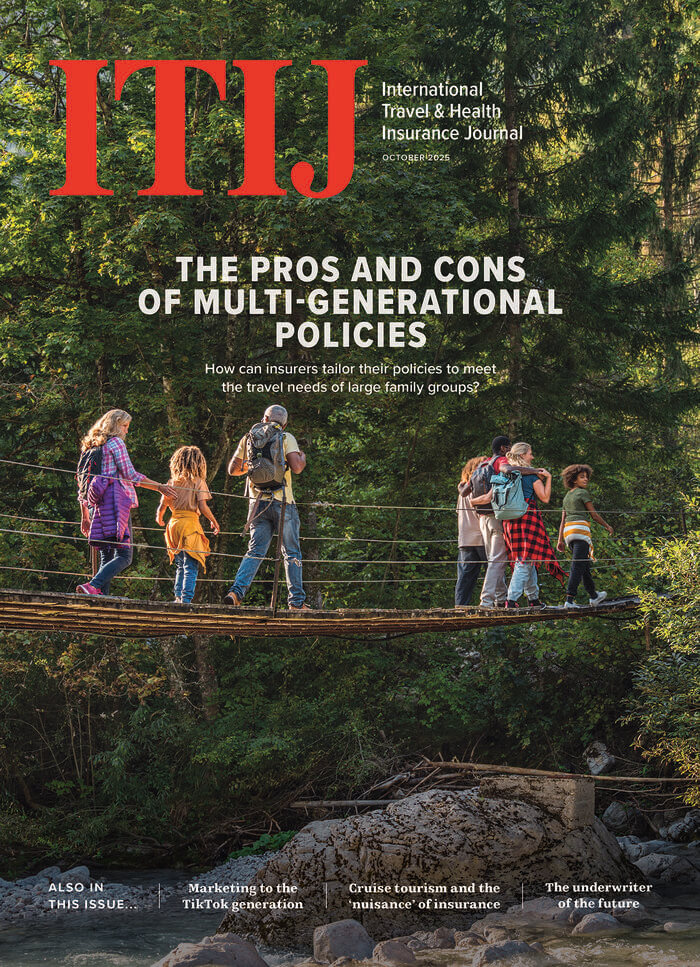
October 2025
Issue
This month we examine whether insurers are making the best use of social media to target a new audience. We look at what’s been done, and what more could be done to educate a new generation. We also look at the rise in multi-generational holidays – are insurers able to tailor policies to fit this trend?
Milan Korcok
Milan Korcok is a national award-wining medical writer who has been covering international healthcare activities and trends in Canada, the US and abroad for many years. He has long served as contributing editor to the Canadian Medical Association Journal and the Journal of the American Medical Association. He is a founder of – and has served as editor of – the US Journal of Drug and Alcohol Dependence; a founder of the Travel Health Insurance Association of Canada, and currently serves as contributor to ITIJ.