
Mike Vallee interview: Keeping humanity at the heart of critical care transport

Mike Vallee, Vice President of Business Development at Medway Air Ambulance, talks to Michelle Royle about growth, innovation, and compassion at 40,000 feet
Q. Can you tell us a little about your career and what inspired you to become involved with Medway Air Ambulance?
I began working in the air ambulance industry in 2002 after several years in commercial aviation. The move into air ambulance came about when the airline I was working for shut down shortly after 9/11. What started as an unexpected career change turned into more than 20 years in an industry that I’ve come to care deeply about.
What has impressed me most is the organisation’s willingness to embrace new ideas and technologies when they can improve patient care or make our teams more effective
In September 2024, I was approached by a friend that held a leadership role at Medway. The decision to join was an easy one. Medway has an excellent reputation for both patient care and operational excellence, and I already knew and respected several members of the leadership team. It felt like a natural fit.
Q. How has Medway Air Ambulance evolved over the years in terms of technology, training, and patient care?
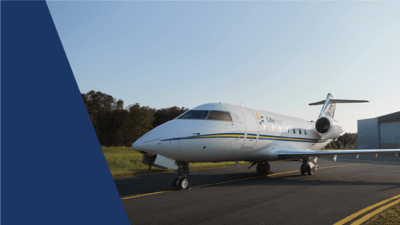
The Learjet 45 is an excellent aircraft, but like any air ambulance platform, space is always at a premium.
Despite those limitations, Medway has consistently invested in technology that helps our crews provide the highest level
of care possible, from advanced patient monitoring equipment to modern transport ventilators. Our team utilises proprietary programmes to conduct intake, quoting and communications as well as the clinical team charts on a bespoke software programme for clinical care. What has impressed me most is the organisation’s willingness to embrace new ideas and technologies when they can improve patient care or make our teams more effective. That mindset has been part of Medway’s culture for many years and continues today.
Q. Medway has completed over 22,000 medical flights. What are the biggest challenges air ambulance crews face when responding to emergencies?
As a fixed-wing air ambulance provider, Medway specialises in hospital-to-hospital transfers rather than responding directly to accident scenes. Because of that, our teams spend a great deal of time ensuring patients are as stable as possible before departure. Even with that preparation, unexpected situations can arise. When they do, our crews rely on their training, experience, and ability to work together under pressure. Those qualities are often the difference-makers when challenges occur in flight.

Q. What skills and qualities are most important for someone working in an air ambulance environment?
Communication, teamwork, adaptability, and good judgement are all essential. Every day is different, and situations can change quickly, so it’s important to stay calm and focus on finding practical solutions. People who do well in this field tend to be highly skilled professionals who are also humble team players. And, as with many demanding professions, a good sense of humour never hurts.
Q. How have worldwide geopolitical events affected the organisation?
Our work is concentrated primarily in the western hemisphere, so developments in places such as Mexico, Cuba, and Venezuela tend to have the most direct impact on our operations. Events elsewhere in the world can affect us as well, particularly when they influence fuel prices and broader economic conditions. We’ve also seen changes in cross-border travel patterns as a result of evolving US–Canada policy dynamics. Like many organisations in the travel sector, we’ve had to adapt to shifting demand, but that’s something our team has managed well.
Q. Medway Air Ambulance works with hospitals and partners in the US and around the world. How do you choose those partners?
In many cases, we’re actually the ones being selected rather than doing the selecting. For travel assistance cases, the destination hospital is usually determined by the third-party administrator based on the patient’s medical needs, location, and preferences. That could mean transport to the nearest appropriate facility, repatriation to a hospital closer to home, or transfer to a specific hospital requested by the patient or family. For domestic transfers, hospitals and healthcare systems choose Medway based on our reputation, experience, geographic reach, and ability to meet specialised patient care requirements.

Keep on reading

Commercial airline complications
Sponsored by Flying Nurses
When two becomes routine
Sponsored by Lifeflight
Q. Tell us about the accreditation Medway has achieved and why you think it’s so important.
Medway holds EURAMI accreditation, an ARGUS Platinum safety rating, NAAMTA accreditation, and CARB approval through the US Department of Defense Commercial Airlift Review Board. While accreditations are important, what matters most is what they represent.
People who do well in this field tend to be highly skilled professionals who are also humble team players
They show that an independent organisation has taken a close look at how you operate and confirmed that you meet a high standard. For hospitals, assistance companies, government agencies, and families, those accreditations provide added confidence that they’re working with an organisation committed to safety, quality, and continuous improvement.
Q. Looking ahead, what are your goals or hopes for the future of Medway Air Ambulance and emergency air medical services?
My hope is that Medway continues to grow while maintaining the culture and standards that have made it successful. Growth is important, but not if it comes at the expense of patient care, safety, or the trust we’ve built with our clients and partners.
The air medical industry will continue to evolve, particularly as new technologies become available and international coordination becomes more important. Whatever changes come, I believe the focus should remain the same: providing compassionate, high-quality care and helping patients get where they need to be safely. Personally, I want to contribute to that mission in a way that continues to earn trust and ensures we never lose sight of the human side of what we do.
Mike Vallee, Vice President of Business Development, Medway Air Ambulance
Mike is responsible for developing strategic partnerships across the healthcare, travel assistance, and insurance sectors. With over 25 years of experience in commercial aviation and air medical transport, he specialises in creating collaborative solutions that streamline patient transfers and provide timely transport options for clients and patients.
September 2026
Issue
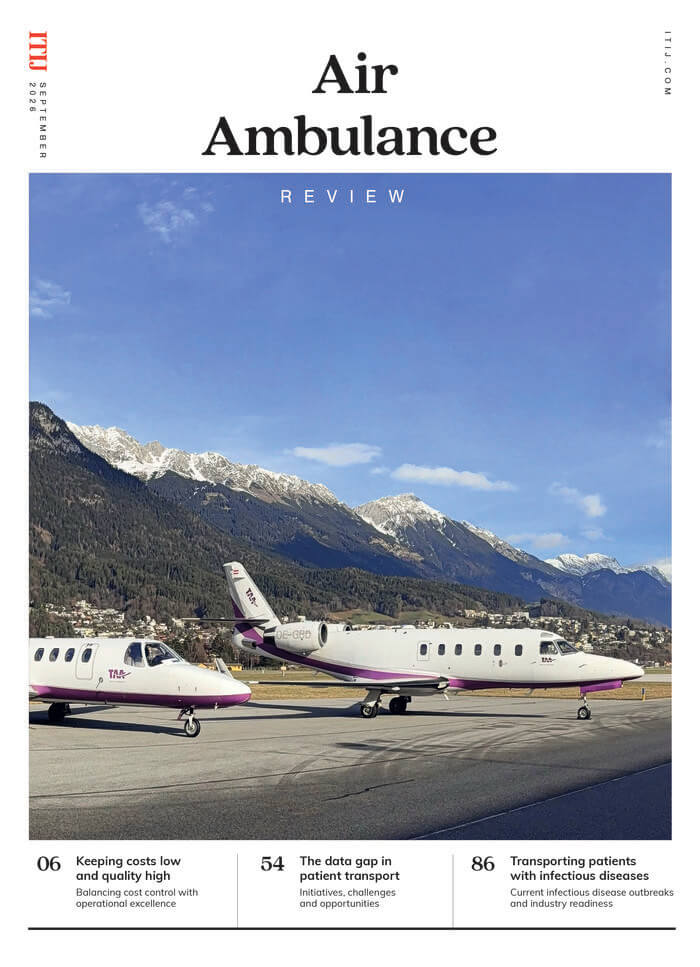
This issue we focus on the problems that rising costs are having on the industry. Air ambulance providers are facing costs across fuel, aircraft maintenance, staffing, insurance, regulatory compliance, and specialist medical equipment. As if that wasn’t enough, delayed payments from insurers are adding further financial pressure. Despite these challenges, providers agree that patient safety and clinical quality must not be compromised.
Michelle Royle
Michelle is Editor of ITIJ.