
A match made in travel: OTA-insurer partnerships

Affinity partnerships between travel insurers and online travel agencies can drive growth and provide benefits for travellers. Lauren Haigh explores how partners are selected and collaborations cultivated
Affinity partnerships are prevalent across many sectors, not least the travel insurance industry. By forming strategic alliances with selected partners, travel insurers can elevate their strengths and resources and expand their reach in a mutually beneficial relationship that is, crucially, also beneficial for the traveller. One key collaborator for travel insurance providers is online travel agencies (OTAs), which represent a one-stop shop for traveller needs, making it easy for consumers to plan and book their trips in one place. OTAs are popular platforms and thereby offer insurance providers the opportunity to reach an extensive audience of travellers. OTAs can elevate their product portfolios by offering travel insurance, a crucial product for the traveller that has risen in demand as travellers have become more aware of risks. OTAs and travel insurers offer complementary services, but shared goals and careful synergy between the two are necessary for a successful collaboration.
Inside the selection process
Therefore, selecting the right partner involves important considerations and a need for alignment. With technology evolving rapidly in the travel landscape, innovation is key. “We look for partners who share an innovative mindset, firmly believe in the embedded insurance world and are ready to test new ideas every day, despite regulatory limitations the insurance world might have,” Francesco Bini, Senior Manager – Strategy and Business Development at lastminute.com, told ITIJ.
Indeed, OTAs have been at the forefront of innovation in the travel industry, transforming how travellers plan, book and experience their trips. In addition to being innovative, prospective partners must also be agile and adaptable. “An agile insurance company can tailor products to specific market needs, can leverage technology to streamline the online shopping and checkout processes, and can create claims and customer service experiences that are aligned with OTAs’ needs,” said Tim Dodge, VP/Chief Marketing Officer of Travel, Accident and Health at Arch Insurance. “First and foremost is providing insurance products that meet travellers’ needs, but it goes much deeper than just products – from customer service to claims administration to communications and technology, OTAs want to do business with insurance providers who have the ability to adapt to their evolving needs.”
Ciprian Caraba, Group Product Manager, Kiwi.com, explained that ensuring alignment requires a rigorous process. “Selecting the right partner for insurer-OTA partnerships involves a multifaceted evaluation process to ensure alignment with our business goals and customer needs. We conduct a thorough evaluation process of potential partners, focusing on several key parameters: brand alignment, including due diligence such as checking independent provider review sites and net promoter scores (NPS); technical feasibility; legal compliance; product and customisation; optimisation and support, including the ability to quickly add new products, A/B testing capabilities and market coverage; customer communication; and business terms,” he stated. “This holistic approach ensures that we select a partner that not only aligns with our business objectives but also enhances the overall customer experience.”
ITIJ also spoke with Christina Tunnah, General Manager, Americas, and Global Marketing and Brands at nib Travel, who said that the priority is partnerships with businesses that share nib’s dedication to high-quality products and exceptional customer service: “By collaborating with partners that value these principles, we ensure that our products cater to the needs of like-minded customers. We carefully align our products with the core offerings and customer demographics of the OTA partner. For example, OTA sites specialising in cruising are an excellent fit for nib, as our insurance products include comprehensive cruise coverage as a standard feature.”
Far-reaching benefits
To be viable, a partnership must have benefits for both partners, as well as, perhaps even more importantly, for the traveller. “It allows the traveller to compare different plans and providers,” Allyson Nichols, Business Development Manager at InsureMyTrip, told ITIJ. “InsureMyTrip employs travel insurance agents who are licensed in all 50 [US] states, so they know all there is to know about a policy and can walk travellers through their choices and explain coverage. This allows the traveller to find the best insurance for their trip by not just checking the box at point of sale (POS).
OTAs want to do business with insurance providers who have the ability to adapt to their evolving needs
“We also provide education around travel insurance and a team to advocate for the traveller should they file a travel insurance claim and it’s denied or delayed. Our team will contact the provider directly to find out why it was denied or delayed.”
Bini highlighted that the mutual benefits are straightforward: “When we increase conversion and sell more products, the insurer sells more policies with us. On top of that, while expanding our operations into new markets, we help our insurance partners to open new markets and grow with us hand-in-hand. Our interests are fully aligned here.”
Tunnah outlined that insurers can tap into OTAs’ extensive customer base. “OTAs have a large customer base of digitally savvy, well-researched customers. Partnering with OTAs allows us to reach a broader audience that might otherwise fall outside our traditional distribution channels, such as retail travel agency partners,” she said. “At nib, we offer a seamless online booking process and sophisticated application programming interfaces (APIs) for easy website integration, making our offerings attractive to both OTAs and their customers. For OTAs, adding travel insurance to their product offering creates a new revenue stream, and OTA customers, who often prefer DIY travel booking, benefit from being prompted to consider travel insurance.”
Dodge agreed: “OTAs can do an outstanding job of attracting prospective travellers through the careful curation of compelling travel experiences. Their digital marketing and product management expertise creates fantastic opportunities for consumers to explore and purchase travel. They create the ideal audience who are at the right point in their travel buyer journey to be receptive to travel insurance offers,” he stated. “By providing in-path purchase opportunities, they streamline the travel insurance purchase process, which is a win for travel insurance providers. OTAs then benefit from increased revenue and the ability to provide their customers with much-needed insurance products in a very efficient, tech-driven manner.”
Caraba also highlighted the benefits of the tech-savvy nature of OTAs: “Insurers can benefit from the OTAs’ technological capabilities, such as dynamic bundling and modular customisation, leading to innovative insurance products that cater to diverse customer needs.”
Unpicking sticking points
Despite the myriad benefits of travel insurer-OTA partnerships, there are associated challenges, including regulatory compliance. “Insurance and travel are highly regulated industries and those regulations are constantly evolving and adapting,” said Bini. “That’s further complicated by having businesses in different countries. This is a key challenge when rules change, so we need a partner to keep pace. To overcome this we ensure our legal teams can meet to ensure compliance and have an open dialogue.”
We carefully align our products with the core offerings and customer demographics of the OTA partner
Tunnah agreed: “Travel insurance, which is a financial services product, is subject to much stricter regulations than traditional travel products. At nib, we leverage our extensive experience and expertise in online distribution to support our OTA partners. We aim to simplify the process and ensure a clear understanding of the regulatory requirements, making the integration and promotion of travel insurance as easy as possible. Tech integration can also be a sticking point, but we are always working together to ensure a seamless experience for the customer.”
Caraba pointed out that another potential sticking point is technical integration. “Integrating complex insurance systems with OTA platforms can be challenging,” he stated. “This can be mitigated by ensuring comprehensive API documentation and collaborative technical support from both parties, one of the key areas in our search for potential insurance partners.”
Dodge agreed: “There is a baseline level of technical savviness that both parties must possess. The real-time exchange of information to create a seamless process for the insured is critical to success. OTAs should choose an insurance underwriter that can understand their unique value proposition and adapt an insurance offer to meet those needs.” Dodge said that it’s all about the ‘four Ps’ – product, price, promotion and placement. “Insurance product features and benefits must be considered for each OTA’s target audiences. Luxury versus economy, international versus domestic, active versus relaxation – the type of travel experience can influence the products each OTA offers. This requires thoughtful design of the travel insurance products developed during the business process,” he underlined.


Managing expectations
In order for both parties in the collaboration to manage one another’s expectations, transparency, communication and understanding are crucial. “I believe in transparent communication and sharing the correct information with partners,” Bini underlined. “Lastminute.com’s expectations for the insurance partner are to grow together and increase sales, and by being transparent we believe that is possible.”
Tunnah highlighted the importance of alignment: “The best partnerships are driven by shared goals and shared expertise.
OTAs have a large customer base of digitally savvy, well-researched customers
OTAs possess a wealth of data on their customer demographics and behaviour, while we at nib offer specific expertise in insurance distribution, search engine marketing (SEM), and conversion optimisation. By aligning and overlaying our key metrics, mutual targets of success can be determined from the start, enhancing the customer experience and meeting both parties’ objectives,” she stated.
Flexibility and adaptability are also key parts of managing expectations. “Both parties should be open to feedback and willing to adapt their strategies based on evolving customer needs and market conditions,” Caraba highlighted. “We look for partners that share the same product values and processes, especially around product iterations through customer feedback loops.”
With effective collaboration, a shared drive for innovation and a consistent and concerted focus on the traveller, OTAs and travel insurers can gain from mutually beneficial collaboration that drives growth and enhances success now and in the long term.
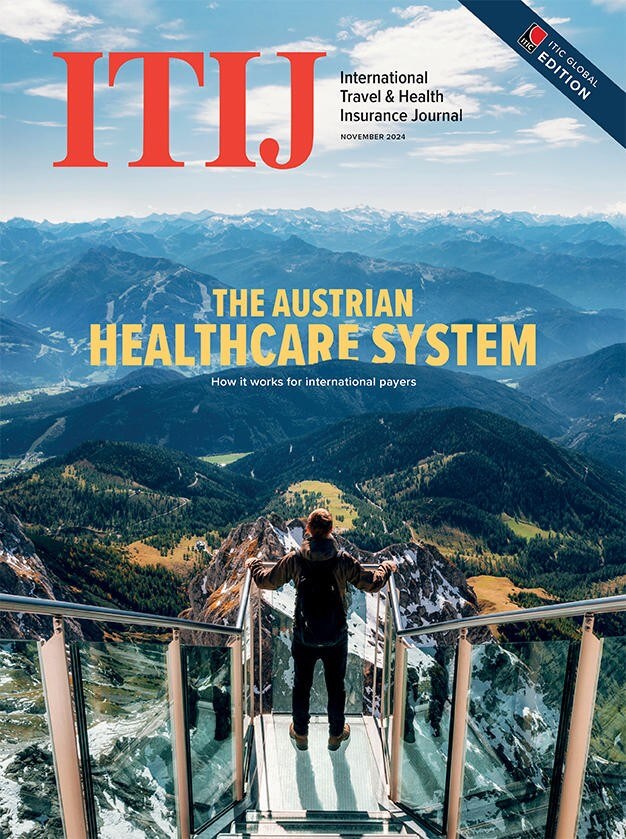
November 2024
Issue
This month we look at affinity partnerships and ask if online travel agencies are the perfect partners for insurers; we cover the trends around cruising in the Mediterranean; we delve into the specifics of the Austrian healthcare system; plus we examine international healthcare and technology, asking how far can technology go.
Lauren Haigh
Lauren Haigh is a freelance writer for ITIJ.