
Managing evolving travel risks and supporting travellers worldwide

Dr Katherine O’Reilly, Regional Medical Director at International SOS, speaks to Chloe Fox about duty of care, evolving travel risks, and delivering the right support for travellers worldwide
As Regional Medical Director, you operate at the forefront of remote workers, expatriates, and travellers. What are the main failings you still see in global workforce medical provision, and how is International SOS evolving to address them?
Duty of care programmes are often reactive rather than proactive, with gaps in compliance, governance, and traveller preparation. ISO 31030 adoption (the international standard providing guidance for organisations on travel risk management) is still uneven. And, despite clear productivity and health impacts, heat and climate risk integration is limited in health and safety programmes.
To address these gaps, we offer ISO 31030 and travel risk awareness training to improve governance and traveller awareness. We’ve introduced artificial intelligence (AI) supported assistance and work across unified platforms to deliver faster, tailored guidance, integrated with our boots-on-the-ground intelligence. Our medical alerts include heat and climate hazards to increase awareness around extreme weather events and provide actionable advice.
How does your organisation approach duty of care for travellers, and what elements are important to delivering effective support before, during, and after travel?
We focus on the right care, in the right place, at the right time – using a verification process which involves visiting facilities and understanding the services they can offer. This operationalises duty of care by combining pre-trip risk preparation, dynamic guidance during travel, and coordinated transfers aligned to medical needs and safety.
To embed this globally, organisations need governance and standards mapped to ISO 31030, digital guidance tools and assistance apps, vetted provider networks, and training that builds muscle memory for directional decisions under pressure.

In your view, what are the key challenges organisations face when trying to deliver bed-to-bed coordination for international medical transfers, and can you share a recent case where boots-on-the-ground intelligence made a difference?
The biggest obstacles are regulatory and airline constraints – medical clearances, oxygen and stretcher rules, permits and schedules – which can limit options compared to dedicated air ambulances. Facility access can also be a challenge.
Provider selection is critical – we use our extensive global database, reviewed regularly by our team, to ensure quality care
One recent case involved an offshore transfer in the Kingdom of Saudi Arabia. Our local assistance centre in Dubai and established trusted providers in the Kingdom streamlined medical coordination, managed costs, and delivered a seamless transition between facilities. This was all while maintaining constant communication with both the patient and the client. In these circumstances, having boots on the ground with our own resources and established provider network was critical to a positive outcome for the patient.
With healthcare systems around the world varying widely in capacity and cost, how do you align the goals of medical integrity and cost-efficiency when working with insurers and assistance providers?
At International SOS, we maintain the high standards of medical integrity with cost-efficiency through a combination of expertise and technology. Provider selection is critical – we use our extensive global database, reviewed regularly by our team, to ensure quality care. Case management and medical monitoring help us maintain clinical standards. Preparedness is also key – aligning travel risk management programmes with ISO 31030 and training reduces avoidable incidents and improves return on investment (ROI) for our clients and their employees.
You describe heatwaves as “a global occupational hazard”. What practical changes should organisations make to their health and safety protocols to reflect this?
Heatwaves are now a global occupational hazard, and organisations need to adapt health and safety protocols accordingly. This starts with heat-specific risk assessments for roles and sites – both outdoor and poorly ventilated indoor environments – integrated into routine audits.
Practical measures include structured work, rest, hydration schedules, acclimatisation plans, shaded rest areas, and cooling solutions for personal protective equipment (PPE). Providing heat awareness sessions and materials and training employees to recognise early symptoms like heat exhaustion, and ensuring clear escalation pathways, is essential.
Policies should align with local regulations, such as midday work bans in Gulf states, and medical monitoring should be in place for high-risk individuals, with thresholds for modifying or halting tasks.
Cognitive performance, decision-making and chronic disease burden are all impacted by extreme heat – how do you recommend organisations quantify, monitor, or benchmark these less obvious risks for their mobile and remote workforce?
Extreme heat doesn’t just affect physical health – it impacts cognitive performance, decision-making, and productivity. Organisations should consider environmental metrics like wet-bulb globe temperature (WBGT), health outcomes such as heat-related symptoms, productivity indicators, and cognitive performance proxies like error rates or decision latency.
Research links heat to a 2–3% productivity loss per degree above 20°C, along with cognitive impairments under heat strain. Fit-for-purpose monitoring can include short cognitive checks during high-heat operations, hydration compliance tracking, and wearable devices for vitals. Benchmarking across sites and roles using World Health Organization (WHO) and World Meteorological Organization (WMO) guidance helps contextualise performance and protections.
When advising clients on global duty-of-care programmes, what role does scenario planning for heat and other climate-driven risks play in your medical governance model – and how far ahead should organisations be thinking?
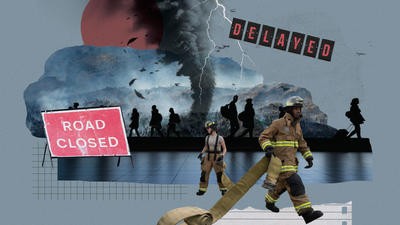
Scenario planning for climate-driven risks should be included with policies. It connects clinical thresholds, evacuation triggers, surge capacity, and communication strategies to hazards like heat, wildfires, floods, and vector-borne disease spread.
Research links heat to a 2–3% productivity loss per degree above 20°C, along with cognitive impairments under heat strain
Organisations should plan on two tracks: near-term scenarios over the next 12–24 months, focusing on seasonal and regional risks, resource cycles, and supplier readiness; and mid-term strategies looking three to five years ahead, factoring in shifting climate baselines and adapting programmes accordingly.
Looking ahead, what innovations (technological, logistical, or clinical) do you believe will have the biggest impact on global healthcare delivery for mobile populations over the next five to 10 years, and how is International SOS positioning itself to take advantage?
Technologies are rapidly evolving. Over the next five to 10 years, several innovations will likely transform healthcare delivery for mobile populations. Generative AI will be able to deliver personalised information based on verified guidance and faster case triage, embedded in assistance platforms under human clinical oversight.
Integrated travel risk management platforms will unify risk intelligence, traveller tracking, and incident workflows. Wearable and remote monitoring technologies will enable continuous tracking of vital signs and heat strain, feeding into medical case management and evacuation decisions. Climate-aware planning tools will inform itineraries and staffing, while ISO 31030-driven governance and training will normalise duty of care globally.
International SOS is already combining AI, unified platforms, climate intelligence, and standards-based governance with expanded provider networks and evacuation capabilities to deliver faster, safer, and more cost-effective care for mobile populations.
Dr Katherine O'Reilly, Regional Medical Director, International SOS
Dr O’Reilly is the Regional Medical Director, Medical Information and Analysis, for the UK, Europe and Americas at International SOS. She is an experienced and enthusiastic doctor with over 10 years of expertise in medical assistance, health intelligence, and risk assessment. Her diverse clinical background spans multiple specialties, including general practice, anaesthesia, public health, and clinical medicine.
February 2026
Issue
In this issue of ITIJ we look at international student insurance, and consider the impact of geopolitical decisions on market demand; we examine what ensues when a fatality happens on board a cruise ship, and what the protocols are for management of the remains; and we look at younger groups eschewing travel insurance.
Chloe Fox
Chloe Fox is a Junior Editor at Voyageur Group, having joined in 2024. She writes for ITIJ and AirMed&Rescue, covering a range of topics including international travel and health insurance, medical assistance provision, and air medical transportation. Chloe holds a BA (Hons) in English and an MA in English Literature from the University of Bristol.