Managing a complex international case across borders in Egypt

Oksana Goldina from Egypt Assistance recounts events from January 2026, when the company managed a complex, rapidly evolving case involving a 69-year-old insured woman in Sharm ElSheikh, Egypt
The case began with nonspecific symptoms: weakness, abdominal pain, fever and jaundice, initially assessed as an acute abdomen. Within 24 hours, the patient’s condition deteriorated significantly, prompting emergency hospitalisation and ICU admission with suspected shock, anaemia and obstructive jaundice.
The patient
As the clinical picture evolved, Egypt Assistance took an active coordination role across multiple levels. The patient was transferred from a private hospital to a state facility to ensure access to broader diagnostic capabilities.
Continuous communication was maintained with treating physicians, while clinical decisions were aligned in real time with the insurer.
As the patient’s condition continued to deteriorate, the therapeutic window for ERCP became increasingly limited. Following multidisciplinary assessment, an alternative biliary drainage procedure was performed, resulting in temporary clinical stabilisation.
The case was further complicated by respiratory failure requiring mechanical ventilation, haemodynamic instability, gastrointestinal bleeding and suspected underlying malignancy.
As the patient’s condition continued to deteriorate, the therapeutic window for ERCP became increasingly limited
The challenges
Alongside the medical complexity, significant financial and logistical challenges emerged, as the patient’s relatives faced restrictions on international fund transfers. Egypt Assistance maintained close coordination with all stakeholders, including the insurance company, medical providers, the consulate and the family, to identify and implement viable payment solutions.
Alongside the medical complexity, significant financial and logistical challenges emerged, as the patient’s relatives faced restrictions on international fund transfers
Despite all efforts, the patient’s condition remained critical, and she passed away on 22 January due to cardiac arrest.
Following the patient’s death, Egypt Assistance remained in close contact with the treating hospital to complete all outstanding administrative and operational requirements necessary for repatriation. Through this coordinated multi-stakeholder effort, hospital costs were successfully reduced to approximately US$14,000, and payment was ultimately arranged via the insurer’s regional office, allowing the case to progress.
Key learning points
This case highlights the importance of a multi-stakeholder assistance model in managing complex international claims. Effective case management required continuous coordination among medical providers, the insurer, the consulate, and the patients' relatives. Acting as a central coordination hub, Egypt Assistance ensured alignment across all parties while balancing clinical realities with financial and logistical constraints, thereby maintaining continuity of care under highly challenging circumstances.
Oksana Goldina, Operations Department Manager, Egypt Assistance, is an experienced assistance professional with over 20 years in the international assistance industry. As Operations Department Manager at Egypt Assistance, she brings extensive expertise in operational coordination, case management, and stakeholder communication, supporting the delivery of high-quality assistance services across a wide range of complex cases.
Egypt Assistance, a sister company of Remed Assistance, is a trusted provider of comprehensive assistance services across Egypt and the Middle East. With 24/7 alarm centres, multilingual case managers, and an extensive provider network, we deliver reliable travel and medical assistance, combining local expertise, international standards, and operational excellence.
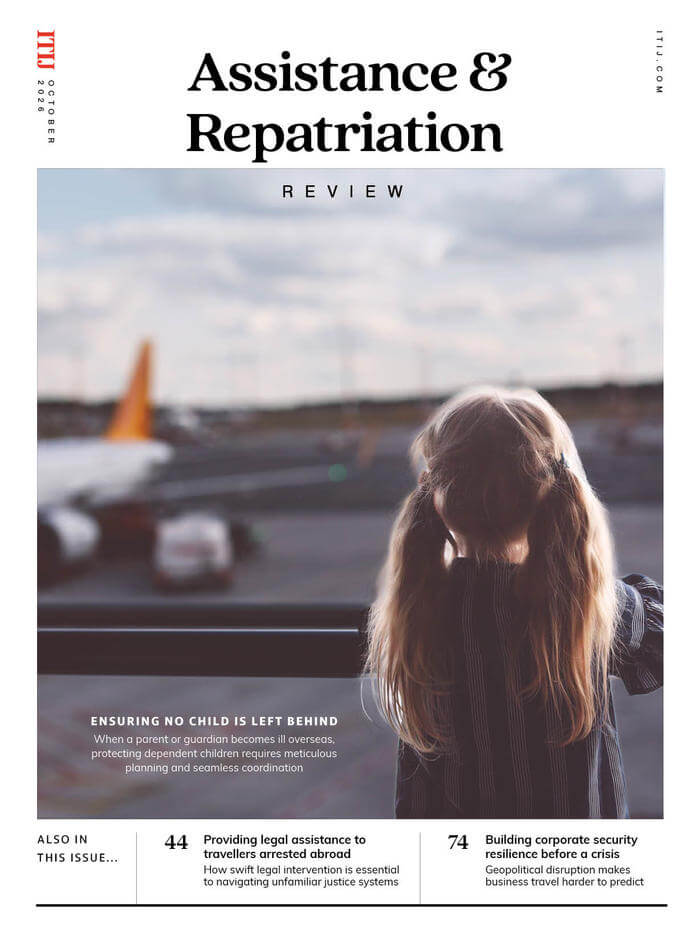
October 2026
Issue
When a parent or guardian becomes seriously ill overseas, assistance providers face a complex challenge that extends well beyond clinical care. Although these cases are relatively rare, in this issue we look at how safeguarding dependent children requires careful planning, legal awareness, and close international coordination.
Editorial Team
The Editorial Team updates the ITIJ website daily, and works on features for the print edition. With expert industry knowledge and years of experience in writing about complex travel insurance issues, the Editorial Team is ready to investigate and report on the topics that matter most to ITIJ's readers.