
From island clinic to chamber: a race against time in suspected DCS

Oliver Müller of Gateway International EMS and Camilo Saraiva of the Divers Alert Network (DAN) describe a recent case involving a diver suffering from decompression sickness
In suspected decompression sickness (DCS), time and process efficiency directly influence outcomes. At 8:41pm local time on 27 October 2025, an assistance centre was notified that a dive instructor in Dauin, Negros Oriental, the Philippines, had developed dizziness and tingling in his lower extremities several hours after completing multiple dives over consecutive days. He had completed four enriched-air dives within no-decompression limits.
After surfacing from the final dive, he felt “strange”, with lightheadedness and difficulty concentrating. Symptoms initially improved, but recurred later, prompting evaluation at a hospital in Dumaguete.
He was haemodynamically stable, alert, and not in respiratory distress, but persistent paraesthesia and earlier neurological complaints raised concern for DCS. High-flow oxygen and intravenous hydration were initiated immediately.
A diving medicine specialist was consulted and recommended recompression therapy due to the neurological presentation and fluctuating course. The nearest hyperbaric-capable facility was in Cebu City, requiring combined road and ferry transport. Air transfer was ruled out because altitude exposure can worsen bubble expansion in DCS. Ground ambulance transport was therefore deemed the safest option.
Because of transport distance, local conditions, and availability constraints, the earliest ambulance departure was scheduled for 10am the following morning. For a four-hour ground transfer, careful preparation was essential. The ambulance team needed to confirm advanced life support (ALS) capability, ensure trained personnel, calculate and load sufficient oxygen with contingency reserves, maintain continuous 100% oxygen administration, document serial neurological examinations, and sustain an active communication loop with the receiving hospital. Working exclusively with accredited and qualified providers was critical.
The ambulance departed as scheduled on 28 October for inter-island transfer to Cebu City. Continuous oxygen therapy and hydration were maintained throughout transit.
Upon arrival, a common operational challenge emerged. Transfer had been recommended, but admission processes and hyperbaric team activation were not synchronised. The patient remained in the emergency department while admission and specialists were finalised.
This phase is often the most delicate for assistance providers. Clinically, the patient remained stable. Operationally, however, delays can heighten anxiety for patients and families and increase reputational exposure for stakeholders. Active followup and escalation ensured admission was secured and hyperbaric consultation proceeded without further delay.
The first recompression treatment was initiated 24 hours after the initial notification and 36 hours after symptom onset. The patient completed three hyperbaric treatments over three days. Documentation showed progressive improvement after the first session, with full neurological resolution by the end of treatment.
Several operational lessons emerge. Early oxygen and hydration are fundamental and may contribute to neurological stabilisation during transfer. Altitude avoidance remains critical; even seemingly faster unpressurised air transport can worsen DCS. Transfer is not complete until the receiving facility confirms admission, specialist availability, and chamber readiness. Finally, while neurological DCS is not always immediately life-threatening, timely recompression significantly influences outcome.
In geographically fragmented regions, hyperbaric access often requires multi-step coordination across islands and facilities. This case demonstrates that when medical direction, transport logistics, and hospital communication align, favourable outcomes are achievable despite logistical friction. In dive medicine, hours matter, and precision determines whether those hours are used in the patient’s best interest.
Camilo Saraiva is Vice President of Medical and Assistance Services at Divers Alert Network (DAN), where he leads global dive medical operations, emergency case management, and travel assistance strategy. A physician executive with expertise in diving and hyperbaric medicine, he oversees medical call centre operations, complex evacuations, and international provider coordination, with a focus on operational excellence, risk mitigation, and diver safety worldwide.
Oliver L Müller is Founder and CEO at Gateway EMS with extensive experience in global medical ground ambulance coordination. His team specialises in rapid deployment logistics, cross-border case management, and high-acuity patient transfers, working closely with global assistance and air ambulance providers to ensure safe, efficient, and clinically appropriate transport solutions.
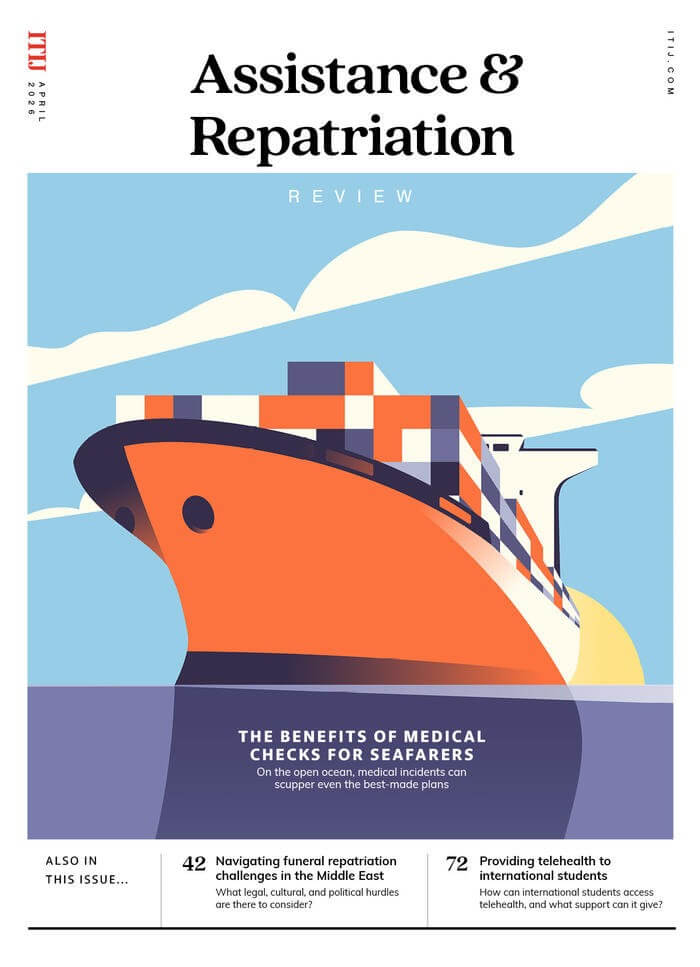
April 2026
Issue
In the first Assistance & Repatriation Review of 2026, we explore the cultural, legal, and logistical intricacies of funeral repatriation in, around, and out of the Middle East. We also consider how pre-deployment medical assessments can save lives and sea voyages. The burgeoning demand for telehealth among students is covered in our third feature, plus we look at how companies are delivering services that meet that need.
Editorial Team
The Editorial Team updates the ITIJ website daily, and works on features for the print edition. With expert industry knowledge and years of experience in writing about complex travel insurance issues, the Editorial Team is ready to investigate and report on the topics that matter most to ITIJ's readers.