
Interview: Daniela Wilson, Director of Aviation at Airlec Ambulance

We spoke to Daniela Wilson, Director of Aviation at Airlec Ambulance, about the challenges of operating air ambulance aircraft globally and the future of the industry
With almost two decades of experience in aviation, what first drew you to the industry?
After spending 12 years living abroad, I returned to Austria with the goal of finding a career that would connect me to the world. The aviation industry appealed to me because it allowed me to utilise my language skills, work in an international environment, and collaborate with people from various cultures. Additionally, having travelled extensively by air, I had developed a strong affinity for aviation.
As Director of Aviation at Airlec Ambulance, what are your main responsibilities?
My primary responsibility is to ensure that our clients’ best interests are always prioritised and to support their unique needs with tailored solutions. I focus on building and maintaining strong relationships with both existing and new clients, ensuring their satisfaction and loyalty. Additionally, I work to expand our supplier network to enhance our commercial position and provide competitive, high-quality services that align with our clients’ expectations.
Are there any challenges to operating a wide fleet of air ambulance aircraft on such a global scale?
Yes, there are several challenges. Operating on a global scale means navigating perpetual change, as crises often occur simultaneously in multiple regions, complicating logistics and operations. Political situations worldwide can significantly impact flight paths and access. Additionally, aviation costs, such as handling fees, landing fees, fuel, and insurance, have risen sharply. The constantly evolving and increasingly complex regulations further add to operational challenges. Maintaining flexibility also requires pilots to hold multiple ratings, which is an essential but costly process to ensure we can respond effectively to our clients’ needs.
Operating on a global scale means navigating perpetual change, as crises often occur simultaneously in multiple regions, complicating logistics and operations
Airlec recently announced it would be merging with VallJet under a unified ownership framework. How will this improve the effectiveness of Airlec’s operations?
The merger with VallJet will significantly enhance Airlec’s resilience and competitiveness by enabling resource sharing, expanding the fleet to include larger-capacity aircraft, and strengthening operational efficiency through a unified structure, better positioning, and an extended service portfolio, with several different locations throughout France.

Have you seen any significant changes in the air ambulance industry over the last 20 years?
The industry has evolved significantly over the past two decades. Flight operations have become increasingly complex due to additional obligations, and the processes for obtaining overflight and landing permits are now more challenging. Staff work-life balance has emerged as a critical issue in the 24/7 operational environment. Additionally, we are frequently called to more remote destinations, which complicates evacuations and highlights a shift in travel patterns. As people undertake riskier journeys to such locations, we have observed an increase in the severity of injuries, further intensifying the challenges faced by air ambulance providers.
Looking ahead, what are some of the key challenges you anticipate for the industry?
Maintaining a healthy work-life balance for employees remains a significant challenge, particularly in a 24/7 operational environment. The growing need for medical personnel, who are already in high demand in hospitals, adds pressure to recruitment efforts.War zones disrupt flight paths, increase operational complexities, and drive up costs. Longer flight routes: extended routes place additional strain on staff duty times, complicating scheduling and compliance.
Flight operations have become increasingly complex due to additional obligations, and the processes for obtaining overflight and landing permits are now more challenging

Furthermore, the industry is under increasing strain due to rising operational costs, such as fuel, handling fees, and maintenance. Price-sensitive clients further exacerbate this issue, which leads to competing against entities with less financial or regulatory burden [and] poses additional challenges to maintaining market share. To mitigate rising costs, keeping maintenance work in-house will be crucial for long-term sustainability. Addressing these interconnected challenges will require strategic planning and innovative solutions.
What is Airlec’s strategy for tackling these challenges?
We are implementing a new flight planning system that eliminates unnecessary steps, streamlining workflows and improving time efficiency. Additionally, we’re committed to creating an engaging workplace by offering opportunities for growth within the company and prioritising internal recruitment. This approach ensures a motivated workforce and helps build a strong internal talent pipeline.
How is Airlec looking to grow its operations in the future?
Airlec is already a major air ambulance player in Europe, but we are driven by a strong ambition to strive for excellence and become the leading global player in the industry. To achieve this, we are investing in cutting-edge medical equipment to address emerging challenges and meet evolving needs. The merger with VallJet has marked a significant milestone in our growth journey, and we are now focused on strengthening both existing and new structures to ensure sustained success and global competitiveness.
Daniela Wilson, Director of Aviation, Airlec Ambulance
Daniela is a seasoned professional with extensive experience in the fields of aviation assistance and ground ambulances. Over the years, she has risen through the ranks, starting as an assistance worker and advancing to her current role as Director of Aviation at Airlec, thanks to her unwavering dedication, passion, and exceptional skill set.
March 2025
Issue
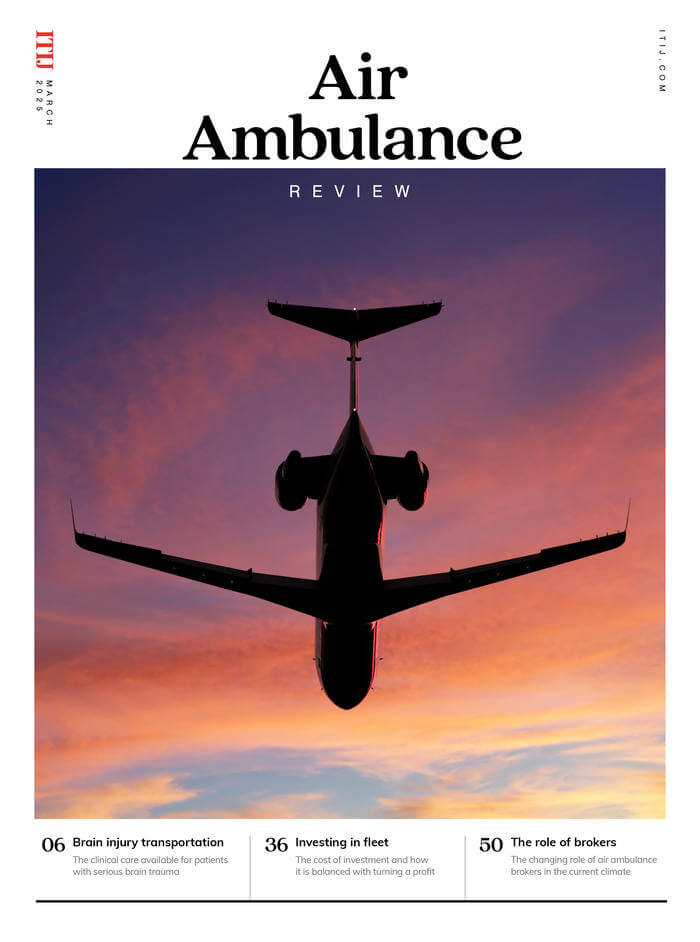
The Air Ambulance Review includes features on clinical care for ABIs; investing in fleet; the role of brokers in the air ambulance industry; and an accreditation update.
Chloe Fox
Chloe Fox is an Editorial Assistant for Voyageur Group, joining in 2024. She writes for ITIJ and AirMed&Rescue, covering a range of topics including international travel and health insurance, medical assistance provision, and air medical transportation. Chloe holds a BA (Hons) in English and an MA in English Literature from the University of Bristol.