
Insuring business travellers

Oliver Cuenca investigates how insurers and assistance firms can provide the right travel protection to businesses and their employees
The corporate travel insurance landscape has undergone a profound transformation in recent years. Once viewed as a simple financial safety net – a mechanism for recovering the cost of a cancelled flight or a lost suitcase – it is now increasingly recognised as a core component of risk management and employee welfare. Today, organisations face a complex array of challenges, from heightened geopolitical tensions and infrastructure disruptions to sophisticated cyber threats targeting remote workers.
Considering the needs of business travellers
Begench Atayev, Global Head of Marketing, Travel, at Allianz Partners, began by explaining that due to the unique cultures and requirements of specific businesses, his company aims to tailor its protection for business travellers to meet the needs of the “product and market”. The aim of such products should be to ensure support for both individual employees and the continuity of business operations, he added.
He reported that such travel protection “may include arrangements for a business representative if a trip is cut short for covered reasons; protection for business equipment against loss, damage, or theft; and reimbursement for reasonable rental costs when replacement equipment is required”.
The ultimate goal, Atayev explained, is to position travel protection as “more than simply a financial reimbursement – rather it becomes a strategic enabler of business continuity, employee wellbeing, and organisational resilience in an increasingly unpredictable travel environment”.
From a customer perspective, he added that these benefits were designed to minimise operational disruption, safeguard work tools, and, most importantly, provide employees with practical support and reassurance “when unexpected events occur”.
Such occurrences may include a broad range of incidents, such as “illness or injury, quarantine, travel document issues, transport disruption, extreme weather, civil unrest, or other unexpected personal, professional, or government-related events”.
Sandra Llamas, Service Alliance Director at Iris Global, added that international business travellers tended to be “more discerning and less predictable” than leisure travellers, and require “rigorous optimisation of resources and medical expenditures – preventing unnecessary procedures without compromising service excellence”. When providing support to business travellers, she noted that as long as the clinical situation permitted it, “cross-border solutions must prioritise business continuity while strictly enforcing cost containment strategies”.
Employee wellbeing
Reena Jassi, Head of Corporate, Accident & Health, at Zurich UK, agreed that when it came to insuring employees, clients were increasingly focused on duty of care, resilience, and employee wellbeing, rather than simply seeking out the lowest-costing
product available.
Awareness of cyber risks has increased significantly, particularly among businesses whose employees regularly travel with sensitive data
“Alongside this,” she added, “there is a growing focus on broader employee wellbeing, with organisations looking at how they support their people more holistically, beyond the trip itself. This includes access to medical support, as well as services that help employees manage their mental, physical, financial, and social wellbeing.”
She continued: “When employees feel supported in this way, it has a direct impact on retention, morale, and productivity. This ultimately shifts the conversation beyond cost and positions travel insurance as part of a wider approach to protecting employees.”
Jonathan Brown, Risk Manager at Charles Taylor Assistance, began by stating the importance of helping organisations understand that duty of care is an “obligation, but also an opportunity – it’s good for business!
“Whilst the reputational (and even legal) risks associated with inadequate duty of care can be considerable, a responsible employer will naturally feel duty-bound to fulfil its care obligations,” he explained. “In turn, employees will feel motivated by an organisation that evidently cares for its staff.”
Beyond this, Brown argued that duty of care went beyond simply being “seen” to look after employees or customers – care must actively plan for foreseeable risks, and make an active effort to mitigate them.
“It’s vital for organisations to think through the practical implications of what this means; either investing in in-house resources or partnering with a specialist provider (often via a corporate insurance policy) to help fulfil their obligations,” he said.
Brown added that, from an assistance perspective, “digital tools such as automated medical screening are more crucial than ever, providing pre-travel risk management by identifying employees with specific vulnerabilities or needs and enabling mitigation measures to be put in place as early and effectively as possible”.
Additionally: “When it comes to assistance, corporate customers may have different expectations to their leisure counterparts. For instance, if they are used to travelling business class they may expect the very highest standards. Or, if they have in-depth local knowledge of an area overseas that they travel to often, they may be more realistic about what is possible or how quickly it can happen.”
Alongside this, Brown noted that, unlike in leisure travel cases, it will not only be the family of the traveller who wants to be involved, but also their employer, who may have their own established medical assistance or evacuation plans, or other local resources.
This, he concluded, means that business travellers require an extra layer of coordination and communication from the assistance provider.

Rising geopolitical risk
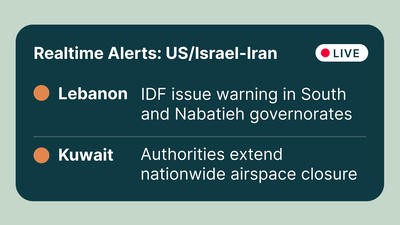
Jassi also highlighted the rising tide of geopolitical volatility worldwide that is affecting business travellers, including both the potential risks on the ground posed by war or political upheaval, and disruption to flights, for example.
She stated that, consequently, her company had begun to view such volatility as a “baseline, rather than an exception”.
“Nonetheless,” Jassi added, “this does not change or constrain a client’s need to travel, as international mobility remains essential to business. Our role as insurers is not to interpret that need, but to ensure it is supported with the right level of preparation and resilience.”
This includes a shift towards more dynamic, risk-responsive solutions that have a stronger focus on “territorial exposures, clearer security and evacuation frameworks, and the use of real-time intelligence”.
Beyond this, she added, is a more intense focus on preparation over reaction, including ensuring alignment with clients’ travel plans, offering proactive pre-trip risk assessment, and providing timely access to information and support prior to departure.
Jason Tassie, Founder of Know Your Business, a UK-based comparison website that specialises in business banking and business finance products, agreed that when it came to rising geopolitical tension, “travel policies now have to be dynamic and really try to cover live risk monitoring and pre-approved contingency plans.
“I don’t think businesses should treat disruption as a rare exception,” he added, before also emphasising the importance of pre-travel support and guidance to ensure the safety of employees overseas.
However, in the event that such tensions escalate into a major crisis, it is also vital to ensure that business travellers have access to sufficient assistance provision.
This, Brown explained, is especially true in cases where conflict flares up, and commercial flights are grounded – such as in Ukraine in 2022, or more recently in the Middle East. However, he warned that it was important to treat each case as unique and requiring a tailored solution, regardless of whether the client was a leisure or business traveller.
Such a solution would include drawing on their own network of transport providers, “such as taxis, ambulances, non-medical vehicles, and more”, as well as those of agents on the ground.
What separates business travellers from their leisure counterparts is their employer, who will typically want to be actively involved in the case, and will often have their own resources, such as property and vehicles, that can be drawn upon.
Engagement is not something insurers can drive in isolation as it requires coordination across HR, corporate security, and travel functions
Cyber risk
Alongside conventional travel risk management, Jassi added that Zurich was noticing rising awareness of “cyber risk … particularly amongst organisations whose employees travel with sensitive data or operate in higher-risk environments.
“Business travellers are a recognised target for cyber threats given their reliance on mobile devices, public networks, and access to corporate systems while on the move,” she continued. “In practice, however, this is less about demand for standalone cyber cover, and more about a focus on risk awareness and preparedness. For example, in certain countries, device screening and data checks at airports can lead to delays or potential exposure of sensitive information.”
Jassi advised that organisations should think carefully about how employees travel with and protect data, through measures such as device protocols and pre-travel briefings.
Tassie also noted that awareness of cyber risks had increased “significantly, particularly among businesses whose employees regularly travel with sensitive data, use public networks or work across multiple jurisdictions”.
Furthermore, he noted that demand for robust cyber protection would also always be strongest from businesses whose employees travel to higher-risk regions, where concerns around “device security, surveillance, and digital theft are more prominent”.
From an assistance perspective, Brown said the risk of cyber interference and infrastructure blackouts could pose challenges when assisting travellers, but added that maintaining a degree of flexibility around communication was key to navigating this. Aside from trying to keep a 24/7 lifeline open at all times, his company will often use more traditional communication tools, “if they work.
“In some countries, WhatsApp is the main communication tool, and where it makes sense to do so, we will switch to using it once initial contact has been made,” he continued. “Where communication lines are severely limited, we’ll agree set protocols with travellers. For instance, we’ll arrange to send messages via a reliable intermediary, if one is available, and make plans in advance, so that travellers know what we’re planning and what they should do if we can’t get back in touch.”
Llamas agreed that communication was critical to managing cases. However, when communication breaks down, it often “stems from a lack of alignment among international insurers, third-party administrators (TPAs), local medical providers, and expatriate or travelling insureds”. This is especially true when information is not being shared in real time.
She argued that TPAs should act as a “central hub” for interactions, “eliminating misunderstandings and building transnational trust”.
Proactive, not reactive
Jassi noted that a key trend being displayed by clients was a “clear expectation for insurers to play a more proactive role”. This includes supporting clients before, during, and after travel, not just at the point of claim.
She added: “For us, this translates in including many additional features to our insurance products. This includes pre-travel advice; real-time alerts; provision of services such as online travel risk awareness training, for instance; onboarding of travel apps and real-time digital mapping of travellers’ location in order to respond to the outbreak of a sudden crisis affecting them; and access to medical and security expertise when it matters most.”
Tassie also noted that there was “growing demand for insurers to act more like risk partners than claims providers.
“This,” he explained, “is because businesses want real-time alerts, destination intelligence, and really practical support before problems escalate.”
Unlike in leisure travel cases, it will not only be the family of the traveller who wants to be involved, but also their employer
Beyond this, he argued that one of the best ways insurers
could be proactive when supporting their clients was to radically simplify their guidance and materials for those not au fait with the insurance world.
“If we are honest,” he added, “most employees do not read policy documents in detail, so insurers need to help simplify engagement through clear guidance and digital tools.”
Llamas said that insurers and TPAs could maximise their strategic value by leveraging “case data analysis to identify international trends, collaborate with insurers to adapt products, and improve operational processes”.
She added: “This business intelligence enables the co-design of tailored action protocols that increase certainty, optimise financial efficiency, and consolidate long-term relationships of trust with global corporations.”
Promoting safe practices
Jassi explained that insurers could play an important role in supporting awareness by working with clients to embed travel risk management into the employee journey.
While duty of care ultimately still lies with employers, it is now an expectation that insurers act as partners, offering “pre-travel guidance, practical risk information, and access to tools that help employees understand where they are going and what to expect”.
The goal, she said, is to make support visible, relevant, and easy to access. However, the most effective outcomes can only be achieved when this approach aligns with the client’s internal policies and culture.
“Engagement is not something insurers can drive in isolation as it requires coordination across HR, corporate security, and travel functions to ensure consistent messaging and accountability,” she concluded.
Brown agreed that ensuring that business travellers were prepared prior to embarking on their journey was critical, and said that assisting businesses in training their employees could be a vital part of this.
“We’re able to run training sessions online or in person, when clients can visit us or vice versa,” he said. “These can include bespoke sessions on an ad-hoc basis that may cover everything from when and how to use our services, to specialist medical advice or, via our security partners, security awareness.”
Navigating a complex future
As corporate travel becomes more entangled with global volatility, the role of the insurer is shifting from that of a passive financial backer to an active partner, and managing modern business trips now requires a more complex approach that blends digital tools with expert communication.
Ultimately, safeguarding the mobile workforce is no longer just about managing a budget, it is about fostering organisational resilience and ensuring that employees are fully supported, wherever they go.
August 2026
Issue
This month we examine an issue important to many of us – the complexities of insuring business travellers. Employee travel exposes organisations to risks including medical emergencies, travel disruption, geopolitical instability and cyber threats. Adequate insurance coverage is more than a financial safeguard; it is a vital part of meeting an organisation’s duty of care obligations and responsibilities.