
Industry Voice: Top 10 considerations when choosing an air ambulance partner

Dr David Farnie, Medical Director of Global Healthcare Management at GeoBlue, provides insight into what the international health insurance company looks for when choosing an air ambulance partner
Ensuring the safe transport of a patient is the goal of any air ambulance provider. However, a transport is a complicated process, with many factors affecting final outcomes. When selecting an air ambulance partner, we must ensure our partners excel in multiple areas. Here are our top 10 considerations.
1. Proven history
As with any other relationship, history matters. Ideally, we want to have had prior successful experiences with the provider and know how they work. That means knowing patients have been transported safely with no medical issues, and there have been no unexpected or preventable delays, including operational or permit issues.
Other factors include:
- Adherence to the timeline in the original quote. Often, we select partners based on the medical urgency and the partner’s availability to pick up the patient. Delays can impact patient outcomes
- Excellent communication and transparency. Complications can happen. We want to be updated if anything unforeseen arises (e.g. medical issues, changes to timelines and costs). It’s important that partners are responsive, proactive and detail-orientated in their communications
- Member satisfaction and feedback. In cases when a family member accompanies the patient, crew interaction is an important element, especially when the patient is unable to communicate effectively. Receiving feedback (good or bad) about the air ambulance crew greatly affects our perception of the provider. We’re here to serve our members, and their safety and satisfaction are our priority.
2. Experience and expertise
As we can’t always work with providers known to us, we must rely on a provider’s experience. We consider how long they’ve been in operation
and their volume of cases. We also look at their expertise across a variety of cases.
Many providers are equipped to handle an adult stroke patient or a patient with an abdominal emergency. However, there are less common case types that require specific experience not only in that area but also in the challenging air ambulance environment. Examples include an agitated patient experiencing a psychotic episode, neonatal cases, complex ventilated patients and infectious disease patients who require isolation.
It’s critical that an air ambulance partner knows the nuances of the geographic areas they serve


3. Knowledge of the geographic region
It’s critical that an air ambulance partner knows the nuances of the geographic areas they serve. This ensures our patients receive complete bed-to-bed service.
Providers must often obtain permits through specific contacts, so familiarity with country requirements is crucial. They need to know the airport hours of operation, as some airfields don’t operate at night. We also expect providers to have a relationship with a licensed and experienced ground ambulance provider.
The provider should also have familiarity with the commonly used hospitals in the area, as they should be able to communicate about clinical information when required, as well as pick-up or delivery times, particularly when after hours or on weekends.
4. Wing-to-wing transfer experience
In cases of long-haul or ultra-long-haul missions, we need to know
the air ambulance provider has experience with wing-to-wing transfers. These are complex operations that require a high level of skill, communication and planning. We want to know the provider has the experience and resources to execute these, both internally as well as externally, when required, with other partner providers. We expect the provider to have a solid relationship with the partner and agreements in place. The outside partner should operate at a level consistent with the air ambulance provider and meet the provider’s standards.
5. Accreditation through a major accrediting body
To ensure quality and safety standards are met, we prefer partners who are accredited by one of the major air ambulance accrediting bodies –
the European Aero-Medical Institute (EURAMI), National Accreditation Alliance of Medical Transport Applications (NAAMTA) or Commission on Accreditation of Medical Transport Systems (CAMTS). Accreditation demonstrates the provider has been vetted, including interviews with the medical director and head of operations, as well as an on-site visit.
Accreditation also includes a formal review of the business, the ethics of the provider, safety and quality management records and operations. The accrediting bodies ensure that all medical providers and aviation crewmembers are licensed and insured, and review their skill level and experience. They also review the aircraft and related equipment with regard to safety and maintenance.
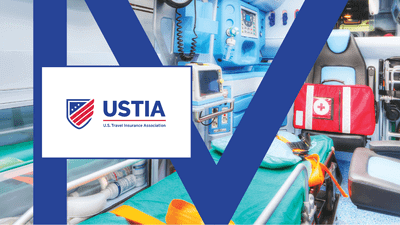

6. Appropriate fleet
In terms of aircraft, they need to match the mission. This means the aircraft must be the appropriate size for the mission type, including the geographic region. For example, short runways, including those at high altitudes, require short-range aircraft. When we issue a request for a quote, we look at the aircraft type to assess not only the size and passenger/crew capacity but also how that influences fuel capacity and the number of tech stops. Tech stops are needed for longer missions. But when comparing providers, we’re always focused on patient outcomes, so the fewer tech stops, the less time the patient spends outside the hospital.
7. Efficient execution
While many elements of execution have already been discussed, execution as a whole is a key component. We must consider the provider’s overall operational efficiency. In doing so, we analyse response time, aircraft utilisation, turnaround time and transport time.
We also look for providers who use data analytics to inform and improve their operations. For example:
- Predictive modelling: predicting high-demand periods to proactively position aircraft and staff
- Resource optimisation: allocating air ambulances to areas with the highest need
- Route optimisation: identifying the most efficient flight paths based on weather and traffic conditions
- Performance improvement: identifying areas for training and process improvements based on data analysis.
To ensure quality and safety standards are met, we prefer partners who are accredited by one of the major air ambulance accrediting bodies
8. Ongoing communication
The provider’s ability to communicate effectively throughout the mission is critical to success. This begins the minute we engage with them. We want to be informed about important milestones, such as the acquisition of permits, the positioning of the aircraft/crew, and the timeline, including tech stops. We also expect the provider to inform us of any potential roadblocks. Once the mission is underway, we want to receive real-time clinical and operational updates, e.g. at patient pick-up, tech stops and airport arrival. A final medical report is required once the mission is complete.
9. Experience with members and ‘high-touch’ stakeholders
Providers must effectively communicate with non-medical stakeholders – including the patient, family members and, at times, ‘high-touch’ stakeholders, such as the patient’s work supervisor. This involves understanding how to balance sharing important (and often difficult-to-hear) medical or operational information with comfort and compassion. And when non-family members, such as work colleagues, are on site or involved, providers must also consider what information is appropriate to share.
10. Excellent reputation
Even though the air ambulance industry is a global industry, it’s also a small world. And reputation matters. A provider should have a solid reputation among key stakeholders such as hospitals, assistance companies and insurance companies. We work with many hospitals in our network, and it goes a long way if the hospital lets us know they’ve had a good experience with a provider and their crew.
The provider’s reputation with the public is also important. Patients who received air ambulance services may share their experiences openly, whether it’s through an online review, a social media post or through the press. At the end of the day, when we choose to partner with a provider, they become part of our care team, and their reputation reflects on us.
Conclusion
Our criteria for selecting an air ambulance partner include a combination of hard and soft skills. Medical and operational experience are critical – as are communication skills, teamwork and time management. Transporting a patient safely and efficiently while keeping them medically stable and emotionally supported is our definition of a successful mission, and we look for air ambulance partners who share that goal and commitment to our members
Dr David E Farnie, Medical Director, Global Healthcare Management, GeoBlue
As Medical Director, Dr Farnie helps oversee the international health insurer GeoBlue’s medical case management activities, including development and implementation of innovative clinical programmes and policies. He supports network development, engagement of providers, product design, strategic planning, and sales support to ensure access to, and quality of, care for members.
He previously, as Global Medical Director, Aviation and Maritime Services, International SOS, led and oversaw the global delivery of assistance services to the aviation and maritime industry. Board certified in Emergency Medicine, early in his career Dr Farnie practised military, hyperbaric, travel, remote bare base and aerospace medicine while serving for 15 years in the US Air Force with deployments throughout Europe, the Middle East and Africa.
March 2025
Issue
The Air Ambulance Review includes features on clinical care for ABIs; investing in fleet; the role of brokers in the air ambulance industry; and an accreditation update.
Dr David E Farnie
As Medical Director, Dr Farnie helps oversee the international health insurer GeoBlue’s medical case management activities, including development and implementation of innovative clinical programmes and policies. He supports network development, engagement of providers,
product design, strategic planning, and sales support to ensure access to, and quality of, care for members.
He previously, as Global Medical Director, Aviation and Maritime Services, International SOS, led and oversaw the global delivery of assistance services to the aviation and maritime industry. Board certified in Emergency Medicine, early in his career Dr Farnie practised military, hyperbaric, travel, remote bare base and aerospace medicine while serving for 15 years in the US Air Force with deployments throughout Europe, the Middle East and Africa.