
Industry Voice: Three countries, one tournament: the travel insurance challenges of the 2026 World Cup

Tim Riley, Managing Director of True Traveller and Chairman of UKTIA, tells ITIJ about hazards the FIFA World Cup travel might bring for UK football fans
Thousands of the UK’s football fans are currently (and some are still to make the trip) across the Atlantic this month, driven by international soccer’s most important event, the FIFA World Cup. But while most followers of the beautiful game have focused on securing flights, accommodation, and match tickets, it is probable that far fewer have paid the same attention to what could ultimately prove the most important part of their trip: travel insurance.
The three host destinations – the USA, Canada, and Mexico – each offer their own challenges to the international traveller. And fans could be risking being significantly out of pocket if they have failed to arrange appropriate cover.
It’s not only the cost of long-haul flights and premium event tickets, but also the possible associated risks with multi-destination travel to these places. For the travel insurance sector, this presents both a significant opportunity and a clear responsibility.
Three destinations and multiple travel patterns
The 2026 tournament is being hosted in 16 cities across the US, Canada and Mexico, and represents a fundamental departure from previous World Cups. With matches spread across a vast geography, many fans will not base themselves in a single location. Instead, they will follow teams across cities and borders, often within tight time frames.
The three host destinations – USA, Canada and Mexico – each offer their own challenges to the international traveller
This shift towards multi-country, multi-leg itineraries introduces a level of complexity that could change the risk profile of a trip for the everyday football fan.
From Atlanta to Mexico City, it is fair to say that the travel experience each host city offers is varied. And each additional flight, border crossing and accommodation booking creates another potential point of tension. Delays, cancellations and the possibility of accident or illness are multiplied as fans travel to follow the tournament.
A high-value opportunity – with expectations to match
There is no doubt that the tournament has and will drive significant demand from UK and European travellers. These are typically high-value customers, booking long-haul trips with substantial upfront spend.
But with higher spend comes higher expectation.
As travel trends become more dynamic and multi-destination, the 2026 World Cup highlights multiple challenges:
- Complex itineraries spanning multiple countries
- Cancellation claims may be higher in value as each host is a long-haul destination for UK fans
- Higher medical expenses abound in the US and Canada.
With any travel to the US and Canada, we as insurers must encourage customers to review annual policies more carefully, particularly around medical coverage limits.
And Mexico equally has its challenges. In fact, recent data we uncovered showed that it was the worldwide destination with the highest number of theft claims among our customers, with mobile phones and cash being the most frequently stolen items reported.

The misconception of a ‘seamless’ North America
One of the most persistent risks surrounding the tournament is the assumption that North America operates as a single, unified travel zone.
In reality, crossing between the US, Canada, and Mexico involves navigating three distinct immigration systems.
There are different entry requirements for each country co-hosting the tournament, as well as differing local laws and customs not only across the different host nations but within different US states as well, so if UK fans are planning to visit or transit through more than one state or country, they need to be aware of the different requirements by checking the UK Foreign Office advice for each one.
The US healthcare factor: an underestimated risk
Medical risk remains one of the most significant and often underestimated exposures associated with long-haul travel, particularly to the US and Canada.
Unlike many European destinations, the US does not offer universal healthcare. Treatment is delivered through a largely privatised system, and costs can escalate rapidly, even for relatively routine care.
A short hospital stay can run into thousands. More serious incidents, particularly those requiring specialist treatment or repatriation, can exceed tens of thousands.
Medical expenses in the US are very high indeed, with one night in intensive care costing anything up to US$6,000, and international air ambulance costs going over $100k! Therefore, customers need to be made aware that they may need to adjust their medical insurance cover.
One of the most persistent risks surrounding the tournament is the assumption that North America operates as a single, unified travel zone
Key medical risks for travellers attending the tournament may range from heat-related illness and dehydration to more common issues such as gastrointestinal illness, minor injuries, and incidents linked to alcohol consumption. These are compounded by the realities of large-scale events, where crowd density and movement can increase the likelihood of accidents or, in rare cases, more serious mass-casualty situations.
During a major event such as the World Cup, additional pressures on local infrastructure may further complicate access to care.
For insurers, this reinforces the need for clear communication around the realities of healthcare costs in the US and Canada.
For travellers, the message is simple: without comprehensive insurance, the financial consequences of a medical emergency could be severe, so checking exactly what levels of cover they have purchased is vital.
As ever, it is vital to provide clear, proactive communication to policyholders, ensuring they understand how to access support quickly, wherever they are in the tournament.

Looking ahead
The 2026 World Cup is indicative of a broader shift towards experience-led travel, where major global events drive complex, multi-destination journeys.
And we as travel insurers are best placed to communicate the risks and make sure our customers can enjoy their travels, whether it is fuelled by their love of football or the pursuit of global experiences that no longer fit neatly within a single destination or risk profile. For the insurance industry, the challenge and the opportunity is to keep pace with that shift and ensure customer service and protection evolve as quickly as the way people choose to travel.
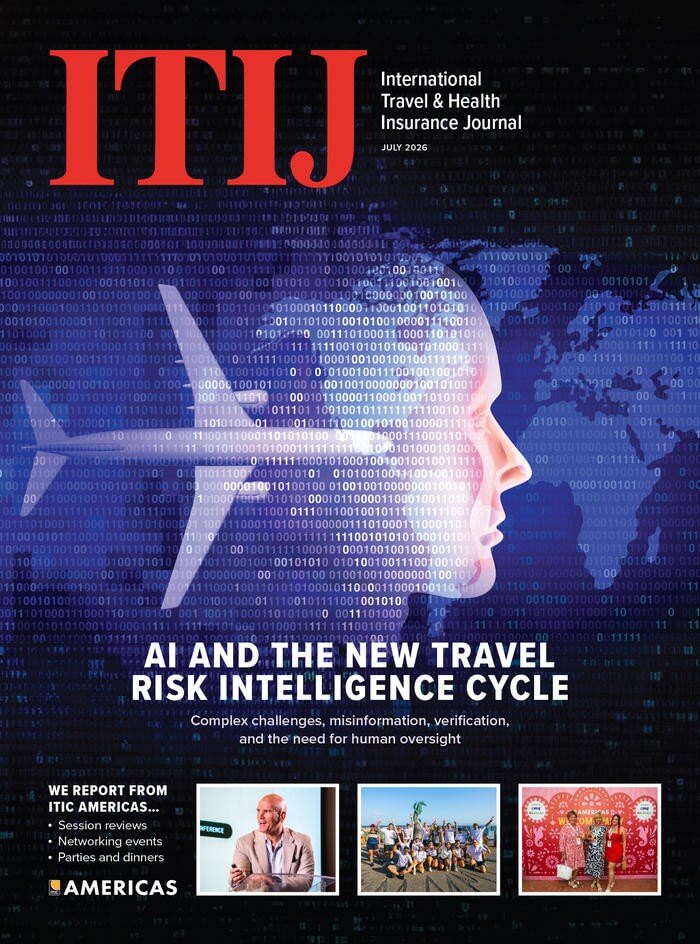
July 2026
Issue
Welcome to your July issue! This month we look at how artificial intelligence solutions are changing the way in which travel risk information is gathered and communicated, plus we ask whether providers should do more to educate their customers, ensuring they understand the products they are buying and using them appropriately.
Tim Riley
In partnership with AXA, True Traveller is probably best known for covering adventure travellers and backpackers. Tim started working for Trailfinders in the 1980s, remaining in the tailor-made part of the travel industry until 2010, where he was Operations Director of TUI Travel Specialist Division, looking after the Austravel, Travelmood and Trips Worldwide brands. Tim still thinks of himself as a ‘travelman’ rather than a travel insurance person, but has the advantage of working at senior levels with tour operators and now insurance.