
Industry Voice: A more holistic approach to helping travellers mitigate weather-related risks

Scott Fleming, President of Aon Affinity Travel Practice, explores how unpredictable weather is changing travel risks, why consumer education matters, and how travel insurance can help protect journeys year-round
Consumers are becoming more aware of the risks that weather can pose to their vacation plans. In fact, according to Aon Affinity Travel Practice’s most recent American Traveler Survey, more than half of Americans are less likely to book travel to destinations prone to hurricanes, blizzards, and other extreme conditions (56% in 2024, up from 49% in 2019).
While this awareness can help travellers avoid the hassles that can come with weather-related delays and cancellations, it doesn’t provide a line of defence against another trend – a rise in unpredictable weather events, from December tornadoes to wildfires expanding into new regions, with their impacts felt well beyond the burn.
As the 2026 Atlantic hurricane season winds down and winter looms on the horizon, the travel insurance industry can help consumers think about their weather risks in a more holistic way. Yes, it is important to take traditional weather patterns into consideration when booking travel and buying coverage. But today, travellers also need to acknowledge that weather doesn’t always stay in its old, predictable lanes. We can help travellers continue to see the world with confidence by educating consumers about the travel insurance benefits they should consider year-round to help protect themselves and their investment in travel.
Navigating an unpredictable climate
Americans love to travel, and according to an AAA survey, more than 60% plan to take at least one vacation this year. The travel insurance industry can help protect those plans if the unexpected should occur before or while they’re on the road. Providing that protection starts with consumer education, both about travel insurance basics and common misperceptions.
As weather patterns intensify and shift, here are five of the most important things consumers should understand.
1. How policies can respond to named storms
Travel insurance can play an important role in helping consumers continue to travel during hurricane season. Some, but not all, trip cancellation plans can reimburse costs if a policyholder is forced to cancel due to a hurricane affecting their destination during the scheduled travel dates. However, consumers must remember that buying a policy after a storm is named will typically negate coverage for that storm.
Other points to emphasise with consumers include:
• Some plans may require a storm to be officially named and directly affect their specific destination, not simply approaching the general geographic area
• If a named storm forces travellers to return home early, trip interruption benefits may help them cover the cost of changing flights and get reimbursed for the unused, non-refundable portion of a planned trip
• Similarly, if travellers are forced to evacuate their hotel or miss a flight because roads become impassable, travel protection may help pay for additional meals, lodging, and transportation expenses that are needed because of the disruption
• Finally, travel insurance can also provide protection before a trip begins. If a traveller’s home becomes uninhabitable due to a weather event (such as an ice storm, flooding or other severe weather damage), that may
be a covered reason to cancel a trip under some policies.
2. Traditional travel insurance versus CFAR
Cancel for any reason (CFAR) gained momentum during the pandemic, and for good reason. It played a big role in helping consumers feel comfortable travelling during a moment of uncertainty because of the flexibility it offers. Today, CFAR can play a similar role in helping boost consumer confidence in the face of shifting weather patterns, but first they need a refresher on what this benefit really is.
One of the biggest misperceptions is that many consumers assume all policies have CFAR benefits. Consumers should know if they have traditional travel insurance, which covers specific named perils, or the expanded coverage of a CFAR plan. And if they have CFAR, they need to know how much they will be reimbursed in the event of a claim and in what format. Confirming these basic understandings can help consumers access their benefits when weather risks strike and can create loyal customers for travel insurance providers.
3. The role of post-departure benefits
Too many consumers still think of travel insurance in terms of just trip cancellation. However, as weather patterns shift, post-departure benefits can be equally important. For example, trip delay benefits can provide a lifeline, helping offset extra costs due to a delay – including meals, lodging or transportation – as well as helping passengers catch up to their scheduled trip. Trip interruption can help a traveller return home if a named storm is poised to strike your destination.
4. How credit card benefits fit in
“My credit card has travel insurance, so I don’t need to buy a separate policy.” This is another common misperception. While some credit cards include travel insurance benefits that can help pay for out-of-pocket costs in certain situations, it’s important to understand that coverage differs from card to card and may not provide coverage in the face of all-weather events. If consumers rely on their card, they should read the terms and conditions of their benefits carefully before making a final decision on supplemental coverage.
5. When to buy travel insurance
Timing is everything when you’re purchasing travel insurance. After all, if consumers wait until after a storm has been named, it may be too late, and some benefits, including CFAR or waivers of certain exclusions, may only be available if a policy is purchased within a specified time frame after booking. Purchasing coverage early gives travellers access to the broadest range of available benefits before severe weather becomes a known event.
Moving forward
The travel insurance industry can play an important role in helping consumers travel with confidence as weather patterns shift in unexpected ways by helping them understand how to help protect their trip. Consumers need counsel, easy-to-digest information at every step along the purchase process, and reminders to revisit their policies right before they travel. When customers understand their travel insurance, they’re less likely to file a claim for a reason that’s not covered under their policy, and more likely to continue to make travel insurance part of their vacation plans in the future.

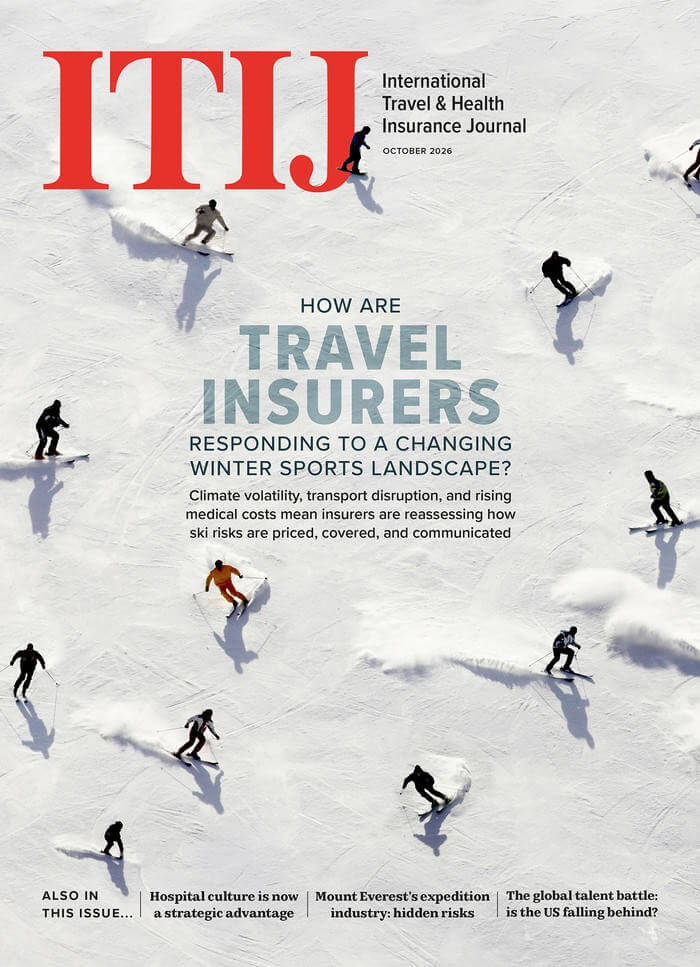
October 2026
Issue
This month in ITIJ we take a close look at how travel insurers are responding to the changes in winter sports risk, and we ask how risk is priced, covered and communicated to policy holders.
How do international hospitals stand out from the crowd, and become the number one choice for insurers and assistance companies? Clinical excellence alone is no longer enough. We look at why hospital culture has become a strategic advantage, and how dedicated international departments are strengthening relationships between hospitals, insurers, and assistance companies.
Scott Fleming
Scott leads customised travel protection programmes for some of the world’s most recognised travel companies. With more than 17 years of experience in the travel insurance industry, he has built a reputation for strengthening partnerships, guiding product strategy and driving growth across the industry.