
Industry Voice: Cultural fluency: embedding cultural competence into medical assistance operations

Waseem El Tanahi, Business Development Director at CONNEX Assistance, talks about the value of deep cultural knowledge and understanding when delivering international medical assistance services
In the high-pressure world of international medical assistance, technical expertise, rapid decision-making, and logistical precision are essential. But what truly distinguishes an outstanding provider is not only the speed or efficiency with which a case is managed, but the respect, sensitivity, and cultural intelligence applied throughout the process. At CONNEX Assistance, this perspective forms the foundation of our operations. With regional hubs in Cairo, Dubai, and Riyadh, and a footprint spanning more than 25 countries across the Middle East and Africa, we have developed a cultural awareness training programme that is not simply a support tool – it is central to our operational strategy.
Culture as core infrastructure
Too often, cultural awareness is treated as a soft skill, a desirable trait but not a critical competency. In our experience, that mindset is not only outdated, but poses operational risk. Our teams regularly handle critical cross-border patient transport in the Arabian Gulf, repatriations from West Africa to Europe, and maternity support for Arab patients in the UK or US. These are complex cases that rely not just on clinical coordination, but on cultural fluency.
In Saudi Arabia, for example, many public hospitals operate with gender-segregated protocols. In Egypt, it is culturally expected that large numbers of family members will visit intensive care unit (ICU) patients – a practice that may overwhelm those from other regions. In Angola, administrative processes are often driven by established personal relationships and informal trust. Each region has its own norms, expectations, and unspoken rules.
Our training ensures we are adept at navigating these unspoken rules as an organisation and equips staff to manage these dynamics with clarity and respect. It begins with three foundational pillars: recognition, understanding, and sensitivity – recognise when culture is affecting behaviour or decisions; understand the context behind those behaviours; and respond with sensitivity that aligns with both the patient’s expectations and the insurer’s standards. This builds trust not only with the patient, but also with the local provider and the insurance company, each of whom needs to feel understood and supported.


Training for cultural awareness
Cultural awareness training begins from day one. New case coordinators and medical staff should be introduced to the healthcare-specific norms of the regions we operate in, as well as the potential cultural, religious, and legal obstacles they may face, through simulations and detailed case studies.
One foundational example in our training dates back 25 years to a case in Cairo. A Scandinavian patient had been admitted to a leading hospital’s open ICU. A nurse was playing Quranic recitations over a speaker at the request of another patient’s family, a gesture seen as comforting to many Egyptian patients. However, the Scandinavian patient, though clinically stable and initially satisfied with the care, experienced great distress during the night due to the unfamiliar practice and lack of peace and quiet, and ultimately requested to be transferred.
This case now serves as a training example. It illustrates the importance of preparing providers to be mindful of varying patient expectations and, where insurance coverage allows, to proactively request private ICU placement. It also emphasises the need to guide local providers in balancing cultural practices with the comfort and dignity of all patients. Just as important, it shows how miscommunication can be avoided through constant dialogue between all stakeholders: the patient, the insurer, and the hospital.

Language and staffing
Language provision is a critical component of our approach. Our alarm centre operates in six core languages: English, Arabic, French, German, Spanish, and Italian. For sensitive situations – like when obtaining medical consent or managing emotionally charged interactions – we use trusted local interpreters who understand the language of both the patient and the healthcare setting.
It could mean supporting a Japanese patient in Qatar during a complex procedure, or helping an Arab family in Germany understand post-rehabilitation care. In both cases, it is about interpretation, trust-building, and cultural alignment.
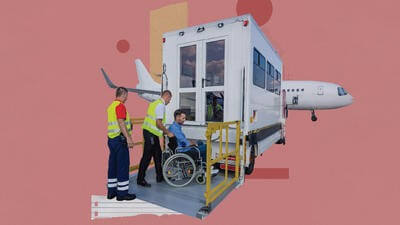
Staffing flexibility is just as crucial. CONNEX Assistance medical escorts are selected for their clinical excellence as well as their visa flexibility, language proficiency, and cultural adaptability. Each mission begins with reviewing clinical requirements and matching them with the right escort. Beyond that, we consider visa logistics, language, and even gender – all critical to trust and comfort during the mission.
These factors are embedded in our training. New staff walk through realistic scenarios that highlight cultural variables and help them anticipate challenges. Our aim is not just individual awareness but shared institutional knowledge that guides consistent, culturally sensitive operations.

Administrative realities
In many parts of the Middle East and Asia, cultural norms intersect with healthcare administration in ways that can disrupt timelines. Ramadan is one example – hospitals shift to night schedules, requiring case timelines to be updated, clients to be informed, and preparations made for potential delays.
Even small details like date formatting matter. Some state institutions may use the Islamic lunar calendar, which requires conversion. In Saudi Arabia, access to medical information can be limited to family members, requiring formal extra steps for third-party access to your data. In the United Arab Emirates, last-minute payments at airport clinics can delay evacuations. We manage these scenarios by anticipating challenges, training teams, and maintaining clear communication with the patient, provider, and insurer.
Cultural knowledge results in better outcomes
Samia Khalil, our International Network Director, recalls a case in Riyadh involving a female Arab patient who urgently required a gynaecologist. “Given the cultural context, we anticipated the patient would not accept a male doctor. Rather than wait for this to become an issue on the patient’s arrival at hospital, we proactively secured a qualified female doctor. That decision prevented delays and ensured timely care.”
She added: “Our training helps us develop playbooks for recurring cultural scenarios. We communicate disruptions like Ramadan delays in advance and, if necessary, send a representative on site. The same applies to escort missions. While each is unique, the questions we ask follow consistent principles that
help us anticipate challenges before they arise.”
Cultural awareness links medical quality to operational success. It improves collaboration, accelerates resolutions, and builds trust. When patients feel seen, they engage more. When providers trust assistance providers to understand their world, they cooperate more fully, and when insurers see culturally competent care, they know their members are in safe hands.
October 2025
Issue
In this latest Assistance & Repatriation Review we explore how legal networks and insurers can help travellers who fall foul of the law while abroad. We look into the intricacies surrounding how medical transfers can be provided to pre-natal and neonatal patients, and examine the provision of medical care to patients who become ill on cruise ships.
Waseem El Tanahi
Waseem is the Business Development Director at CONNEX Assistance, where he drives strategic partnerships and growth initiatives across the Middle East and Africa. With over 20 years of experience in healthcare, travel assistance, and related sectors, he has successfully led the company’s expansion into new markets, including the opening of a CONNEX Assistance operational office in Saudi Arabia.