
High hopes for medical tourism

Tatum Anderson examines cost containment and international management for MEA-based patients crossing borders for healthcare
Before the pandemic, hundreds of thousands of patients – particularly from Middle Eastern countries – travelled to the US and Europe for medical treatment. Around 100,000 UAE residents went abroad for health services every year, of which 7,000 patients were nationals whose medical travel was actually sponsored by the government.
But a confluence of circumstances in recent years has altered the picture radically. It isn’t just the effect of 9/11, but also the pandemic and changing fortunes of governments. Earlier this year, Laila Al Jassmi, CEO & Founder of Health Beyond Borders, told an ITIJ conference that cases referred abroad have been reduced by as much as 70 per cent according to local authorities. Governments have also started to scale back on sponsorships.
Financial free zones
New strategies include investment in medical islands or cities and tourism management platforms. Financial free zones allow foreign health service providers to set-up shop, from Al-Maryah Island to Abu Dhabi’s Saadiyat Island, with an international medical city being developed in Salalah, Sultanate of Oman.
The UAE put in place a strategy in 2016, forming a health tourism department – Dubai Health Authority (DHA) – which created the Dubai Health Experience (DXH), an online platform that coordinates 75 facilities, travel agents and hoteliers. It also provides consultations, reservations, insurance recommendations and second medical opinion services and packages.
According to the DHA, in 2018, 33 per cent of medical travellers to Dubai came from within the UAE and other Gulf States, predominantly Kuwait, Oman and Saudi Arabia; thirty per cent from Asia, mainly India, Iran and Pakistan; and six per cent from Europe, mainly the UK, France and Italy.
The Department of Health Abu Dhabi and Department of Culture and Tourism has copied DXH, now connecting 40 healthcare facilities, providing 280 medical treatment packages, insurance packages, appointments, hotels, recreational activities and transport.
This sea change in the region is benefitting medical travel, says CONNEX Assistance, which provides assistance from Egypt to Gulf Cooperation Council (GCC) countries, to Algeria, Tunisia and Iraq. “We feel with the investment in healthcare taking place by local and multinational companies in Dubai, UAE, and Cairo, Egypt, our medical tourism industry can only grow stronger every year,” said Lara Helmi, Co-Founder and Managing Director of CONNEX Assistance. “As the industry gets better at packaging the Travel for Treatment offering, the industry-leading provider of medical, technical and funerary assistance in the Middle East and North Africa will grow.”
With four decades in the region, Fakeeh University Hospital in Dubai has benefitted from the latest developments. Dr Fatih Mehmet Gül, Vice President of UAE & Group Growth Office & Chief Executive Officer, said international patients are an important community. “We receive them from most of our surrounding nations in the Middle East and Africa (MEA). Due to the sheer volume, we have set in place International Patient Services,” he said.

Dubai is attempting to become a main medical tourism hotspot, but it’s a work in progress
The most sought-after treatments are provided by Fakeeh University Hospital’s Surgical Institute, which specialises in minimally invasive procedures, as well as cancer care for adults and pediatric patients. “Not only for treatment, but we also receive patients seeking a differential diagnosis,” he said. “We help them, then move on to a treatment plan that is supported by smart systems, expert care and faster recovery.”
Dr Gül extolled the virtues of the hospital interface’s with DXH. “The easy to navigate, single window smart application, as well as the digital gateway, is something phenomenal that Dubai, UAE, has to offer compared to any other country,” he said. “It helps expose health tourists to a high-quality, comprehensive and integrated directory of services and offers. This adds extra validation and authentication to providers.”
Dubai is attempting to become a main medical tourism hotspot, but it’s a work in progress. “There is lots to be done through insurance companies and this area certainly needs to be strengthened,” Dr Gül said, adding that the majority of international travelling patients are cash-paying. “Few have international insurance coverage,” he stated. “Apart from insurance, there are medical facilitation companies, as well as consulates, supporting patients with guarantee of payment (GOP).”
Travel for Treatment
CONNEX Assistance, with offices in Cairo and Dubai, has a view of medical travel from the GCC to North Africa and beyond. It divides Travel for Treatment in the region into different groups. This includes those with limited medical services seeking a better quality of treatment overall – from the likes of Sudan, Libya, Yemen and sub-Saharan countries, going to Egypt or the UAE for elective and major emergency procedures. Others are in search of centres of excellence for a particular diagnosis. “With inbound patients to Egypt, for example, these tend to be fertility treatments or gastric sleeve surgeries, for which we are well known amongst Arab countries,” said Helmi. “For Arabs overseas, you see a lot of travel to Germany and the US, specifically for orthopedic surgery, joint replacement, cardiac surgery and oncology treatment.”
Their Indian, Egyptian and Jordanian patients actually travel home for a good quality of care because of considerably lower costs than the UAE. “They are offered a ticket to undertake an elective surgery and recover in the company of their families, often creating considerable savings for the insurer,” Helmi said.
Indian, Egyptian and Jordanian patients actually travel home for a good quality of care because of considerably lower costs than the UAE
So, there is a considerable appetite for international travel in the MEA region, yet not all institutions can meet these needs. “All hospitals would like international patients, but they are not always prepared to manage the additional effort which goes into delivering a good service,” she said. CONNEX will ask a lot of questions related to the case, require a lot of materials about the facility, information about the treating doctor and access to them, as well as regular updates and medical reports. “Some facilities are better suited to respond to these requests swiftly,” she explained. “Travel for Treatment in particular can be difficult for hospitals, as they are unable to package their offering in a way which is easy for a patient to feel comfortable, rather than at a facility where they reside.”
American and European hospitals have years of experience over their Middle Eastern counterparts in this respect, but Helmi says things are improving. “We find that facilities in our region are catching up, as more of them build TFT departments, contacting us, especially in the past year,” she added. CONNEX Assistance has direct billing agreements throughout the whole of the Middle East, and due to its history in the region, doesn’t have any issues keeping them in place. It also works through direct networks and partner companies worldwide.

Patient expectations in Nairobi
Because of its unique geographic location in Nairobi and in-depth knowledge of the political climate, medical issues and culture, AMREF Flying Doctors (AFD) handles complex assistance cases. These range from prolonged hospitalisations and emergency hospital transfers, to home-based services and provision of a wide range of concierge services, including personal shopping, flight ticketing and hotel reservations. This extends to teleconsultations, drug and medical equipment delivery and mobile laboratory services. That is why AFD handles cases in challenging and remote parts of the greater Eastern Africa region through established partnerships and using its own staff directly. It plans to open in Somalia and the Democratic Republic of Congo (DRC).
Dr Joseph Lelo, medical director of AFD, said the organisation primarily deals with emergency or urgent cases, where patients are travelling in the region on tourism or business. “That said, some patients do travel to seek advanced care not available in their home country,” he said. “Patients will typically be coming to Nairobi from other East and Central African countries referred by their doctors or insurance providers. Some will be self-paying.”
Hospitals within the region could more effectively manage international patient expectations using competitive pricing and quality, said Dr Lelo. Having a liaison office with multilingual staff to help clients with communication and settling in is a big plus. Some facilities may be fraudulent and offer more than they can deliver, however. “A profit-driven medical industry can put ethics aside. For example, in a case of advanced cancer, a hospital may promise a cure for a patient,” he said.
Dr Lelo, therefore, emphasises the way assistance companies like his focus on driving quality and excellent user experiences. “Our principle is to side with the patient and be their advocate. We demand quality service from our hospital partners where we take our clients,” he said.
From the point of view of assistance companies and insurers, Dr Lelo said proper communication with clients on expectations, as well as having robust quality assurance processes, is essential. Frequent audits and assessments of the facilities and customer feedback give adequate tools to guide interventions to improve outcomes, he said.
As for billing agreements, Dr Lelo believes direct agreements are in place for most of the major hospitals in the region. Of course, there are exceptions. “Some hospitals will demand up-front payment, especially if the client is new or does not have insurance,” he said. “This is from their experiences of clients not being able to pay bills after the services or with delayed payments from insurers.” Some hospitals will even demand up-front payment of cash deposit on admission, even in emergency cases. “This is a major problem as it causes delay in treatment and is against the law,” he added.

Dr Lelo has noticed that countries with banking technology and processes that enable faster transactions and lower costs will have easier billing agreements. “Alternatively, having in-country agents to directly negotiate and make payments also works well,” he said. From his experience, international health insurance providers and hospitals are happy to work out direct billing arrangements. “This, however, means a direct visit and negotiation with the facility,” he said. “It works best if they use an intermediary assistance company which already has agreements with the facilities.”
Medical networks tend to be region specific – for example, East or Southern Africa, French or English-speaking hospitals. “The networks will cover major hospitals,” said Dr Lelo. AFD also has its own network and offers services to the international insurance providers should they need it. “We act as their agents to offer services to their clients.” If anything could be improved, it would be a prompt settlement of bills and efficient communication on cases.
He also recognised that patient numbers can affect the process. “With hundreds of assistance companies each sending a low volume of patients to hospitals, getting deals is difficult,” he said. “If they consolidated and worked with regional partners, volume discounts and rebates would be easier.”
May 2023
Issue
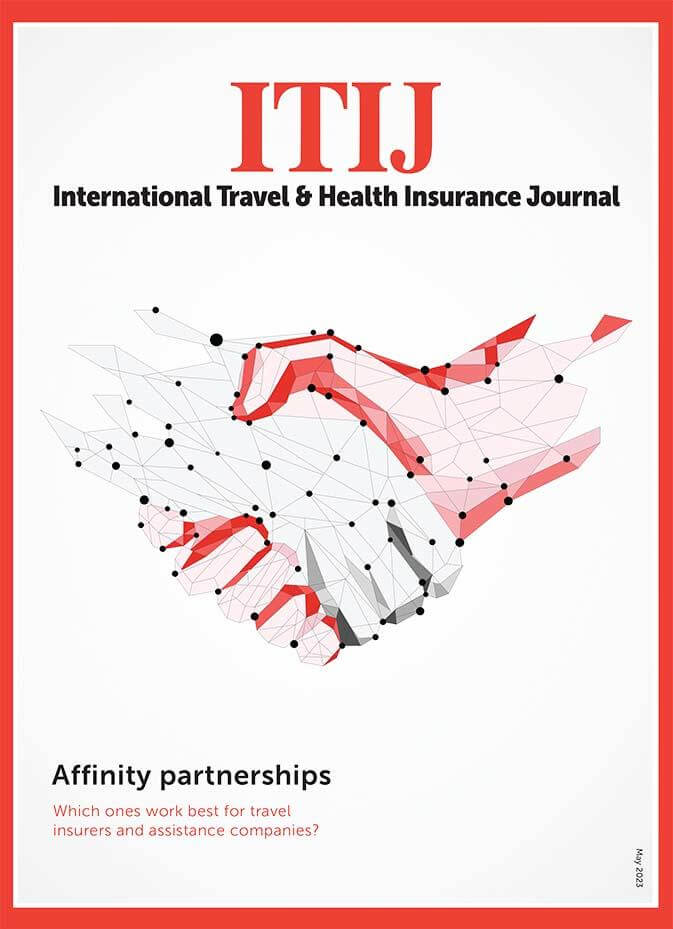
In the May issue we consider the affinity partnerships for travel insurers and discuss which ones work best for insurers and assistance companies. We also examine which control measures assistance companies use during Hajj; look at cost containment and international patient management for MEA-based patients crossing borders for healthcare; and explore price escalation for medical care during high tourist seasons in areas that depend seasonal patients.
Tatum Anderson
Tatum Anderson is a journalist and has written in-depth features for ITIJ and its supplements for over 12 years. An experienced tech, business and global health specialist, she specialises in writing about all manner of medical travel and technology, from AI and telemedicine to crew health and cost containment. She routinely interviews high-level executives from international hospitals and insurers to assistance companies and air ambulance firms worldwide. Tatum has also written for a range of high-profile publications including The Bulletin of the World Health Organization, BBC News Online and The Guardian. She was a stringer for The Economist and has contributed to The Lancet, BMJ and Nature.
Keep on reading

Partnerships with travel insurers and assistance companies

Assistance during Hajj
Seasonal price hikes for medical care








February 2025
Issue
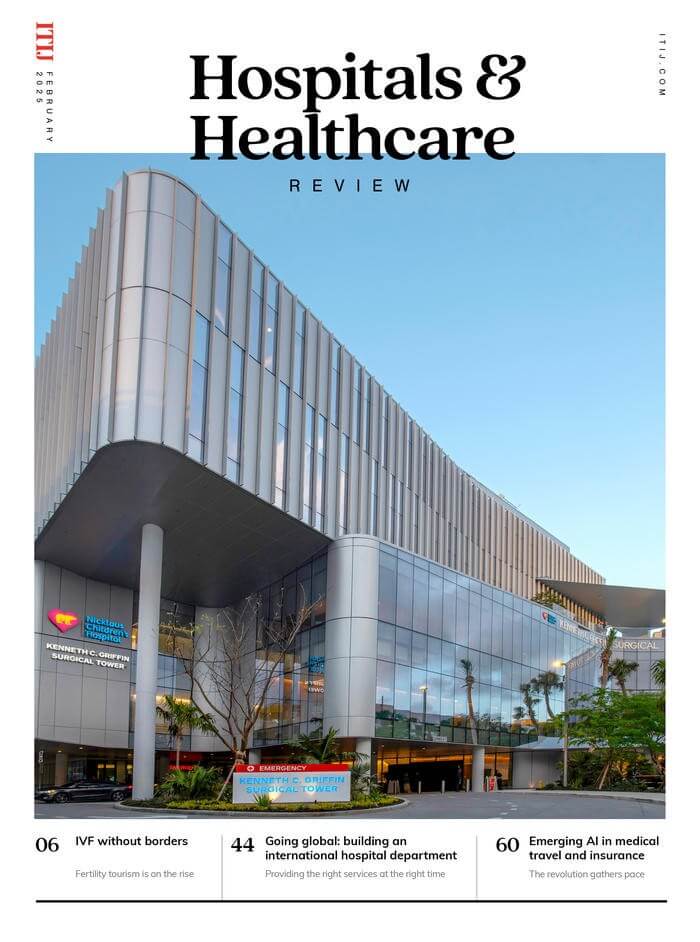
Offering readers a deep dive into the issues facing providers and payers of healthcare services around the world. Cost containment, international patient department development, the role of AI in healthcare delivery and more.