Global mobility has changed. Are healthcare insurance strategies keeping pace?

Connecting globally mobile people to the right care, before costs and risks escalate. Insights from Gitte Bach, Founder and CEO of New Frontier Group
The way people live and work across borders has fundamentally changed, but many healthcare insurance strategies have remained the same. The traditional distinction between a traveller and an expatriate is disappearing as remote work, digital nomad visas, extended assignments, and blended business-leisure travel become the new normal.
For insurers, employers, and assistance providers, this shift creates new opportunities and new risks. The challenge is no longer just responding to medical emergencies abroad; it’s ensuring that globally mobile individuals have access to the right care before health issues become major financial, clinical events.
Policy choices
Many internationally mobile professionals still rely on healthcare solutions designed for a different era. Short-term travel insurance will always be an excellent solution for emergency medical needs during vacations or brief business trips. However, it was never intended to support months of international living, ongoing medical care, or the healthcare needs of an increasingly mobile workforce.
As more countries introduce long-stay and digital nomad visa programmes, comprehensive medical coverage is becoming an essential part of international mobility. Many visa programmes now require applicants to demonstrate adequate health insurance, reflecting a growing need for additional coverage options in the global market.
At the same time, global medical inflation continues to place pressure on insurers, employers, and members alike. Rising healthcare costs are making it increasingly difficult to rely solely on traditional costmanagement strategies focused on negotiating bills after treatment has occurred. Instead, successful organisations are shifting their focus upstream and focusing on preventing unnecessary claims before they happen. This is a big area where healthcare insurance strategy is evolving.
An evolving landscape
As an example, telemedicine used to be a convenient alternative to an office visit, and now leading travel insurance organisations are embedding virtual care into broader cost management programmes. Early clinical triage helps members receive guidance before seeking unnecessary emergency care.
Digital consultations support chronic disease management, behavioural health, medication adherence, and post-treatment follow-up, reducing avoidable hospitalisations while improving continuity of care. Telehealth delivers its greatest value when it is intentionally integrated into broader care navigation and cost management strategies, not offered as a standalone service. Transitional care management is also needed for patients hospitalised outside of their home country to ensure a smooth transition that optimises recovery.
Artificial intelligence (AI) is also strengthening options by helping identify members who may benefit from earlier intervention, while experienced clinicians continue to provide the judgement and oversight that complex cases require. Technology is making healthcare smarter, not replacing the human expertise that remains essential to quality outcomes.
Another big change is in employment shifts. Today’s workforce no longer fits neatly into traditional expatriate programmes. Employees may spend weeks, months, or even years working across multiple countries, often combining professional travel with personal mobility. Duty of care has become more dynamic, requiring employers to look for healthcare solutions that are equally flexible.
Rising healthcare costs are making it increasingly difficult to rely solely on traditional costmanagement strategies focused on negotiating bills after treatment has occurred
The future of international healthcare will not be defined by broader networks or larger discounts alone. It will be measured by how effectively organisations connect globally mobile people to care that meets their specific needs, even before high-cost events occur. Global mobility has changed. The organisations that rethink healthcare strategies now will be the ones best positioned to protect the members, control costs, and deliver better outcomes in the years ahead.
Gitte Bach
Founder and CEO, New Frontier Group
Gitte launched the independent, woman-owned global cost management firm in 2002 with a bold vision: to bring smarter, more affordable solutions to international healthcare. With more than two decades of experience in international insurance and global assistance, Gitte has built NFG into a trusted partner for insurers, maritime operators, and multinational organizations navigating complex healthcare systems worldwide. She is focused on compassion, transparency, and strategically driven solutions.
September 2026
Issue
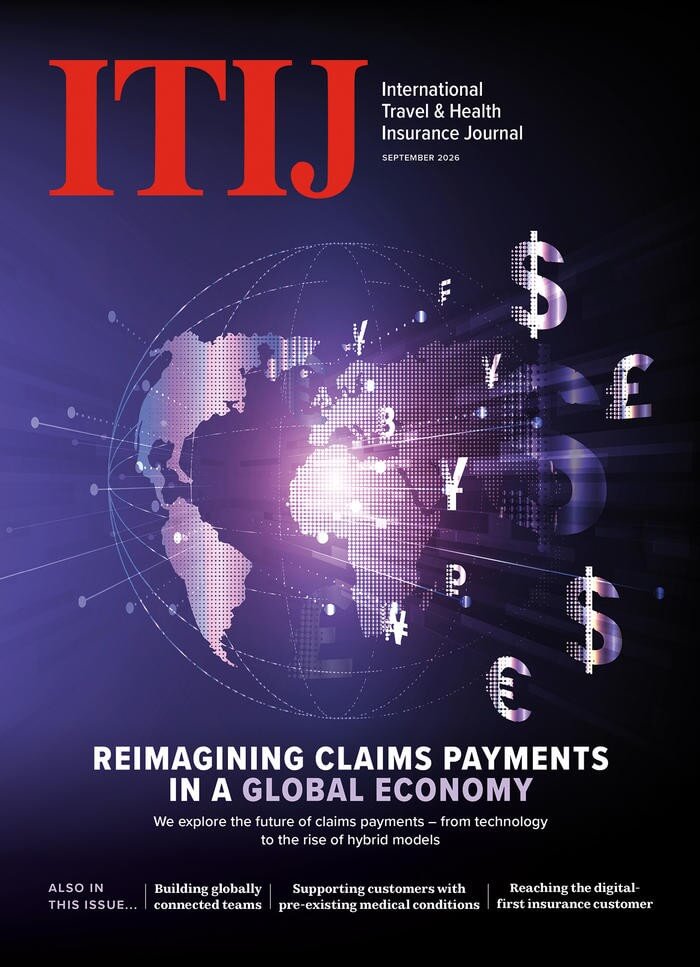
This month we take a close look at claims payments. As these payments become increasingly global, organisations are evaluating traditional international transfers, cryptocurrency, and parametric payment models to balance speed, cost, compliance, and customer experience.
While traditional banking systems remain trusted for reliability and regulatory certainty, they often fail to meet growing expectations for instant payments. Industry leaders increasingly favour hybrid payment ecosystems, combining established banking networks with modern digital technologies to deliver flexible, efficient, and customer-centric payment solutions. We hope the insights from our experts give you food for thought.
Editorial Team
The Editorial Team updates the ITIJ website daily, and works on features for the print edition. With expert industry knowledge and years of experience in writing about complex travel insurance issues, the Editorial Team is ready to investigate and report on the topics that matter most to ITIJ's readers.