The future of repatriation: why technology needs a human touch

As repatriation evolves, Crystal Wharton of TMCA Group tells us how they are combining technology with hands-on expertise to improve outcomes for travellers
TMCA has extensive experience in the sector. How has the company evolved, and what role does it play in assistance and repatriation today?
We started from modest beginnings and have grown into a trusted industry leader. The company has evolved significantly as the travel insurance industry has become more global and the needs of travellers have become more complex. Assistance has grown from primarily responding to emergencies into a comprehensive service that coordinates medical care, case management, cost containment, transportation, and repatriation.
TMCA Group plays a critical role in managing the entire process when a traveller experiences a medical emergency away from home. This can include locating appropriate medical facilities, monitoring the patient’s condition, coordinating with treating physicians and hospitals, arranging guarantees of payment, and determining the safest and most appropriate way to return the traveller home when medically necessary.
Repatriation is particularly important because it requires much more than simply arranging transportation. It involves medical assessment, coordination with the treatment facility, transportation providers, airlines, medical escorts, and the receiving facility at home.
I also think the industry is increasingly combining technology with the human side of assistance. Technology and artificial intelligence (AI) can help us process information more efficiently and manage complex cases, but the human element remains essential.
What expertise does TMCA bring to assistance companies and their customers?
Our company brings value to assistance companies by providing expertise, support, and solutions that help them manage complex cases more efficiently and effectively. We act as an extension of their team, helping with the coordination and management of cases so they can focus on their core responsibilities and, most importantly, the needs of their customers.
For the customer, our role is to make a difficult situation easier to navigate.
We help bring organisation and communication to the process by working with hospitals, medical providers, insurers, and assistance companies to obtain the information and documentation needed to move the case forward.
One of the biggest things we bring is responsiveness and personal attention. Every case is different, and while technology can help make processes more efficient, complex medical and travel situations still require people who can communicate effectively, follow up consistently, and understand the importance of each case.
Ultimately, we help assistance companies deliver a better experience to their customers.
What are the biggest changes you have seen in the assistance and repatriation sector in recent years?
One of the biggest changes is how much more complex and coordinated the process has become. Cases today often involve multiple parties, including insurers, assistance companies, hospitals, medical providers, transportation companies, and families, so strong communication and case management have become increasingly important.
Technology has also had a major impact. We now have better access to information, electronic medical records, digital communication, and tools that allow cases to be monitored and managed more efficiently. More recently, AI is beginning to play a role by helping organise information, review documentation, identify trends, and reduce some of the administrative workload.
I’ve also seen a greater focus on cost containment and accountability. Medical care, particularly internationally, can be extremely expensive, so assistance companies need to balance providing the right level of care by making sure treatment and transportation costs are appropriate and properly managed.
Travellers and their families also expect immediate assistance and regular communication, especially when someone is hospitalised in another country.
Finally, I think the industry has become more focused on overall customer experience. Assistance and repatriation are not simply about arranging transportation home. They are about coordinating the entire process, from the initial medical emergency through treatment, discharge, and safe repatriation.
What are the main challenges facing the sector today, and how is TMCA responding?
Some of the biggest challenges are the increasing cost of medical care, the complexity of international cases, the need for faster response times, and the growing expectations from customers and assistance companies.
Medical costs continue to rise, particularly in countries where healthcare can be extremely expensive. At the same time, cases are becoming more complex. Managing lots of moving parts while ensuring the patient receives appropriate care can be challenging.
Another major challenge is communication. When someone is hospitalised overseas, their family and the assistance company need timely and accurate information. Delays in obtaining medical records, treatment plans, billing information, or discharge details can impact the entire case.
TMCA responds to these challenges by providing experienced, hands-on support and by acting as an extension of our clients’ teams. Our focus is on obtaining the information needed to properly manage each case.
We are also adapting to the increasing role of technology and AI. These tools can help us organise information, improve efficiency, and reduce administrative tasks.
Ultimately, I think TMCA’s strength is combining technology and efficiency with the human element.
What new technologies or developments do you think will shape the future of medical repatriation?
AI will likely have one of the biggest impacts. It can help review and summarise medical records, identify important clinical information, organise large amounts of documentation, and help teams quickly understand a patient’s condition. This could significantly reduce the time spent on administrative tasks.
Real-time communication and data sharing is becoming increasingly important. Having secure access to medical information, treatment updates, flight information, and transportation options in one place could make it much easier to coordinate a repatriation from start to finish.
Another development I think will be important is predictive technology.
Being able to identify potential complications or changes in a patient’s condition earlier could allow assistance teams to begin planning for evacuation or repatriation sooner.
Technology will also continue to improve the logistics of repatriation. We may see more sophisticated systems that can evaluate transportation options, medical escort requirements, aircraft capabilities, receiving facilities, and timing. However, I don’t think technology will replace the human element. Ultimately, the goal should be to make repatriation faster, safer, more coordinated, and more patient focused.
Looking ahead, where do you see the assistance and repatriation sector heading, and what role will TMCA play?
Looking ahead, I see the assistance and repatriation sector becoming even more technology-driven, but also more focused on personalised and efficient service.
Medical cases are becoming increasingly complex, healthcare costs continue to rise, and customers expect faster communication and support. At the same time, technology and AI will give assistance companies better tools to manage information, identify risks, and make more informed decisions.
I believe the future will involve greater integration between technology, medical providers, insurers, and assistance companies. Real-time information sharing and better data management should allow cases to be assessed and coordinated more quickly, which can ultimately lead to better outcomes for the patient and more efficient management of costs.
I see TMCA playing an important role in that evolution by continuing to provide the expertise and hands-on support that assistance companies need.
I also see an opportunity for TMCA to become an even more valuable strategic partner to assistance companies – not simply helping with individual cases, but helping them manage complex medical claims, control costs, obtain the necessary documentation, and improve the overall customer experience.
Ultimately, I think the future of the sector will be about combining technology with experience. Technology can make us faster and more efficient, but it is the people behind the process who ensure that a traveller receives the right support at the right time.
Crystal Wharton is CEO and Senior Case Manager at TMCA Group. As the CEO of a successful women-owned company. Crystal has built her career around a passion for people, service, and meaningful relationships. Becoming CEO at just 26, she has combined entrepreneurial drive with a deep personal commitment to loyalty, customer satisfaction, and delivering an exceptional experience – values that continue to shape her leadership and the company’s success.
TMCA Group Corp. is a women owned, family-operated leader in travel medical assistance, providing 24/7 worldwide support to insurers, assistance companies, and travellers. With decades of industry experience, TMCA specialises in medical cost containment, case management, claims support, and repatriation, delivering personalised solutions built on loyalty, customer satisfaction, compassion, and exceptional service.
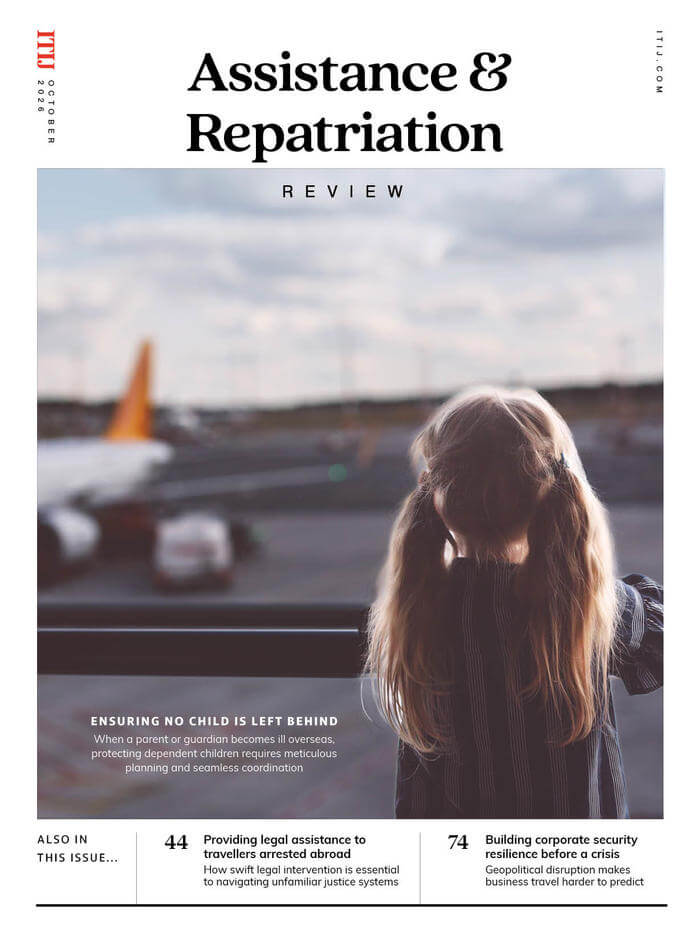
October 2026
Issue
When a parent or guardian becomes seriously ill overseas, assistance providers face a complex challenge that extends well beyond clinical care. Although these cases are relatively rare, in this issue we look at how safeguarding dependent children requires careful planning, legal awareness, and close international coordination.
Editorial Team
The Editorial Team updates the ITIJ website daily, and works on features for the print edition. With expert industry knowledge and years of experience in writing about complex travel insurance issues, the Editorial Team is ready to investigate and report on the topics that matter most to ITIJ's readers.