
European Air Ambulance supports hantavirus evacuation flights

Tom Hienckes, Commercial Manager at European Air Ambulance, recounts the complex transfer of infected passengers from Cape Verde and the Canary Islands to the Netherlands
European Air Ambulance (EAA) played a pivotal role in the international medical‑evacuation effort following a suspected hantavirus outbreak aboard the expedition cruise vessel MV Hondius in May 2026. EAA conducted three complex missions, each requiring seamless coordination, specialised infection‑control procedures, and close collaboration with assistance companies, local handling agents, public health authorities, and diplomatic channels.
The mission
EAA was tasked with supporting the aeromedical transfer of infected passengers and close‑contact cases from Cape Verde to the Netherlands, and shortly thereafter from the Canary Islands to the Netherlands. As is common in maritime medical emergencies, the situation evolved rapidly, with frequent changes in patient numbers, medical conditions, and transport requirements. Effective communication between all stakeholders was therefore essential to ensure an appropriate and timely response.
The missions once again demonstrated the importance of maintaining a fully staffed, 24/7 operations centre; not only to provide uninterrupted support to clients, but also to ensure continuous guidance and coordination for EAA’s own flight and medical crews.
The flights
For these evacuations, EAA deployed its Challenger 605, configured specifically for advanced aeromedical transport. The decision to use the Challenger 605 instead of the Learjet 45XR was based on two key considerations. First, the Challenger’s long‑range capability enabled nonstop operations, eliminating the need for a refuelling stop with an infectiousdisease patient on board.
Experience from previous outbreaks has shown that arranging intermediate stops under such conditions is not only operationally challenging but, in some cases, impossible, as certain countries refuse landing or even overflight permission when infectious‑disease patients are being transported. Avoiding fuel stops is therefore strongly preferred when dealing with suspected high‑consequence infectious diseases.
Secondly, the more spacious cabin of the Challenger 605 provides greater physical separation between patients and the medical crew. Should medical intervention be required, the aircraft offers full intensive care capability while still allowing the team to maintain appropriate infection‑control measures throughout the mission.
During the flights, all patients remained under continuous supervision by EAA’s aeromedical team, consisting of experienced physicians and flight nurses trained in critical care and in the management of infectious‑disease patients.
The three missions required careful management of infection‑control risks associated with transporting confirmed or suspected cases. EAA’s medical crews implemented enhanced protective measures, including the use of personal protective equipment (PPE), strict patient‑handling procedures, and dedicated infection‑control protocols. After each mission, the Challenger 605 returned to EAA’s home base in Luxembourg, where it underwent immediate and comprehensive decontamination in accordance with established medical transport standards.
Operation visibility
For EAA, these missions reinforced the importance of preparedness, operational flexibility, and clinical expertise in managing high‑risk international evacuations. They also received extensive international media coverage, often broadcast live, which significantly increased the visibility of the operations.
While such exposure can have a positive marketing impact when everything runs smoothly, it can equally have the opposite effect if any element does not go as planned. Moreover, live coverage adds additional pressure on all parties involved, not only on the air ambulance provider.
To conclude, these missions demonstrated that such operations cannot be carried out by an air ambulance provider alone. With many parties involved, effective coordination on all sides is essential.
The evacuations highlighted the critical importance of specialist aeromedical transport providers in responding to infectious‑disease incidents and underscored the value of close cooperation between assistance companies, healthcare providers, diplomatic authorities, and local partners.
Tom Hienckes
Commercial Manager, European Air Ambulance
Tom is responsible for customer relations, account management and supporting operations across EAA’s Challenger 605 and Learjet 45XR fleet. An aviation enthusiast, he studied Aviation Management before starting his career with a global business jet operator, gaining experience in both commercial and operational roles in Luxembourg and the UK. His customer-focused and operational mindset strengthens EAA’s patient centred mission to deliver high-quality global air ambulance services. Fluent in Luxembourgish, German, French, and English, Tom builds strong relationships across the international air ambulance and travel insurance sectors.
July 2026
Issue
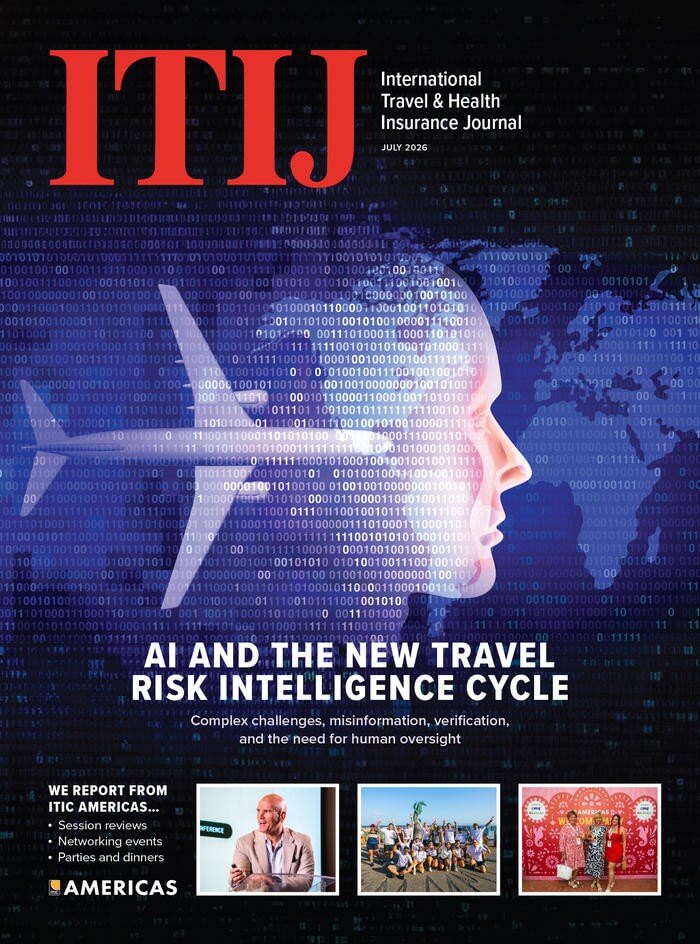
Welcome to your July issue! This month we look at how artificial intelligence solutions are changing the way in which travel risk information is gathered and communicated, plus we ask whether providers should do more to educate their customers, ensuring they understand the products they are buying and using them appropriately.
Editorial Team
The Editorial Team updates the ITIJ website daily, and works on features for the print edition. With expert industry knowledge and years of experience in writing about complex travel insurance issues, the Editorial Team is ready to investigate and report on the topics that matter most to ITIJ's readers.