From diversion to destination

Dr Özlem Bayrak Başakçı from Redstar Aviation tells us about a successfully coordinated intercontinental neonatal transportation
Redstar Aviation, an international provider of aeromedical evacuation and critical care transport, recently conducted a complex neonatal transfer that highlighted the importance of continuous monitoring, close communication, and careful operational planning in the safe transport of fragile paediatric patients.
The patient
The patient was an extremely premature infant with a complicated neonatal course who had initially been hospitalised in Tbilisi. Arrangements had been made by another organisation for the infant to travel to the US on a commercial flight accompanied by a medical escort. However, during the journey, the patient’s condition required diversion, and the aircraft made an unscheduled landing in Istanbul. The infant was subsequently admitted to a neonatal intensive care unit for stabilisation and further management.
The request
At this stage, Redstar Aviation was contacted to evaluate and plan a dedicated air ambulance transfer from Istanbul to Boston for continuation of care.
From the time the transfer request was received, Redstar Aviation’s Medical Operations Department and the Medical Directorate maintained close and continuous communication with the treating hospital in Istanbul. The patient’s condition was followed carefully in the days leading up to the flight, and regular updates were obtained to assess transport readiness. This period of close monitoring allowed the team to plan the mission in a controlled and timely manner once the patient was considered fit to fly.
Particular attention was also given to supporting the patient’s family. The infant’s mother had understandable concerns following the unexpected diversion and hospitalisation in a foreign country. Clear and consistent communication helped address these concerns, providing reassurance and transparency throughout the preparation phase.
The flight
Flight planning and medical preparation were carried out in close coordination with the neonatologist responsible for the patient’s care in Istanbul. Ongoing communication with the treating physician allowed the transport team to anticipate potential challenges and align the transfer plan with the patient’s clinical condition. This collaborative approach helped ensure that the timing of the transfer was appropriate and that all necessary preparations were completed prior to departure.
The transfer was performed using a Bombardier Challenger 605 air ambulance aircraft configured for high-acuity critical care transport. Equipment, monitoring, and environmental controls were prepared to meet the needs of a fragile neonatal patient, and all operational arrangements – including ground handling and international coordination – were completed to ensure a smooth and uninterrupted transfer.
Throughout the flight, the infant remained clinically stable, and no significant complications were encountered.
Continuous monitoring and supportive care were maintained during all phases of transport, including ground transfers and the intercontinental flight segment. The medical team focused on maintaining a controlled and calm environment, which is particularly important in neonatal transport missions.
Upon arrival in Boston, the patient was transferred safely to the receiving medical team, and the mission was completed successfully.
Flight planning and medical preparation were carried out in close coordination with the neonatologist responsible for the patient’s care in Istanbul
Conclusion
This case demonstrates that aeromedical transport extends well beyond the flight itself. Through close medical coordination, careful planning, and effective family communication, Redstar Aviation successfully delivered a safe and wellcoordinated air ambulance operation. As demand for cross-border medical care continues to grow, such integrated aeromedical solutions play a vital role in ensuring that critically ill patients can safely access the specialised care they require.
Dr Özlem Bayrak Başakçı is Deputy Medical Director at Redstar Aviation and a board-certified emergency medicine specialist with 12 years of clinical experience. She has been working at Redstar Aviation for almost two years and currently serves as Deputy Medical Director.
March 2026
Issue
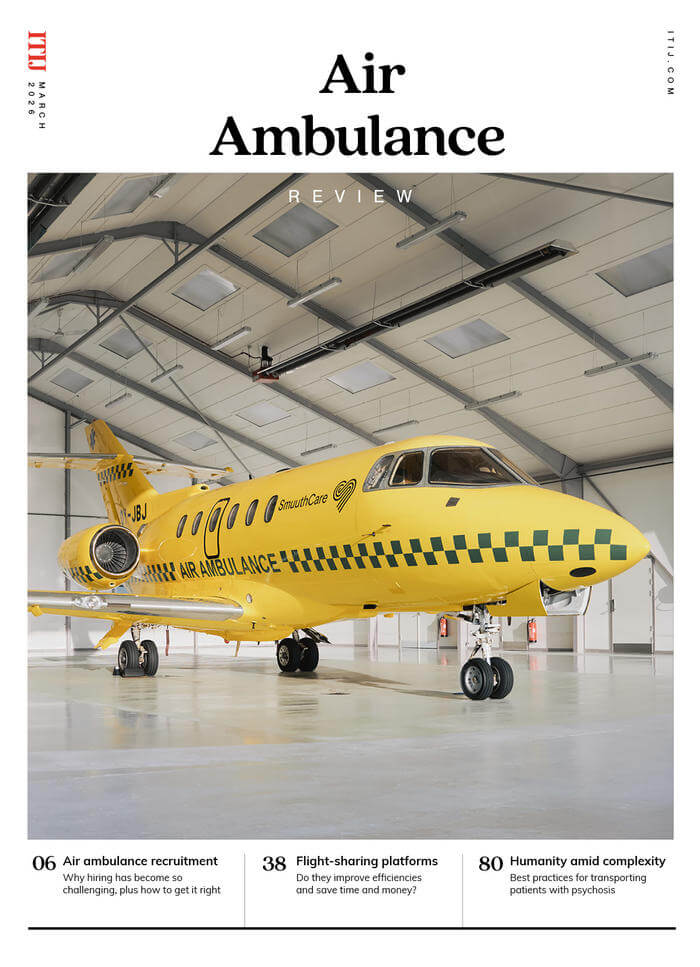
In this issue of Air Ambulance Review we examine the challenges facing air ambulance providers when it comes to recruitment; look at flight-sharing platforms and ask if they can improve efficiencies; and we delve into the latest medications, protocols and best practices for transferring vulnerable patients with psychosis.
Editorial Team
The Editorial Team updates the ITIJ website daily, and works on features for the print edition. With expert industry knowledge and years of experience in writing about complex travel insurance issues, the Editorial Team is ready to investigate and report on the topics that matter most to ITIJ's readers.