
Dive safety in Egypt

The number of fatal and non-fatal accidents occurring on liveaboard dive boats in Egypt is steadily creeping up. Mandy Langfield looks at standards and quality measurements for these vessels, and asks about the risks divers are taking when they choose these holidays
Safety standards of Red Sea resort diving operators vary considerably.” These are the first words of the UK’s Foreign & Commonwealth Development Office (FCDO) if you Google ‘dive safety Egypt’. There is little doubt that you get what you pay for when it comes to the safety of dive operations in the country, and indeed in other popular diving destinations worldwide. From personal experience, I can say that at a hotel in Barbados, I was allowed, as a teenager, to go scuba diving in the sea with just 10 minutes of experience in the hotel pool. There was no safety briefing other than the most basic explanation of hand signals. And then we were in the water.
But what about those who choose to go on holidays that cater specifically to experienced scuba divers? Those with liveaboard options, where the divers maximise their time underwater by living on the dive boat for a week or more?
ITIJ reported in November last year on an incident where a liveaboard dive boat capsized in Egypt, which saw the deaths of 11 tourists and local crewmembers after a wave reportedly turned the boat over and it sunk in just a few minutes. In that case, there has been no official suggestion of a problem with the safety standards on the boat; it was unlucky and early morning, meaning that people were still in their cabins.
The incidents in 2024 were not, sadly, an anomaly. Three British divers died aboard the MV Hurricane in June of 2023, and another vessel, the Carlton Queen, sank in April of the same year
However, there was another case of a liveaboard dive boat sinking in October 2024, another in June the same year, and another in February 2024 (in which one German tourist died as a result of a fire on the boat). A report in Dive Magazine following the February incident alleged complaints from the affected divers (from an interview with German scuba magazine Taucher.Net) about what they described as “a litany” of safety concerns, including a lack of briefing on arrival, life jackets not being easily accessible, and no fire alarm sounding when the fire did break out. It also appeared in that case that no roll call was carried out. Once passengers reached land sometime later (the inflatable boats in which they escaped the sinking vessel were also criticised for not working properly), it was discovered that one diver was missing.
The incidents in 2024 were not, sadly, an anomaly. Three British divers died aboard the MV Hurricane in June of 2023, and another vessel, the Carlton Queen, sank in April of the same year.
International standards
Most of the liveaboard vessels currently in use by diving companies are small enough that they fall outside the scope of the International Convention for the Safety of Life at Sea (SOLAS). The main objective of the SOLAS Convention is to specify minimum standards for the construction, equipment and operation of ships, compatible with their safety. Flag states are responsible for ensuring that ships under their flag comply with its requirements, and a number of certificates are prescribed in the Convention as proof that this has been done.
Liveaboard holidays introduce unique risks that standard dive accident insurance might not fully cover
A bachelor’s thesis entitled ‘Investigation of a series of accidents involving yachts for diving holidays’ was published at the beginning of 2024 by Justus Schiszler from the Shipbuilding and Maritime Technology degree programme at the Kiel University of Applied Sciences. What Schiszler identified as part of the analysis should be concerning to any insurer with exposure to this niche part of the industry:
- One fatality every 37.8 accidents in shipping, for example cruise ships and container ships, which must all be SOLAS-compliant
- 1.2 or two fatalities per accident in diving liveaboard vessels (depending on the exclusion/inclusion of the Conception* accident).
Four leading causes of accidents tracked between 2006 and 2023 were fire, running aground, stability issues, and flooding. Accident hotspots were the Red Sea and Southeast Asia.

Choose a reputable operator
ITIJ spoke to Camilo Saraiva, Vice President of Claims and Assistance Services for Divers Alert Network (DAN), about the risks facing divers heading to Egypt for a liveaboard dive holiday. He pointed out that liveaboard diving holidays are increasingly popular among divers seeking access to the world’s most captivating underwater environments. But, as with any adventure, understanding the safety, logistical, and insurance considerations is vital for an enjoyable experience.
“In general,” he said, “liveaboard boats in Egypt and other popular dive destinations are safe and seaworthy. These vessels are typically designed or retrofitted to meet the unique needs of divers, with onboard compressors, equipment storage, and dive platforms. Reputable operators adhere to established maintenance schedules and comply with local maritime regulations.”
Most of the liveaboard vessels currently in use by diving companies are small enough that they fall outside the scope of the International Convention for the Safety of Life at Sea
As with everything in life, however, it is a case of ‘caveat emptor’ – and with varying qualities and standards, divers have to do their research. Saraiva recommends reviewing certifications, audits, and fellow diver reviews. “At DAN, we encourage divers to enquire about safety equipment, including oxygen, communication devices, and lifeboats,” he added.
When it comes to the insurance that divers need for liveaboard holidays, it is different from a standard travel insurance policy that includes scuba diving. “Liveaboard holidays introduce unique risks that standard dive accident insurance might not fully cover,” pointed out Saraiva.
“While dive accident insurance generally addresses injuries and emergencies related to diving itself, liveaboards add additional elements such as extended periods at sea, potential delays in reaching medical facilities, and exposure to maritime risks such as vessel evacuation. Divers should ensure their policies address specific liveaboard-related concerns, such as air evacuations from remote areas or medical support for non-diving injuries sustained on board.”
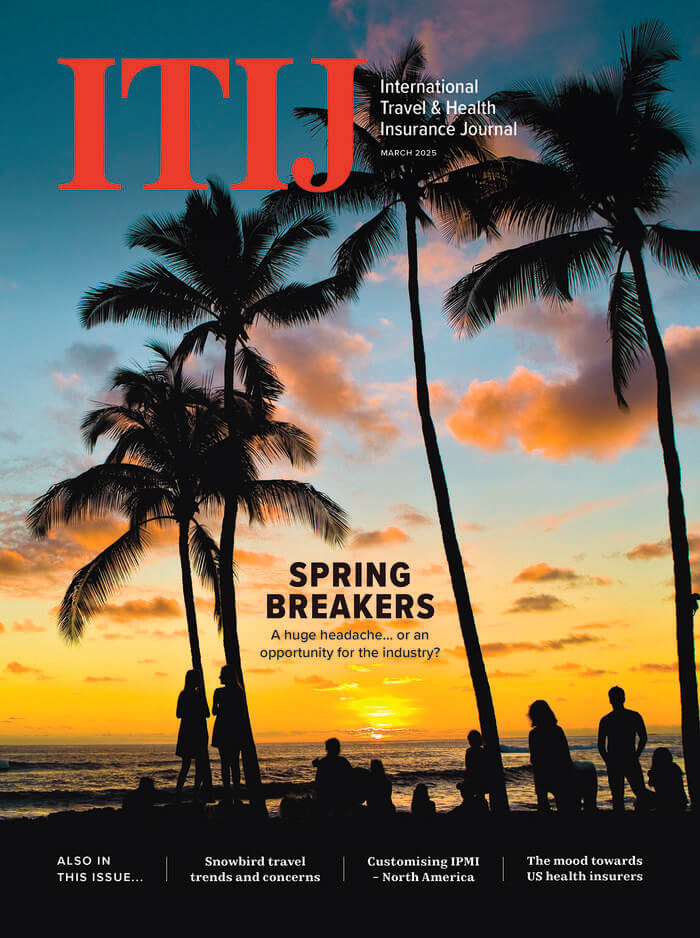
March 2025
Issue
In the March issue of ITIJ we examine spring break trends; look at the changing snowbird market; and investigate IPMI policies in North America. Included with this issue is the Air Ambulance Review, which has features on clinical care for ABIs; investing in fleet; the role of brokers in the air ambulance industry and an accreditation update.
Mandy Langfield
Mandy Langfield is a Director of Palladium Media Partners and former Publishing Director at Voyageur Group. She has written extensively on international travel and health insurance, medical assistance provision, and air medical transportation.