
Discount rate change in the UK

Mark Hewitt, creator of piCalculator and Managing Director at Verisk, looks at the impact of last year’s discount rate change in the UK.

Many British insurers are just recovering from the discount rate change, and with the pending Civil Liability Bill, there may be yet another rate modification by the end of 2019. Insurers are sure to follow the Bill’s progress closely to prepare for any changes to the discount rate – which is a figure set by the government that is used to help set compensation payouts – and avoid the turmoil that ensued last year when the rate was changed dramatically and unexpectedly.
The Bill, which the UK Government introduced this past March, calls for an initial review of the discount rate methodology to start within 90 days of the Bill’s passage and for the review to take no more than 180 days. While there’s no definitive timeline for the Bill to pass into law, it’s likely to happen early next year. And that means by the end of 2019, a new discount rate may be in effect.
Discount rate change surprised the industry
Insurers had a rude awakening at 7 a.m. on 27 February 2017, when the government unexpectedly announced a cut in the discount rate from 2.5 per cent to negative 0.75 per cent. Because there was no advance notice and the discount rate hadn’t budged in 16 years, the deep change was a surprise.
First, the significant rate reduction dramatically increased the damages awarded to personal injury claimants receiving a settlement for future losses. Therefore, insurers had to make a massive shift in reserves to be able to pay out claims affected by the new rate.
Second, it tied up insurer resources because actuaries had to spend several days scrambling to recalculate thousands of claims affected by the new rate.
Third, the change had a significant impact on insurers’ bottom line. Motor insurers lost £3.5 billion, and some companies experienced a 25-per-cent profit loss. Those losses resulted in higher premiums for consumers, as motor insurance rates rose by nine per cent.
The rush to recalculate thousands of claims and move more money into reserving is something that no one wishes to repeat. While the most recent government buzz indicates a more modest discount rate shift between zero and one per cent, even this less dramatic change will be more manageable with advanced planning.

Current calculation methods involve guesswork
Many insurers make some preparations for rate fluctuations that will affect settlement figures for their complex claims. While these large losses make up only a small fraction of incoming claims, they can represent a significant proportion of reserves. A certain amount of guesswork is also involved.
To calculate payouts for complex claims, claims handlers create huge spreadsheets with values for injury treatments, lost wages and dozens of other expenses related to catastrophic injuries from devastating motor accidents. Some insurers require claims handlers to develop two or more additional versions of these figures calculated with different discount rates. In this scenario, if the company has guessed the correct new discount rate, its team is all set and ready to proceed.
But there are a couple of drawbacks to manual calculations. They’re labour-intensive, tying up valuable time calculating possible rates. Additionally, companies are performing calculations on rate changes that may not be correct, which is what occurred in 2017.
No one anticipated the exact rate change, so any preplanning turned out to be a waste of untold man-hours. One insurer reported that it took nearly 10 weeks to produce new reserves for its live claims after the new rate was announced. With all hands on deck to deal with the change, there was no movement forward on current claims, stalling work for weeks.
In some ways, calculating reserves can seem like a no-win situation: organisations spend time preparing for a rate change but still waste more time recalculating reserves if they don’t correctly guess the new rate
Technology helps to manage reserves proactively
In some ways, calculating reserves can seem like a no-win situation: organisations spend time preparing for a rate change but still waste more time recalculating reserves if they don’t correctly guess the new rate. The best approach is implementing technological solutions that calculate reserves automatically. Automation not only reduces laborious manual calculations and speeds up the process overall, automation technologies can also give insurers unprecedented visibility into their books of business to manage reserves proactively.
Because calculating heads of loss for all types of personal injury claims is so complex and time consuming, companies often do so only every six months as regulations require. But if they could perform these complex calculations quickly at the click of a button instead of printing Ogden tables and struggling with complicated formulas, they could do it more frequently.
If insurers could recalculate reserves monthly or even quarterly, they could maintain more accurate reserves, maximise their investments, and improve profitability downstream. If the discount rate happens to change – whether by one per cent or 3.25 per cent – calculating those changes would take minutes with an automated tool, as opposed to days with the current approach.
Get ahead of the rate change
With the pending legislation, a new discount is on the way in 2019. Insurers don’t want to repeat the nightmare of 2017, which not only cost them valuable time in recalculating reserves but millions of pounds needed to pay higher injury claims and increase their reserves.
As automation becomes more prevalent in the insurance industry, it’s critical to expand that technology to complex personal injury claim settlements to simplify calculations, save time and proactively manage reserves as rate changes loom.
November 2018
Issue
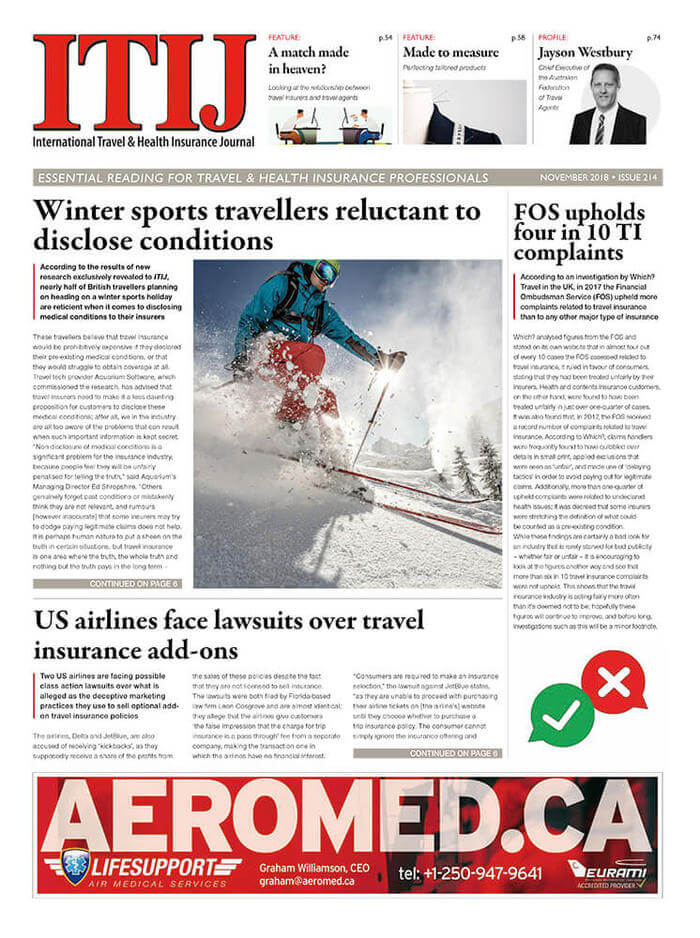
In the November issue of ITIJ, we have features analysing the industry shift towards creating more tailored travel insurance products, the evolution of winter sports cover, meeting customer expectations and how travel insurers work with the travel trade to enhance consumer awareness around travel insurance and ensure that insurance sold to travellers is fit for purpose.
You’ll also find opinion pieces from legal firm Frost Todd Brown on travel assistance services regulation in the US, Rewrite Digital on the growing need to be tech-savvy, Verisk on the impact of the discount rate change in the UK, and SAS UK & Ireland on the new International Financial Reporting Standard 17.
Mark Hewitt
Mark Hewitt, creator of piCalculator and Managing Director at Verisk