
Developing a desirable medical tourism destination

With facilities and countries competing for a share in the lucrative medical tourism market, what can they do to stand out? Experts share with Lauren Haigh their strategies for success
Medical tourism is no longer a small, niche market available to an elite, wealthy few. Today, travelling abroad for cosmetic, dental and surgical care is increasingly commonplace, with estimates from Market.Us indicating that the industry is valued at US$100 billion and is growing by 15–25% annually. Social media influencers show off their brand new ‘Turkey teeth’ on Instagram and, according to Yeditepe Healthcare, 40% of the current total turnover in medical tourism in Turkey is in dental services. Turkey is among the top medical tourism destinations, according to Patients Beyond Borders’ findings, alongside Costa Rica, India, Israel, Malaysia, Mexico, Singapore, South Korea, Taiwan, Thailand and the US.
It’s a lucrative market, and everyone wants a piece of the pie. The question is: what makes a successful medical tourism destination? Researcher Dr Mala Kamdar at the SAL Institute of Management in Ahmedabad, India, asked this very question back in 2014 and devised a model describing characteristics to become a preferred medical tourism destination. On the list were, among other things: healthcare-related characteristics, low cost of treatment, variety of medical treatment offerings, and availability of highly trained and experienced doctors. While these requirements stand the test of time, what are the key considerations today?


Factors for success
ITIJ asked Jonathan Edelheit, Co‑Founder and Chairman of the Medical Tourism Association, to shed light on the factors he believes contribute to the success of a medical tourism destination. He reported that 50% of international patients enquiring about having medical treatment abroad end up not doing so because they don’t trust the outcome of the provider or don’t trust sending their money to the provider. “The Medical Tourism Association estimates that the industry is losing about $20 billion a year because of trust factors. The key factors that drive the success of a medical tourism destination are safety, trust, high-quality clinical outcomes and the overall patient experience. While medical excellence is critical, trust and safety extend beyond healthcare – they also play a crucial role in the tourism aspect,” he explained.
Carlos Eduardo Jurado Moncayo, an independent consultant, underlined that commitment to patient wellbeing is key: “The more the provider institution can anticipate the patient’s needs, the easier it is to avoid problems and the smoother the whole process will be. This is possibly the greatest success factor in the treatment of international patients. If the patient and his accompanying group, despite going through all the difficult situations inherent to the treatment, feel accompanied, the patient will feel satisfied. The patient must be made to feel at home.”
With modern social media, a single negative experience can reach hundreds of thousands, if not millions, of people instantly
Conveying credibility
ITIJ also spoke with Professor David Hold, Managing Partner, E-Telehealth Solutions, who has a background as a former banker specialising in bankruptcies and turnarounds and experience as a financial consultant in the healthcare industry. “While a hospital’s expertise in specialised treatments is a key factor, a critical challenge is how to effectively convey credibility to potential clients,” he said. “Over-the-top marketing campaigns won’t work any more – today’s instant communication tools like TikTok and Instagram can spread negative experiences rapidly. I used to warn clients about the power of word-of-mouth marketing, where one dissatisfied customer could tell 10 people, who in turn would tell 10 more. With modern social media, a single negative experience can reach hundreds of thousands, if not millions, of people instantly.”
Indeed, social media is deeply embedded in today’s world, with 5.24 billion social media users globally. It can serve as a platform for demonstrating expertise and presenting services but, on the other side of the coin, a negative experience can spread like wildfire, quickly damaging a provider’s reputation. “Social media is becoming a major influence in medical tourism, and hospitals must be extremely cautious in their approach,” stated Hold. “One of the biggest risks is relying on influencers and promoters who prioritise profits over patient wellbeing. To mitigate these risks, hospitals should develop controlled, closed-loop networks where they can directly interact with potential patients and healthcare professionals. This ensures that accurate information is shared and minimises the risk of misinformation spreading through unreliable sources.”
Social media marketing strategies
There is no doubt that marketing, through social media and other online platforms, plays an important role in attracting international patients. “The fact that procedures can be shown through videos, along with the facilities, testimonials of patients treated, images of additional sites that can be visited in the city or country of the procedure, cultural aspects, and many other elements, serves to bring the institution closer to its potential clients/patients,” said Jurado. “However, just as we have institutions that have this and more to show, there are also those that can distract the patient’s attention to beautiful images that have nothing to do with reality.”
Edelheit believes that the most effective marketing strategy is an approach that combines B2C and B2B. “Google ads and social media ads don’t bring the return on investment that everyone would hope for,” he said. “The best results [from] B2C is natural organic ‘trusted’ traffic. Providers need to make sure they are everywhere the patients are looking. Creating strong B2B relationships and having an active long-term campaign to get in network with insurers, governments, third-party administrators (TPAs) and other referring organisations is key. We feel aligning with a trusted brand has the biggest success in attracting international patients. This is why our organisation entered into a long-term exclusive partnership with Mastercard to revolutionise medical tourism. Mastercard is one of the top 10 trusted brands in the world and has 3.3 billion global customers.”
Prioritising quality and honesty
If a medical tourism provider or destination is facing negative PR, there are important steps that should be taken. Jurado said that honesty must be the priority in these situations. “Trying to hide a situation can result in problems much more serious than the situation itself, while showing the corrective measures that were defined and implemented to prevent it from happening again is what allows the community to make its own judgements about the entity’s actions,” he told ITIJ. “Such activities not only position the company internationally but also set a path within the organisation for corrective actions that will allow it to anticipate any risk that may arise. It is well known that one learns much more from mistakes, the corrective actions that were taken, and the way in which they were corrected.”
The most effective marketing strategy is an approach that combines B2C and B2B
This is one of the many reasons accreditation is so important, lending respected credibility to providers. “It’s crucial to regulate, set standards and invest in accreditation like Joint Commission International (JCI), Accreditation Canada or Global Healthcare Accreditation (GHA),” confirmed Edelheit. “The destinations with the most negative press seem to be the ones that don’t really care about it and do nothing to regulate, pass laws or protect patients. South Korea is a great example where you don’t see negative press because the number one priority for them is great patient outcomes and so literally every aspect of the industry is heavily regulated and there are even financial penalties as well as criminal prosecution that can occur for violations.”
Jurado agreed and highlighted that accreditation processes are rigorous for good reason: “Accreditation processes are very important because they guarantee to the user population in general and to the service contractors that the entity is suitable in everything it does and that it has met the standards to obtain accreditation. Not surprisingly, the quality standards defined for these processes are demanding and require investment of resources and methodology to achieve them.”


Combining the right elements
Colombia is an example of an established medical tourism destination where high-quality affordable healthcare and JCI-accredited hospitals lend credibility and contribute to its popularity. This began with the establishment of Clínica Barraquer around 50 years ago, which helped elevate Colombia’s status as a destination for medical treatment, especially in ophthalmology. A project called Transformácion Productiva is underway to advance the country to world-leading status in this area by 2032.
Established medical tourism hubs have advantages over emerging providers and destinations. Jurado commented on key factors that separate established and emerging, and how destinations can set themselves apart: “In healthcare, much has evolved, and technological innovation means that entities must be at the forefront in their procedures, equipment and training of their human resources to be more competitive.
But in the end, the entities are competing for the same thing: to offer the best and safest treatment at the best price,” he stated. “This is where the other factors surrounding care come into play. Destinations are beginning to emerge as the most attractive when they combine elements of treatment and procedures with scenarios that additionally provide different experiences for the patient and his or her group, such as outdoor activities, spa activities, combination of clinical factors with wellness, visits to spiritual sites, food camps, etc.”
Destinations are beginning to emerge as the most attractive when they combine elements of treatment and procedures with scenarios that additionally provide different experiences for the patient and his or her group, such as outdoor activities, spa activities, combination of clinical factors with wellness, visits to spiritual sites, food camps, etc.
The luxury of flexibility
Edelheit pointed out that emerging destinations often have the advantage of agility. “They can adopt new strategies, leverage technology, and heavily invest in marketing to build their brand and relationships,” he said. “In contrast, some established destinations become complacent, relying on their historical reputation rather than expanding their marketing and outreach efforts.” Edelheit said that from a healthcare quality standpoint, established destinations typically have the upper hand due to their experience, high procedural volumes, and track record of strong clinical outcomes. “However, we have observed a global shift: even destinations with a long history of excellence are now losing market share to emerging players,” he stated. “One key reason is that emerging markets are not constrained by traditional systems or outdated ways of thinking. They are more adaptive, open to innovation, and proactive in meeting evolving patient expectations. This flexibility allows them to capture business that traditionally flowed to well-established markets.”
Another difference, asserted Hold, is that new entrants in the medical tourism market often have deep financial backing. “For example, the United Arab Emirates has invested hundreds of millions in collaboration with major international healthcare providers. Even established US healthcare companies are looking at global opportunities due to domestic healthcare challenges,” he commented. “A growing trend is strategic partnerships with local providers, allowing international expertise without requiring patient travel. Some organisations, like Apollo Hospitals, are already partnering with African hospitals. Though these initiatives are still in their early stages, they will evolve significantly. Advances in technology and telemedicine will further accelerate this shift.”

Taking control of the narrative around medical tourism
Naturally, there are challenges facing countries striving to become medical tourism hubs. Hold said that one of the biggest was ensuring high-quality healthcare while maintaining competitive pricing. “The future of telemedicine and global hospital networks will be critical,” he stated. “Rather than relying on external promoters who may harm their reputation, hospitals must take control of their own branding and patient experience. Establishing direct collaborations with internationally accredited hospitals will be essential in gaining credibility and long-term sustainability.
“Hospitals and governments should also invest in quality control measures – regulatory oversight and accreditation systems will become increasingly important in attracting international patients.”
Edelheit underlined the importance of strategy and reiterated the value of accreditation and trust. “Developing the wrong strategy, not executing on the strategy well and assuming that just because you have announced you are doing medical tourism consumers will still come is a big mistake. Making sure you are a trusted medical tourism hub is key. Investing in accreditation, whether it’s local, national, JCI or GHA, is a big step forward. Being able to deliver an amazing international patient experience is key to success, but governments make the mistake of investing in marketing that doesn’t work instead of making sure the healthcare providers are ready to receive international patients and can excel at it. Medical tourism is a heavily word-of-mouth industry. Also, B2B and B2G [business-to-government] referral partners won’t keep referring your patients if you can’t get it right,” he concluded.
Quality healthcare is at the heart of medical tourism but without a well-thought-out, effective strategy that is carefully executed, an effective marketing strategy, a deep understanding of patient needs and the ability to build and maintain trust, facilities and destinations won’t succeed at establishing a successful medical tourism hub.
August 2025
Issue
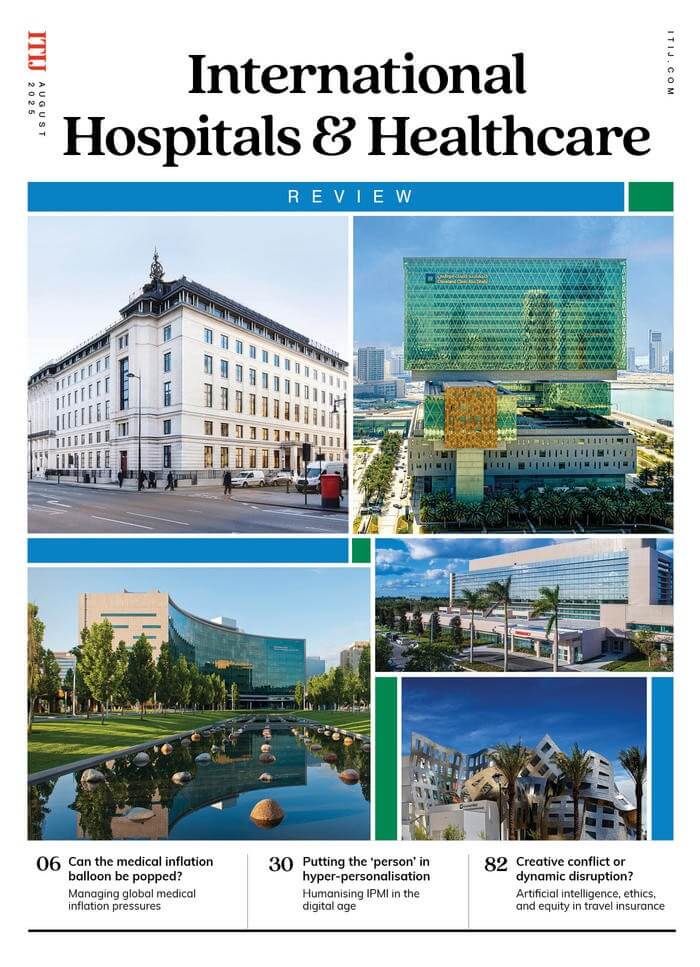
This month we look at the rising demand for medical escorts on commercial airlines, plus ask how the latest technology can help insurance companies. In our International Hospitals and Healthcare Review we examine humanising IPMI in the digital age, and ask what makes a destination desirable for medical tourism.
Lauren Haigh
Lauren Haigh is a freelance writer for ITIJ.









February 2025
Issue
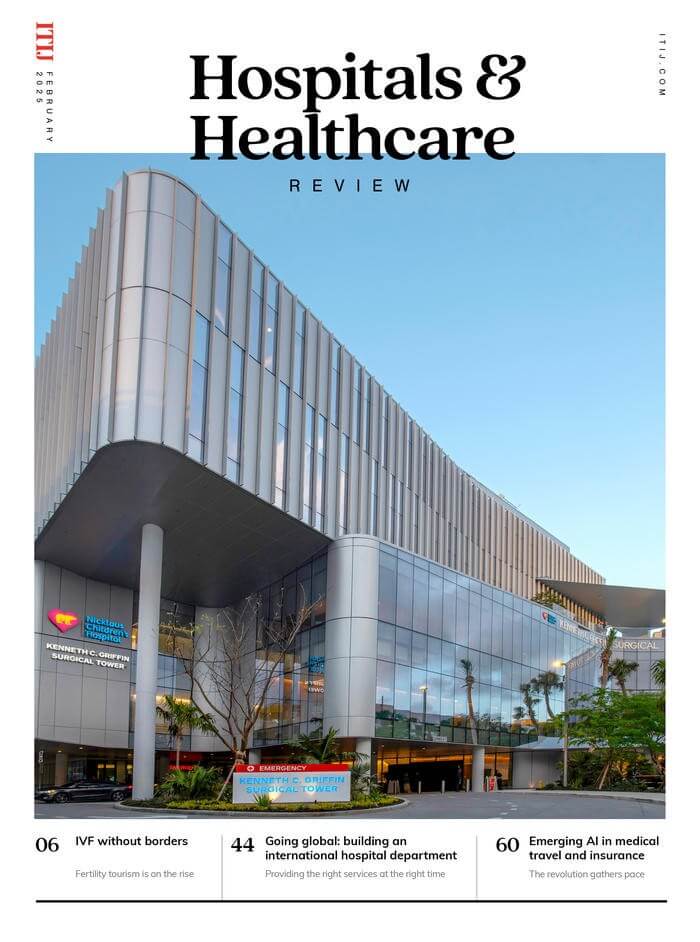
Offering readers a deep dive into the issues facing providers and payers of healthcare services around the world. Cost containment, international patient department development, the role of AI in healthcare delivery and more.