A critical paediatric mission

Kristian Walter Høeg from SmuuthCare recounts the successful transfer of a baby from Germany to the US
The SmuuthCare team recently completed a transatlantic bed-tobed transfer of a four-month-old ventilated infant from Minden, Germany, to Winnipeg, Canada, with both parents on board. The mission required continuous paediatric intensive care and careful planning across multiple countries and handover points.
The call
The request came early in the morning while the crew was in Copenhagen, returning from a previous mission. The infant had suffered accidental hypoxic cardiac arrest due to strangulation 14 days earlier and remained sedated and intubated. Several investigations, including MRI scans of the brain, indicated a high risk of severe neurological injury. Attempts to wean from ventilatory support had been unsuccessful, and the decision was made to transfer the child to Canada so that further treatment decisions could be taken closer to the family’s home.
Given the patient’s age and clinical condition, the medical crew returned to SmuuthCare’s base in Billund, Denmark, before proceeding. This allowed time to prepare and check all required equipment directly, including the BabyPod, ventilator, transport monitor, infusion pumps, and oxygen systems. Having hands-on access to the equipment before departure was considered essential for a mission of this length and complexity.
The mission
From Billund the team flew to Hannover and continued by ambulance to Johannes Wesling Klinikum Minden. Ahead of the transfer, the medical crew met with the treating paediatric team to review ventilator settings, medications, fluids, and step-by step planning for the long flight. Time was also spent with the parents to explain how the transport would be conducted and what to expect during the journey.
On the day of departure, the infant was transferred into the BabyPod with support from the hospital’s paediatric staff. Ventilator settings and medication regiments were replicated precisely on SmuuthCare’s equipment. All devices were secured to the ambulance stretcher, allowing for a stable transfer to Hannover Airport.
Both parents accompanied the flight and remained at their child’s side throughout the flight. During transport, the medical team provided continuous ventilation, sedation, seizure prophylaxis, antibiotics, fluids, breast milk via nasogastric tube, total parenteral nutrition, and regular suctioning. The infant remained clinically stable throughout the journey. The parents were able to assist with basic care and maintain physical and emotional contact with their child, which was an important part of the transport.
The flight included a technical stop in Kangerlussuaq, Greenland, before continuing to Winnipeg. Upon arrival a local ambulance team met the aircraft. The ground transfer and handover at the Children’s Hospital of Winnipeg were calm, structured, and well coordinated. The patient was transferred from the BabyPod to the hospital bed, connected to the receiving team’s equipment, and all medical documentation from Germany, along with a detailed in-flight report, was handed over.
Conclusion
This case demonstrated that successful long-distance transport of critically ill infants depends on good planning, handson preparation of equipment, experienced medical crews, close collaboration between all teams, and maintaining continuity of care throughout every stage of the transfer.
SmuuthCare specialises in managing complex international air medical missions such as this, supported by experienced medical and flight crews and operational expertise developed through decades of work in demanding aviation environments.
Kristian Walter Høeg is the COO of SmuuthCare, part of the Sundberg Aviation Group. With over 15 years of aviation expertise, he oversees the company’s operational strategy and ensures the highest standards across all medical flight operations. SmuuthCare, based in Billund, Denmark, operates two Hawker 800XP aircraft designed to uphold the highest standards of in-flight medical care.
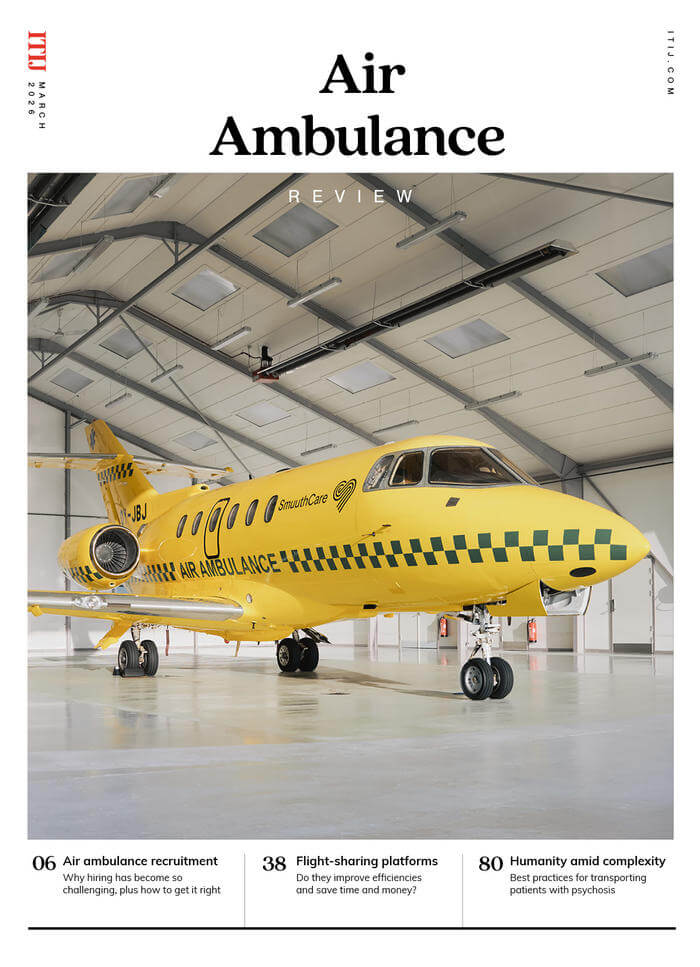
March 2026
Issue
In this issue of Air Ambulance Review we examine the challenges facing air ambulance providers when it comes to recruitment; look at flight-sharing platforms and ask if they can improve efficiencies; and we delve into the latest medications, protocols and best practices for transferring vulnerable patients with psychosis.
Editorial Team
The Editorial Team updates the ITIJ website daily, and works on features for the print edition. With expert industry knowledge and years of experience in writing about complex travel insurance issues, the Editorial Team is ready to investigate and report on the topics that matter most to ITIJ's readers.