
The changing face of business travel

As business travel rebounds post-pandemic, Alysia Cameron-Davies explores the evolving landscape, focusing on employee safety and wellbeing, and the complexities of ‘bleisure’ travel
Like all forms of travel, business trips took a major hit during the pandemic. With air traffic ground to a halt and many businesses encouraging remote work, the shift to virtual meetings via apps like Zoom and Teams became the new normal. So what does the business travel landscape look like post-pandemic?
A Mastercard survey from 2023 revealed that despite the rise of virtual meetings during the pandemic, corporate travel is still highly valued. Nine out of 10 respondents said they still considered business travel essential for driving growth, with over half of them willing to spend more than US$1 billion on travel in 2025.
Claire McKinnon, Director of Global Insurance and Key Partners at Healix, stated: “Post-pandemic travel has been returning in significant numbers since 2022.”
A Research and Markets report, Key Trends in Business Travel 2024, revealed that outbound business trips in 2023 saw a 68.95% increase compared with 2022, climbing from 103.3 million to 174.23 million trips. Although this marks a strong recovery, the numbers remained below pre-pandemic levels; however, analysts predicted a full rebound by 2024. Looking ahead, they projected further growth, anticipating that outbound business trips could reach 276.63 million by 2028, with a compound annual growth rate (CAGR) of 9.69% from 2023–28.
Meeting employee expectations: comprehensive coverage and safety first
As business travel picks up again, how do employees feel about hitting the road? According to SAP Concur’s Global Business Travellers Report 2024, 67% of business travellers viewed work-related travel as essential to their careers, and 51% expressed enjoyment for such trips.
However, despite the positive outlook from the majority, SAP Concur revealed that 92% of those surveyed would be prepared to decline trips if they were concerned about safety, social issues, environmental impact, or work-life balance.
Kate Fitzpatrick, Regional Security Director, EMEA at World Travel Protection, emphasised: “The pandemic has underscored the critical importance of proactive duty of care. Employees are asking more questions about their travel safety and want to know, for instance, how they will get home in a crisis situation. They expect comprehensive support from their companies, with a clear priority placed on their safety, health, and wellbeing while travelling.”
The pandemic has underscored the critical importance of proactive duty of care
McKinnon agreed that employees today expect their safety to be a top priority. “Employees have higher expectations of their companies when they are sent on a work assignment abroad, whether it is short term, for longer periods, or even working as an expatriate,” she said. “Employees have long expected their company to fulfil its duty of care for them while abroad, but now they expect that the risks of travel have been mitigated through full travel risk management.”
From an employer’s perspective, McKinnon noted that companies are becoming increasingly mindful of ISO 31030. This international framework for managing risks associated with business travel helps organisations identify, assess, and mitigate various travel-related risks, ensuring a strong duty of care for their employees.
“Healix understands the guidelines and we work with many companies on a direct basis to ensure best practice in this area. We provide practical support and guidance to help establish and embed travel risk management programmes within their organisation,” she said.
Fitzpatrick highlighted the findings from World Travel Protection’s 2024 survey conducted by Opinium, involving 2,000 business travellers who travel for business at least once a year in the UK, the US, Canada and Australia. She revealed that 58% of respondents felt that their companies took business travel risks more seriously than before. However, she noted, “51% believe their employers could still do more to ensure their safety while travelling. These statistics highlight the growing demand for robust business travel policies that address these concerns effectively.”
Supporting this, McKinnon stressed: “The business travel insurance product is an absolute expectation, with employers seeking out policies that offer additional benefits to keep their policies up to date, including a travel app, e-learning, online GP services, mental health support, and counselling.”
As well as providing these comprehensive services, Fitzpatrick emphasised that preparation is key to ensuring a successful travel experience for employees. She explained that this includes giving comprehensive pre-travel briefings to make sure travellers are well prepared before departure and fully informed about where to seek support during their trip.
Supporting mental health and employee wellbeing
Travelling for work can have both a positive and negative impact on mental health. As with any type of travel – whether for business or pleasure – there are highs and lows. Jetting off to a new destination can be exciting and invigorating, but navigating airports or train stations, organising travel schedules, and adjusting to unfamiliar surroundings can also be stressful. A 2024 survey by Booking.com highlights this duality. While 52% of business travellers reported that a change of air positively affects their mental health and promotes personal growth, 23% expressed concerns about health challenges such as sleep deprivation, stress management, and maintaining a healthy diet. Additionally, 18% reported experiencing health issues such as anxiety while away.
The business travel insurance product is an absolute expectation
With growing awareness around mental health and wellbeing, McKinnon noted: “Insurers are increasingly adding mental health support to their cover, in response to increasing demands. Travellers may find they are without their usual support network when abroad and not have the resources to cope locally without these extra support services. This is most noticeable in specific travel groups such as student travel groups, including university and scholastic groups or non-governmental organisation (NGO) workers. Post-Covid, and with the removal of the old taboos surrounding mental health, the mental health support and counselling services are well received and utilised.”
Meeting diverse needs: tailored training and risk assessment
In addition to mental health and general wellbeing, it’s vital that the diverse needs of employees are taken into account. Preparing staff for travel can be complex, as individual requirements can vary greatly, and factors like gender, age, and nationality can present unique challenges. To ensure everyone’s safety and wellbeing while on the road, companies should provide tailored training and resources that address the specific risks and concerns of their employees.
“A safe and successful trip relies on both the organisation and the traveller working together,” said Fitzpatrick. “While organisations are responsible for creating travel safety programmes, it’s equally important to empower employees with the information they need to prioritise their own safety.
“Recognising that employees may not wish to share personal information, we recommend that organisations provide information tailored to specific communities, including LGBTAQ+ travellers, to all employees. This ensures that everyone has access to the relevant data to make informed decisions. Our resources consider various factors that might make someone stand out, such as race, ethnicity, religion, and gender. We strive to ensure all information is inclusive and considered through an intersectional lens.
“For example, in some destinations, public displays of affection are not only frowned upon but can be dangerous, particularly for same-sex couples. It may be necessary to avoid revealing one’s sexuality in public, and all colleagues must be mindful not to inadvertently expose their LGBTQ+ colleagues by referring to a same-sex spouse.”
She explained: “By educating staff, companies are not condoning these discriminatory laws but rather fulfilling their duty of care by protecting their employees. Travellers must also familiarise themselves with local laws, customs, and what behaviours are considered acceptable. Employers should gauge the comfort levels of employees before assigning them to specific destinations. In cases where a location may be potentially unsafe, sending more than one representative can provide additional support and security.”
As we can see, when it comes to business travel, a one-size-fits-all approach simply doesn’t work. Fitzpatrick and McKinnon highlighted how assistance providers like World Travel Protection and Healix offer personalised travel safety solutions, helping employers equip their employees with the essential tools and resources needed to stay informed and secure throughout their journeys.
Fitzpatrick noted: “Our approach is entirely tailored to the individual traveller, their specific activities, and their destination. Understanding the risks posed by each of those three factors, individually as well as combined, creates a customised travel safety programme designed to support travellers and minimise risks during their trips.”
Illustrating this, she explained that two travellers on the same flight could encounter different risks at their destination. For instance, if one traveller stays in the city while the other catches a local bus to a distant rural town, they are likely to face distinct medical and security risks, even though they have the same flight itinerary.
Additionally, she pointed out: “Travellers must also be prepared for exceptional circumstances, such as bomb alerts or unexpected overnight stays at airports due to closed airspace. Beyond planning their itinerary and assessing risks at every step, we emphasise the importance of contingency planning for unforeseen events.”
McKinnon also emphasised the importance of being prepared for extreme situations and the need for tools that provide real-time travel information and support. She highlighted Healix’s Travel Oracle app, which offers policyholders up-to-date insights on their travel destinations and allows them to activate emergency assistance directly from their mobile devices. The app also includes an e-learning module called SAFER Travel Lite, designed to help travellers stay alert to potential risks. The course covers key areas including situational awareness, avoiding routine, familiarising yourself with local surroundings, exercising common sense, and remaining anonymous.
Additionally, McKinnon informed us that Healix offers specialised e-learning courses for specific travel risks, such as malaria prevention and LGBTQ+ safety.
She also discussed the use of personalised risk-management tools like Healix Travel Safe. This offers employees a quick overview of security, medical, and logistical risks at their destination, alongside health considerations specific to the traveller. After completing a brief assessment, users receive a ‘traffic light’ risk score and a detailed report, which outlines strategies to mitigate local risks. This kind of tool streamlines risk assessment, saving both time and resources for employers while ensuring the safety of their employees.

The rise of ‘bleisure’ travel
While ensuring employee safety during work trips is essential, the challenge comes as modern travellers increasingly embrace the concept of blending business with leisure – known as bleisure travel. Expedia’s 2022 Q4 Traveler Insights Report revealed that 76% of surveyed business travellers indicated plans to add leisure days to their work trips. Squeezing in a few days of holiday before or after corporate travel certainly has its perks, but it also introduces complexities, particularly when it comes to navigating insurance coverage for these extended trips.
A safe and successful trip relies on both the organisation and the traveller working together
The key challenge lies in clearly delineating the boundaries of business insurance. Employers must establish transparent guidelines that inform employees where their coverage begins and ends when they opt to add leisure days to their itinerary. This includes understanding what types of risks are covered during the leisure portion of their trip, as well as whether they need to purchase additional insurance for personal activities.

McKinnon explained: “Many companies are addressing the area of bleisure by making sure they have a policy on this and ensuring that their business travel policy allows for cover in this area. Typically, a company may cover 7–14 days’ bleisure dependent on the original travel duration for the work trip, but is very specific to the cover the company agrees with the insurer.”
Insurers therefore play a critical role in developing tailored policies that effectively encompass both business and leisure activities, ensuring clear distinctions between the two within their coverage. By working with companies, insurers can provide essential guidance on navigating these complexities and implementing robust risk management strategies. Fostering collaboration among employers, insurers, and assistance providers enables a comprehensive approach to travel safety, supporting employees’ desire to blend work and leisure while also protecting their wellbeing throughout their trip.
December 2024
Issue
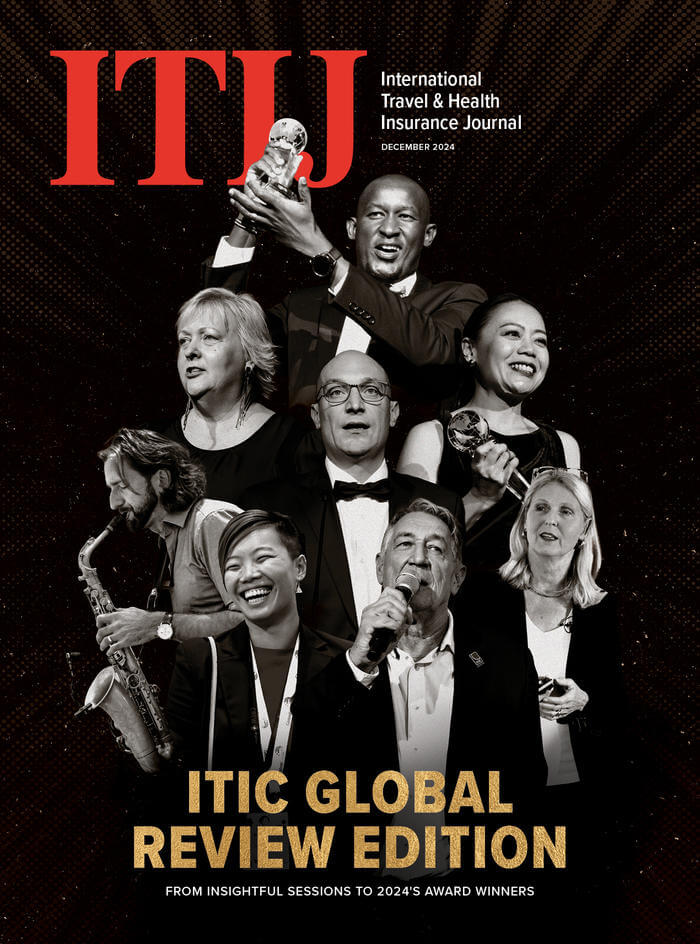
In the December issue we explore the changing landscape of the insurance industry as it rebounds post-pandemic; we examine policies for pregnant women, and ask if more can be done; we report from the sessions at ITIC Global, and announce the winners of the ITIJ Awards.
Alysia Cameron-Davies
Alysia is a copy writer for Voyageur Publishing.