
Alison Thornberry interview: How insurers can support the future of cross-border healthcare

Chloe Fox speaks to Alison Thornberry, Founder of Sure Insurance Services, about how growing demand for overseas treatment is driving innovation in cross-border healthcare insurance
Your career has spanned insurance, healthcare, and international partnerships. What originally drew you to the medical tourism and international private medical insurance (IPMI) sector?
My first policy creation involved working with Aviva, and we launched Childsure in 2008, which was a standalone child’s private medical insurance (PMI) policy.
In 2012, I was approached by a Lloyd’s insurer to develop a policy that would cover either a surgeon or hospital if a self-pay patient experienced a complication that was nobody’s fault but required a revision. This was mainly targeted at the cosmetic surgery sector, which was a growing market with a need to protect patients who might face significant medical costs following a complication. By engaging with and collaborating alongside the British Association of Aesthetic
Plastic Surgeons (BAAPS), we managed to refine the policy and promote it exclusively to its members and approved hospitals. This approach gave the insurance provider confidence in the standard of the surgeons and secured support from BAAPS for the insurance claims team.
Building on the success of this policy, we subsequently collaborated with the International Society of Aesthetic Plastic Surgery (ISAPS). Following on from this, we then concentrated our efforts on creating a travel insurance policy, including complication cover, delayed recovery, and return trip benefits.
Looking back on your journey building Sure, what have been the biggest leadership lessons from growing a specialist business in such a complex global market?
The most important lesson is to build territory by territory, ensuring that all regulatory, governance, and, especially, customer service factors are in place. Reputation is crucial when creating and delivering niche consumer policies. Taking time to build a strong team with the skill set needed for niche products and markets. Investing in employees is the most valuable investment you can make.

Medical tourism sits at the intersection of healthcare, travel, and insurance. How do you see the sector evolving within the wider IPMI landscape?
Medical tourism is expanding from a patient and consumer-driven market to a more integrated system with international insurers working more closely with medical, travel, and other providers. Greater confidence is being built as the focus shifts towards delivering the best care available rather than merely affordable treatment overseas.
Given the ageing population, it makes sense for insurers to establish international provider networks. Enhanced insurance policies that include cross-border treatment as a benefit rather than something patients need to research will improve the IPMI landscape.
What are the biggest challenges currently facing insurers and intermediaries when supporting clients seeking treatment overseas?
Adding extra benefits to a basic travel insurance policy is sensible for protecting travellers overseas seeking medical treatment. However, travel insurance and accident and health insurance are separate fields within the insurance market, and merging these two can be complex. The main challenge lies in building a competent claims team that not only understands travel insurance claims but can also interpret and respond to specific medical claims involving elective, cosmetic, fertility, and dental procedures. It is essential to have someone managing a claim who is compassionate, reasonable, and knowledgeable about medical terminology and outcomes.
As patient expectations continue to shift, what innovations or trends do you believe will define the future of medical tourism?
Patients will expect the same level of service from their healthcare provider as they do from other service providers. For example, instant access to information via apps, online virtual consultations before and after travel, online patient care packages – including access to their patient coordinator – and transparency regarding costs. I believe that improvements in data access and systems will be the biggest trend.
A growing trend set to continue in the coming years, as people live longer and seek more natural ways of maintaining their fitness and youthfulness, is holistic and wellness treatments. These are typically found in treatment centres that promote calmness, relaxation, and mindfulness, supported by holistic approaches.
The increasing popularity of weight-loss medication has caused a rapid surge in skin-removal surgeries across the Western Hemisphere. Clinics and hospitals worldwide are already establishing specialised centres to meet this demand. Patients often do not realise that, after significant weight loss, multiple procedures may be necessary to achieve their desired results. This will likely increase the need for affordable surgery, boosting medical tourism.
How important will technology and data become in improving transparency, patient confidence, and risk management across cross-border healthcare?
Patients are already utilising artificial intelligence (AI) to support research on clinics, destinations, and affordable travel and procedure packages. AI is still in its early phases, but as enhancements are implemented, it is anticipated that this will benefit IPMI services.
Cross-border healthcare information can be inconsistent, and patients often struggle to feel confident with an overseas provider. It is hoped that as technology and data sharing become more secure and accessible, patients will benefit from continued telehealth monitoring when returning to their home country.
Patients being able to benefit from follow-up care, access their records, and communicate with their overseas clinic, along with any ongoing treatment and monitoring, will all support patient confidence and risk management going forward.
What opportunities do you see emerging for travel and health insurance providers as international healthcare demand continues to grow?
Travel insurance with added benefits for medical tourists is expected to be a growing market, covering elective, cosmetic, dental, and fertility procedures. There is also an expanding market for those travelling for wellness examinations, therapy, or retreats that may include medical interventions.
I expect more cross-border agreements with IPMI and overseas hospitals. Future evaluations might include telemedicine access, virtual consultations, and digital prescription services, allowing patients to access these services in their home country and travel abroad only for the medical procedure.
Looking ahead, what excites you most about the future of the medical tourism industry and its role in global healthcare access?
I am excited to be part of and witness the benefits of medical tourism driven by global expertise in medical personnel, hospitals, technology, and insurance providers. Patients will be able to access specialised surgeons not only for cosmetic and elective procedures but also for diagnosing symptoms, treating life-threatening illnesses, and utilising specialised paediatric services.
Advances in technology, data sharing, and more affordable medical packages are transforming global healthcare access, thereby improving life expectancy, patient satisfaction, cost efficiency, and clinical expertise.
Alison Thornberry
Alison founded Sure Insurance Services in 2003, a specialist managing general agent focused on international niche policies in private medical insurance, medical tourism, and the self-pay patient sector. With over 30 years of experience in insurance and financial services, Alison has held senior leadership roles within the international insurance healthcare sector. Throughout her career, she has worked closely with insurers, reinsurers, and brokers, together with the British and international societies for aesthetic surgery, to develop and provide specialised policies.
August 2026
Issue
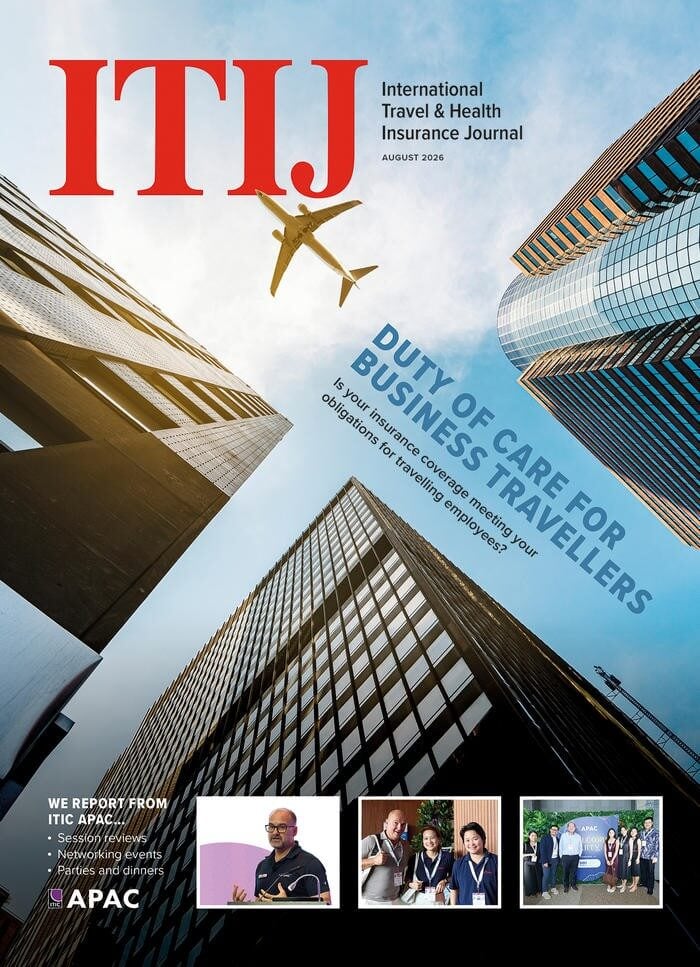
This month we examine an issue important to many of us – the complexities of insuring business travellers. Employee travel exposes organisations to risks including medical emergencies, travel disruption, geopolitical instability and cyber threats. Adequate insurance coverage is more than a financial safeguard; it is a vital part of meeting an organisation’s duty of care obligations and responsibilities.
Chloe Fox
Chloe Fox is an Editorial Assistant for Voyageur Group, joining in 2024. She writes for ITIJ and AirMed&Rescue, covering a range of topics including international travel and health insurance, medical assistance provision, and air medical transportation. Chloe holds a BA (Hons) in English and an MA in English Literature from the University of Bristol.