AI in international medical claims: where automation works and where human expertise still matters

Natalya Butakova, CEO of AP Companies Global Health Management, explains how the business is adapting to an increasingly complex global landscape
Artificial intelligence (AI) is transforming many aspects of healthcare administration. Which parts of the international medical claims process are best suited to automation today, and where do you still see significant limitations?
At AP, we have been using automation in our claims and operational processes for several years. Claims processing is the most obvious area. Repetitive steps such as invoice intake, data extraction, claim creation, follow-ups and routing can all be automated.
The goal is to give our specialists more time to focus on medical assessment, cost containment and decisions that require their expertise.
But the situation changes completely in an emergency. If a member is hospitalised abroad and needs urgent treatment, evacuation or repatriation, AI should not make those decisions independently. Those cases need experienced case managers and medical professionals.
For us, the principle is simple. The more repetitive and standardised the process, the more we can automate. The higher the medical risk, the more important human judgement becomes.
International medical claims often involve multiple languages, healthcare systems, and billing standards. How effectively can AI navigate this complexity, and what challenges remain?
At AP, we use AI to support the translation and processing of medical invoices, clinical reports and other documentation across multiple languages.
But translating a medical invoice and understanding what it means within a particular healthcare system are two very different things. Assessing treatment or charges requires context, including the country, local billing practices, treatment complexity and available alternatives.
A general AI model is not enough. You need specialised data, clear criteria and training based on real expert decisions. Something unusual in one country may be perfectly normal in another. AI still needs the right local and medical context, with human experts overseeing the process.
Fraud detection is frequently highlighted as a major benefit of AI. How is AI helping claims teams identify suspicious patterns, and what role do human investigators continue to play?
Fraud detection is a very good use case for AI because we are dealing with enormous volumes of data. It can flag unusual procedures, pricing outside expected ranges, duplicate claims and suspicious billing patterns.
International research estimates that around 3% to 10% of healthcare expenditure may be lost to fraud, so there is real value in identifying suspicious patterns earlier.
But an anomaly is not the same thing as fraud. An expensive claim may be completely legitimate because of the patient's condition, treatment complexity or the local healthcare market. This is why medical and claims expertise remains essential.
I do not see AI replacing investigators or medical experts. I see it giving them a much better way to identify the cases that genuinely deserve a closer look.
As automation becomes more sophisticated, how do you strike the right balance between efficiency and empathy, particularly when claimants may be dealing with serious illness or medical emergencies abroad?
We can automate routing, claims processing, document handling and follow-ups, giving our people more time for the part of the job that really needs a person.
When someone becomes seriously ill or has a medical emergency abroad, they should not feel that they are being managed by an algorithm. Our case managers and medical doctors communicate directly with the member and treating medical team, and support the family when appropriate.
AP has spent years training our teams to handle difficult and sensitive conversations. How do you speak to someone who is seriously ill and thousands of miles from home? How do you explain what is happening to a worried family? How do you support someone through an evacuation or international repatriation? These are not simply operational tasks. They are an important part of the service we provide.
AI can make us faster and more efficient. It can take away repetitive work and help our specialists make better-informed decisions. But it cannot reassure someone who is frightened or provide the human presence they need at a critical moment. That part of healthcare should remain human.
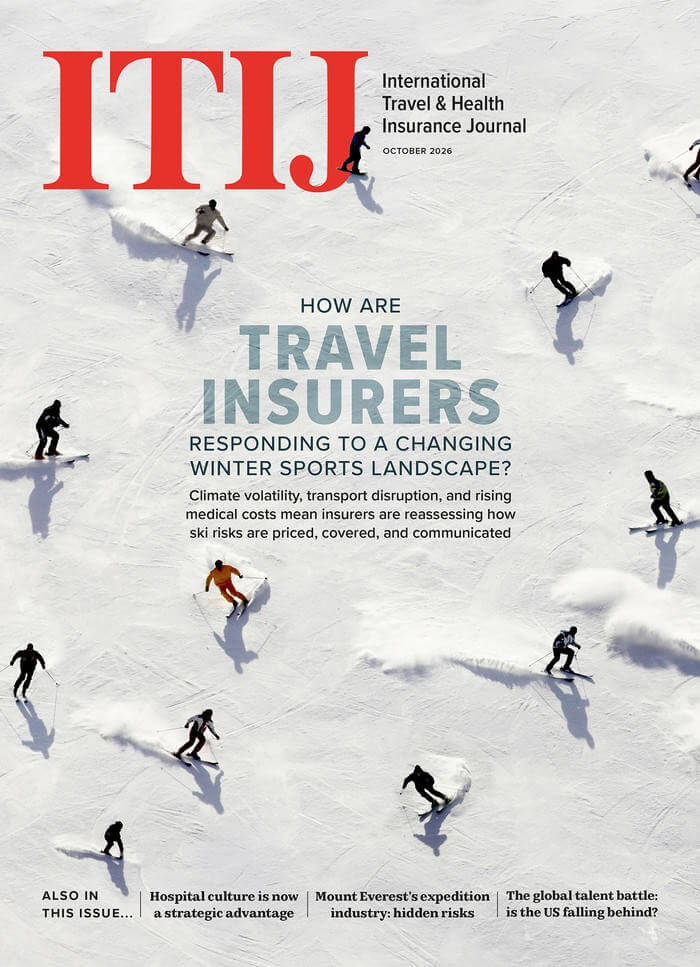
October 2026
Issue
This month in ITIJ we take a close look at how travel insurers are responding to the changes in winter sports risk, and we ask how risk is priced, covered and communicated to policy holders.
How do international hospitals stand out from the crowd, and become the number one choice for insurers and assistance companies? Clinical excellence alone is no longer enough. We look at why hospital culture has become a strategic advantage, and how dedicated international departments are strengthening relationships between hospitals, insurers, and assistance companies.
Editorial Team
The Editorial Team updates the ITIJ website daily, and works on features for the print edition. With expert industry knowledge and years of experience in writing about complex travel insurance issues, the Editorial Team is ready to investigate and report on the topics that matter most to ITIJ's readers.